This guide takes 4 minutes to read and covers every decision point you'll face at the bedside for 5-lead ECG placement—from electrode positioning to troubleshooting a noisy trace. You'll learn exactly where each lead goes, how to choose between V1 and V5, how to read AHA vs IEC color codes without second-guessing, and how to fix the three most common signal problems in under a minute.

Quick-start map of the 5 leads
For continuous monitoring, place four "limb" electrodes on the torso to cut motion artifact and use one chest lead (V) for targeted ventricular insight.
- RA: Right upper chest, just below the clavicle (mid-clavicular), soft tissue.
- LA: Left upper chest, just below the clavicle (mid-clavicular), soft tissue.
- RL: Right lower torso, above the iliac crest.
- LL: Left lower torso, above the iliac crest.
- V (choose one): V1 = 4th ICS, right sternal border (rhythm); V5 = 5th ICS, anterior axillary line (ischemia/ST).
- Skin prep: clip hair, cleanse, dry; light abrasion per policy.
- Avoid bone, incisions, devices, irritated skin; press electrodes for 5–10 seconds.
- Confirm palette/labels (AHA vs IEC) before connecting leadwires.
- Provide strain relief: route cables downward and secure slack away from lines and dressings.
Safety: Use defibrillation-rated accessories when indicated; replace damaged cables/electrodes; follow infection-prevention policies.
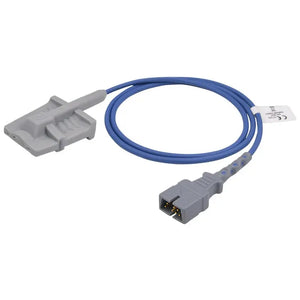
Need a replacement 5-lead ECG cable?
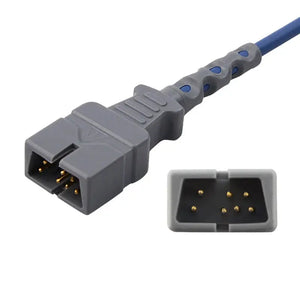
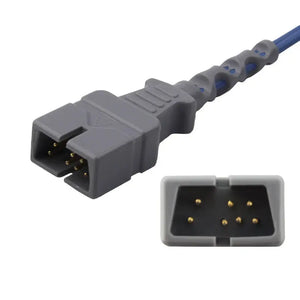
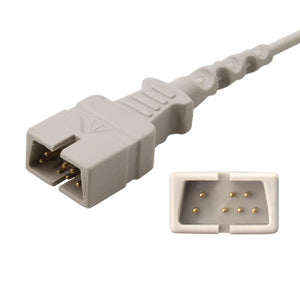
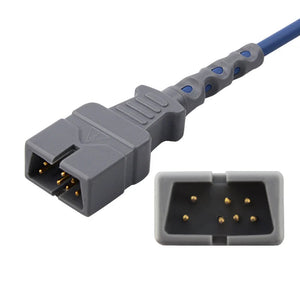
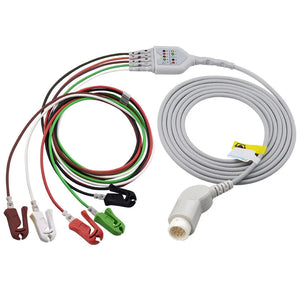
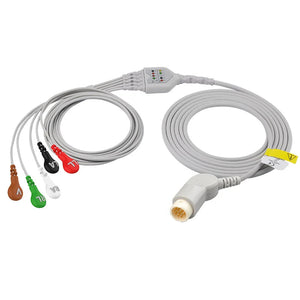
Cracked jackets, intermittent dropouts, or a noisy trace after prep? It's usually the cable. Shop by monitor brand:
Pick the chest lead: V1 vs V5
| Objective | Lead | Why |
|---|---|---|
| Arrhythmia / conduction | V1 | Best P-wave clarity; septal/right-sided view aids SVT vs VT and BBB patterns. |
| Ischemia / ST trending | V5 | Lateral wall sensitivity; reliable ST depression/elevation trends. |
Rule: One chest site at a time; label on the monitor and document the choice.
5-lead EKG Placement by u/learningsponges in ECG
Color coding: AHA vs IEC
Trust letters first, color second. This avoids cross-wiring when devices mix palettes.
| Lead | AHA | IEC | Label |
|---|---|---|---|
| RA | White | Red | RA / R |
| LA | Black | Yellow | LA / L |
| RL (ground) | Green | Black | RL / N |
| LL | Red | Green | LL / F |
| V (chest) | Brown | Brown | V / C |
🔌 Need a specific standard leadwire?
Mixed palettes across your fleet? Match leadwires to your monitor's required standard:
Mnemonics that stick
- AHA: "White on right" (RA), "Clouds over grass" (white over green, right), "Smoke over fire" (black over red, left), "Chocolate near the heart" (V).
- IEC: "Red on right" (RA), "Sun over meadow" (yellow over green, left), RL black = neutral, V brown near the heart.
Tip: Use letters + color-blind-safe shapes on bedside cards; confirm palette in the monitor setup.

Prep & position (what actually improves signal)
- Skin: Clip hair; cleanse; dry fully; light abrasion per policy; press to warm gel.
- Position: Set posture first (supine or semi-Fowler's 30–45°), then landmark ribs.
- Landmarks: Find the sternal angle → rib 2 → count to 4th/5th ICS (V1/V5).
Quality electrodes = quality signal
Even perfect prep can't rescue a cheap electrode. Stock up on reliable adhesive electrodes that hold through sweat, motion, and long monitoring windows.
Connect, verify, and monitor
- Seat connectors until they click; route cables down; secure slack away from lines.
- On the monitor: choose display lead (V1 rhythm / V5 ST), set gain/speed, minimize filters.
- Confirm trace: stable baseline, clear QRS, P waves when visible; capture a baseline strip and document chest site and palette (AHA/IEC).
Troubleshoot fast
Wandering baseline & motion
Coach stillness; re-prep/dry skin; add slack; verify true 4th/5th ICS. If artifact persists, the electrode adhesive may be expired or losing contact—swap in fresh electrodes →
Muscle noise & AC (mains) interference
Warm patient, relax shoulders; separate ECG from power cords; ensure RL (ground) makes excellent contact.
Lead-off alarms & loose/dry electrodes
Replace electrode (don't reuse), reseat leadwire, inspect pins/snaps; consider high-adhesion foam for sweat.
⚠️ Still getting lead-off alarms after replacing the electrode?
When alarms return within minutes, the leadwire is often the real culprit—look for cracked jackets, corroded snaps, or intermittent "wiggle" loss. Replace by monitor brand:
Compatible ECG cables & leadwires by brand
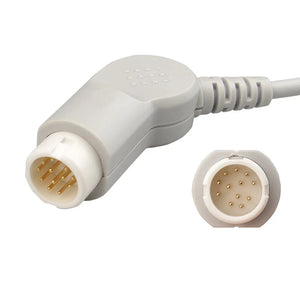
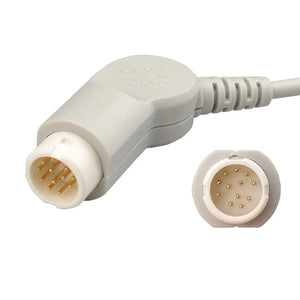
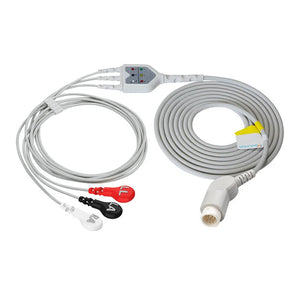
If prep is good but the signal is still noisy, cables are often the culprit. Replace leadwires for cracked jackets, corroded snaps/pins, or intermittent "wiggle" loss. Replace the trunk cable for broken strain reliefs, exposed conductors, or multi-lead dropouts that follow the trunk.
Philips Compatible
GE Healthcare Compatible
Mindray Compatible
Nihon Kohden Compatible
Pre-purchase fast check: match monitor port → trunk model → leadwire interface (snap/pin) → defib rating → cleaning compatibility → quick bedside trial.
Not sure which cable fits your fleet?
Send us your monitor model and we'll match the right trunk cable + leadwires + electrodes in one reply.
Talk to Our Team →Frequently asked questions
Where do you place the 5 leads on an ECG? +
Place RA on the right upper chest below the clavicle, LA on the left upper chest below the clavicle, RL above the right iliac crest, and LL above the left iliac crest. For the single V lead, choose V1 (4th intercostal space, right sternal border) for rhythm monitoring or V5 (5th intercostal space, anterior axillary line) for ischemia and ST trending.
What is the difference between AHA and IEC color coding? +
AHA (used primarily in the US) assigns: White (RA), Black (LA), Green (RL), Red (LL), Brown (V).
IEC (used internationally) assigns: Red (RA), Yellow (LA), Black (RL), Green (LL), Brown (V).
Always trust the letter labels over colors, since devices may mix palettes across a mixed fleet.
Should I use V1 or V5 for monitoring? +
Use V1 for arrhythmia and conduction monitoring—it provides the best P-wave clarity and aids SVT vs VT differentiation and bundle branch block patterns. Use V5 for ischemia and ST trending because of its lateral wall sensitivity and reliable ST depression/elevation tracking. Only one chest site at a time; document your choice on the monitor.
How do I fix a wandering baseline on an ECG? +
Coach the patient to stay still, re-prep and dry the skin, add cable slack, and verify correct placement at the 4th or 5th intercostal space. If artifact persists after these steps, the electrodes or leadwires are likely at fault—swap in fresh electrodes or inspect the leadwire for cracks and corrosion.
How often should ECG leadwires and trunk cables be replaced? +
There's no single interval—replacement is condition-based. Replace leadwires when you see cracked jackets, corroded snaps/pins, bent connectors, or intermittent "wiggle" loss during motion. Replace the trunk cable when multiple leads drop simultaneously, strain reliefs are broken, or conductors show through the outer jacket. Most hospitals inspect cables at every patient turnover and replace every 12–24 months under heavy use.
Can I use a 3-lead ECG cable in a 5-lead port? +
Only if the trunk cable connector matches the monitor's port and the monitor supports 3-lead mode. A 3-lead cable will not provide a chest (V) lead, so you'll lose arrhythmia differentiation and ST trending capability. For most modern monitors, a dedicated 5-lead cable is the correct match—verify monitor port, connector style (snap vs grabber), and defib rating before swapping.
Why does my ECG show muscle noise even with good electrode contact? +
Muscle noise (EMG artifact) usually comes from patient shivering, tension, or tremor. Warm the patient, position the arms and shoulders in a relaxed posture, and move electrodes closer to the torso on soft tissue rather than over muscle bellies. If noise persists, check that the RL (ground) electrode has excellent skin contact and that the ECG cable is routed away from AC power sources that can introduce 50/60 Hz interference.
References: American Heart Association (AHA); American College of Cardiology (ACC).
One-line takeaway: Prep dry skin, place limbs on soft tissue, pick V1 or V5 (and document), trust letters over colors, then verify a clean baseline before relying on alarms or trends.