Written by the MedLinket Clinical Engineering Team · Manufacturer since 2004 · ISO 13485:2016 & FDA 510(k) cleared · Last updated: February 2026 · Estimated reading time: 12 minutes
⚡ Quick Answer: Every patient monitor requires specific external accessories to measure vital signs. The six core categories are: SpO2 sensors and adapter cables (oxygen saturation), ECG trunk cables, leadwires, and electrodes (heart rhythm), NIBP cuffs and hoses (blood pressure), temperature probes (body temperature), IBP transducers and cables (invasive blood pressure), and EtCO2 sampling lines and water traps (end-tidal CO2). Each accessory must match your monitor's brand, model, and connector type — a mismatch is one of the most common causes of monitor reading failures.
🔑 Key Takeaways
- Patient monitors don't measure anything by themselves — the monitoring accessories are what capture the clinical data.
- Accessories are a leading cause of monitor alarms and parameter failures. Choosing quality accessories and maintaining them on schedule helps reduce avoidable false alarms.
- Every accessory is brand- and often model-specific. A Philips-compatible SpO2 sensor won't work in a Mindray monitor.
- Proactive replacement on a schedule is cheaper and safer than waiting for failure — see our accessory replacement schedule guide.
- Quality compatible accessories can cost significantly less than OEM originals while meeting applicable FDA and CE safety standards. Learn how to evaluate them in our OEM vs compatible accessories comparison.
If you've ever been frustrated by a monitor alarming for no apparent reason, displaying "---" where a number should be, or giving readings that don't make sense — the problem often traces back to an accessory, not the monitor itself. After two decades of manufacturing patient monitor accessories and supporting 2,000+ hospitals across 120+ countries, the MedLinket engineering team finds that accessory-related issues are a frequent root cause of the "monitor malfunction" service calls we receive.
Understanding what each accessory does, when it needs replacing, and how to choose the right one is foundational knowledge for anyone who works with patient monitors. This guide breaks down every accessory category organized by the monitoring parameter it serves. Whether you're a nurse troubleshooting bedside issues, a BMET managing inventory, or a procurement manager evaluating suppliers, this is your complete reference.
📚 This article is part of our Hospital Monitor Reading & Accessories Guide — a comprehensive resource for understanding, troubleshooting, and maintaining patient monitoring equipment. New to monitor reading? Start with How to Read a Hospital Monitor.
Master Reference: All Accessories at a Glance
Before diving into each parameter, here's a complete overview of every accessory type, its function, lifespan, and the symptoms that signal it needs replacing. Bookmark this table — experienced BMETs and clinical engineers tell us it's the single most referenced resource in this guide.
| Parameter | Accessory | Function | Typical Lifespan | Replace When… |
|---|---|---|---|---|
| SpO2 | Reusable sensor | Measures oxygen saturation via light absorption (660nm red + 940nm infrared) | 12 months | Intermittent readings, cracked housing, dim LED |
| Disposable sensor | Single-patient-use oxygen measurement | Single use | After each patient or per manufacturer spec | |
| Adapter/extension cable | Connects sensor to monitor | 2–3 years | Intermittent connection, bent pins, cracked jacket | |
| ECG | Trunk cable | Connects leadwires to monitor | 2–3 years | Intermittent signal loss, loose connector |
| Leadwires | Connect trunk cable to electrodes | 6–12 months | Corroded snaps, broken clips, persistent "Leads Off" | |
| Electrodes | Detect electrical signals from skin | 24 hours (disposable) | Edges peeling, gel dried, poor waveform quality | |
| NIBP | Cuff (reusable) | Occludes artery for oscillometric measurement | 12–18 months | Air leaks, faded markings, stiff bladder |
| Hose | Connects cuff to monitor | 2–3 years | Kinks, cracking, loose connectors | |
| Temp | Reusable probe | Measures body temperature via thermistor | 12–24 months | Drift in readings, slow response, cable damage |
| Disposable probe | Single-patient temperature measurement | Single use | After each patient | |
| IBP | Transducer kit | Converts arterial pressure to electrical signal | Single use (disposable) | After each patient; never reuse |
| Adapter cable | Connects transducer to monitor | 2–3 years | Intermittent readings, damaged connector | |
| EtCO2 | Sampling line | Carries exhaled gas to sidestream sensor | 24–72 hours | Moisture buildup, occlusion, per infection control policy |
| Water trap | Removes moisture before it reaches the CO2 sensor | Per manufacturer spec | Moisture saturation, increased measurement drift |
Now let's examine each parameter category in detail.
1. SpO2 Monitoring Accessories
SpO2 (peripheral oxygen saturation) measures the percentage of oxygen-carrying hemoglobin in the blood using two wavelengths of light — 660nm red and 940nm infrared. The principle is straightforward: oxygenated hemoglobin (HbO2) absorbs more infrared light, while deoxygenated hemoglobin (Hb) absorbs more red light. The sensor calculates the ratio to determine SpO2 percentage. Normal SpO2 is 95–100% for healthy adults — read more in our complete SpO2 guide.
An important principle to remember: "No Pulse, No Pulse Oximetry." SpO2 sensors require pulsatile blood flow to function. That's why cold fingers, poor perfusion, and excessive patient movement all cause reading failures — the sensor can't detect a clean pulse signal.
Accessory Components
Reusable SpO2 Sensors — These clip onto the patient's finger (or ear, for ear-clip models) and are designed for repeated use across patients after cleaning. Types include:
- Finger clip (adult) — most common, quick application
- Soft silicone (adult / pediatric) — gentle for sensitive skin, neonates
- Y-type wrap (neonate/infant) — wraps around foot or hand
- Ear clip — useful when fingers are unavailable or poorly perfused
Disposable SpO2 Sensors — Single-patient-use adhesive sensors for infection control, sensitive skin (burn patients, neonates), or surgical settings where secure adhesion is needed. Available in non-adhesive wrap, adhesive, and pediatric-specific versions. MedLinket disposable sensors come in several material types:
- Comfort foam (non-adhesive) — suited to burn patients and sensitive skin
- Elastic non-woven (adhesive) — for short-term monitoring
- Transparent breathable film (aluminum-foil shielded) — designed for surgical environments with light/EMI interference
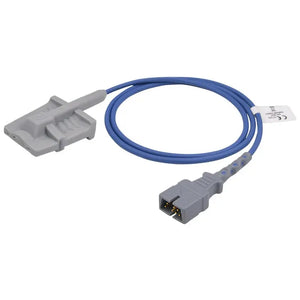
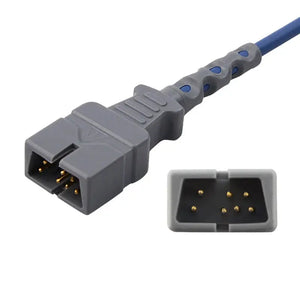
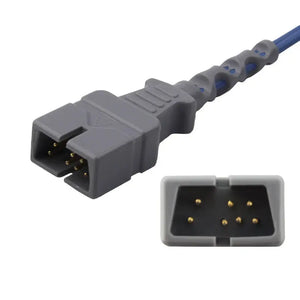
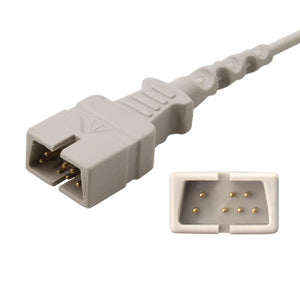
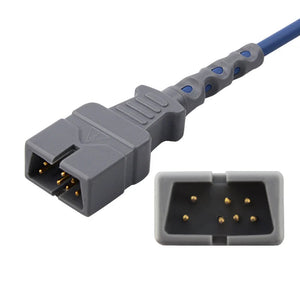
SpO2 Adapter/Extension Cables — Connect short-cable sensors to the monitor. This is where brand compatibility is defined — a Masimo adapter cable allows Masimo-type sensors to connect to Masimo-compatible monitor ports. MedLinket's multi-compatible adapter strategy lets a single sensor work across Mindray, Philips, GE, Masimo, and Nellcor-compatible monitors simply by swapping adapter cables — helping reduce the number of sensor SKUs a facility must stock.
⚠️ Critical Compatibility Note: SpO2 technology is not universal. Different manufacturers use different signal-processing protocols (Masimo SET, Nellcor OxiMax, Mindray proprietary, etc.). A sensor and cable that physically fit may still produce inaccurate readings if the technology protocol doesn't match. Always confirm both the physical connector AND the technology type. Learn more in our guide to compatible SpO2 sensors for multi-brand monitors.
🔒 MedLinket Over-Temperature Protection: MedLinket's over-temperature SpO2 sensors include an automatic shutdown feature: if the sensor-site skin temperature exceeds 41°C, the sensor stops operating and triggers a monitor alarm. Once temperature drops below 41°C, it auto-resumes SpO2 monitoring. This design helps address the contact-burn risk that can affect neonates and poorly perfused patients during prolonged monitoring. Note: for neonates above 3.5 kg, the manufacturer advises against wrap measurement on the foot where tissue is too thick.
Common SpO2 Accessory Issues & Troubleshooting
| Symptom | Likely Accessory Cause | Solution |
|---|---|---|
| SpO2 reads "---" or 0% | Sensor disconnected or damaged | Reconnect or replace sensor |
| Intermittent/fluctuating readings | Poor sensor contact, worn sensor, or patient movement | Reposition; try different digit; replace if >12 months old |
| Consistently low on stable patient | Nail polish, cold fingers, or wrong sensor type | Remove polish; warm hand; try ear clip sensor |
| Sensor LED not lighting up | Faulty sensor or cable | Try known-good sensor; if still no LED, check cable/port |
For a step-by-step response algorithm when SpO2 alarms, see our detailed guide: What is SpO2 and What is a Normal SpO2 Level? For a deeper understanding of how the sensors work, read How Do SpO2 Sensors Work?
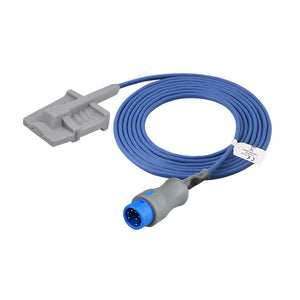
Browse MedLinket SpO2 sensors and cables → All SpO2 Products
2. ECG Monitoring Accessories
ECG (electrocardiogram) monitoring detects the heart's electrical activity through skin-surface electrodes. The cardiac conduction system — from the SA node through the AV node, Bundle of His, bundle branches, and Purkinje fibers — generates electrical signals that the electrodes pick up and transmit through the cable system to the monitor. ECG also provides respiration rate via the impedance method: as the chest expands during breathing, the impedance between the RA and LL electrodes changes, allowing the monitor to derive respiratory rate without additional sensors.
ECG is the most complex accessory system on a patient monitor because it involves three tiers of components working together: electrodes (on the patient), leadwires (connecting electrodes to the cable), and the trunk cable (connecting to the monitor). A failure at any tier produces the same symptoms — "Leads Off," noisy waveforms, or no ECG at all.
Accessory Components
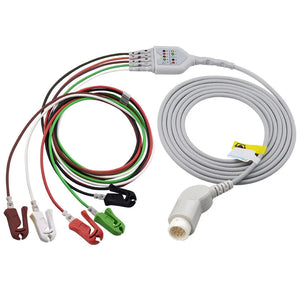
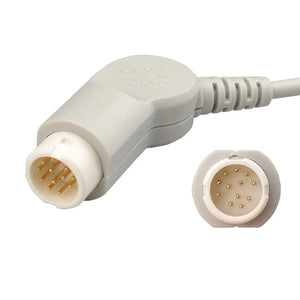
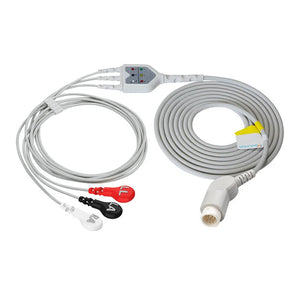
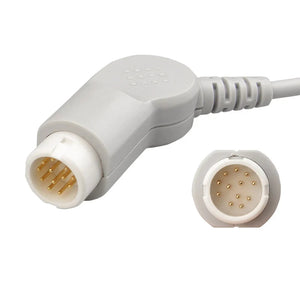
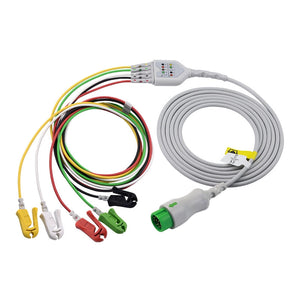
ECG Trunk Cables — The main cable that plugs into the monitor. Available in 3-lead, 5-lead, and 10/12-lead configurations. The monitor-end connector is brand-specific (Philips, GE, Mindray, Nihon Kohden, Dräger, etc.), while the patient-end terminates in a junction for attaching leadwires.
ECG Leadwires — Individual wires that connect from the trunk cable's junction to each electrode. Available with snap or grabber (pinch/clip) ends, in AHA (US color coding) or IEC (European color coding) standards. Leadwires bear the most physical stress and are replaced more frequently than trunk cables. Examples: Mindray 5-lead leadwires, Philips 3-lead leadwires, GE 5-lead leadwires.
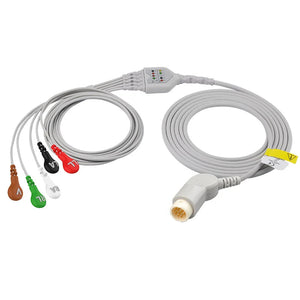
One-Piece ECG Cables — Integrate trunk cable and leadwires into a single unit. Simpler to manage but must be replaced entirely when any leadwire fails. Examples: Mindray 3-lead one-piece (snap), Mindray 5-lead one-piece (grabber).
Disposable ECG Electrodes — Adhesive pads with AgCl (silver chloride) coating and conductive gel that detect the heart's electrical signals through the skin. The quality of the electrode directly impacts waveform quality, baseline stability, and false alarm rates.
💡 From our factory floor: MedLinket's offset-center (eccentric) ECG electrode design is engineered to reduce motion artifact compared with traditional center-snap electrodes. In our internal laboratory testing, center-snap electrodes showed baseline drift up to 7,000μV during a simulated tap test at the connection point, while the eccentric design was largely unaffected. During pull testing (1N force every 5 seconds), center electrodes showed 2,000–7,000μV potential drops with incomplete recovery, whereas the eccentric design showed only a temporary ~1,000μV drop, recovering within 0.1 seconds. These are internal test figures (sample size and equipment not specified) and are particularly relevant to Holter and telemetry monitoring, where movement-induced noise contributes to a large share of false alarms — one journal report attributes up to 99.4% of monitor alarms to false positives.
MedLinket electrodes also meet the YY/T 0196-2005 industry standard with margin: the NMPA-registered test values record AC impedance averaging 109Ω (standard: ≤2kΩ), DC offset voltage at 5.1mV with a 4.11mV change (standard: ≤100mV), and internal noise at 49.5μV peak-to-peak (standard: ≤150μV).
ECG Lead Configuration Quick Reference
| Configuration | Leads | Best For | Placement Guide |
|---|---|---|---|
| 3-lead | RA, LA, LL | Basic rhythm monitoring | 3-Lead ECG Placement Guide |
| 5-lead | RA, LA, LL, RL, V | Standard monitoring + arrhythmia detection | 5-Lead ECG Placement Guide |
| 12-lead | 4 limb + 6 chest (V1-V6) | Full diagnostic ECG | 12-Lead ECG Placement Guide |
For comprehensive placement guides including mnemonics and special situations, see our complete ECG lead placement master guide.
Common ECG Accessory Issues & Troubleshooting
| Symptom | Likely Accessory Cause | Solution |
|---|---|---|
| "Leads Off" alarm | Electrode dried out, leadwire detached, poor skin contact | Replace electrodes (24h max); check connections |
| Noisy/artifact-filled waveform | Poor skin prep, worn cables, 50/60Hz interference | Clean skin with alcohol; replace leadwires; check grounding. See ECG artifact troubleshooting |
| Baseline drift | Electrode movement, respiration, or poor adhesion | Secure cable routing; use eccentric electrodes for active patients |
| Flatline on awake patient | Trunk cable disconnected or completely failed | Reconnect trunk cable; swap with known-good cable. See no reading troubleshooting |
Browse MedLinket ECG cables and leadwires → All ECG Products
3. NIBP Monitoring Accessories
NIBP (non-invasive blood pressure) monitoring uses the oscillometric method: a cuff inflates to occlude an artery, then gradually deflates while the monitor analyzes pressure oscillations. The point of maximum oscillation corresponds to MAP (mean arterial pressure), from which the monitor calculates systolic and diastolic values. For a detailed explanation of what NIBP numbers mean, see our guide to understanding NIBP readings: systolic, diastolic, and MAP.
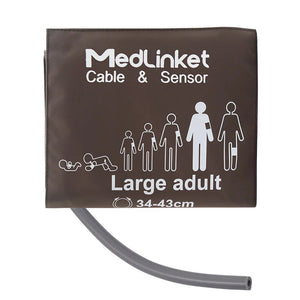
The cuff size is the single most important factor in measurement accuracy. A cuff that is too narrow reads artificially high; a cuff that is too wide reads artificially low. As a general guide, the inflatable bladder should cover at least 75% of the limb circumference, and at the borderline between two sizes you should size up.
Accessory Components
Reusable NIBP Cuffs — Multi-patient blood pressure cuffs available in sizes from neonatal (3–6 cm limb circumference) through adult thigh (42–54 cm). MedLinket's range covers all ages and body types with latex-free, DEHP-free materials. Key features include range markers and artery alignment indicators for correct application. The neonatal Hylink transparent series uses clear TPU material that allows visual inspection of the skin underneath to help prevent pressure injuries — a critical concern in NICU settings.
Disposable NIBP Cuffs — Single-patient cuffs for infection control, particularly in isolation rooms. Available in adult and neonatal variants.
NIBP Hoses — Connect the cuff to the monitor's NIBP port. The NIBP connector type is brand-specific (Philips, GE, Mindray each use different bayonet or proprietary connectors). This is a common source of confusion — see our guide on finding NIBP hoses for Philips monitors.
NIBP Connectors — Adapters that allow cuffs from one system to connect to hoses from another, or to standardize connector types across a facility.
NIBP Cuff Sizing Reference
| Cuff Size | Limb Circumference | Patient Type |
|---|---|---|
| Neonatal #1 | 3–6 cm | Premature infant |
| Neonatal #3 | 6–11 cm | Neonate |
| Neonatal #5 | 8–15 cm | Infant |
| Child | 15–22 cm | Pediatric |
| Small adult | 17–25 cm | Small adult / large child |
| Adult | 24–32 cm | Standard adult |
| Adult long | 28–37 cm | Larger adult arm |
| Large adult | 32–42 cm | Obese adult |
| Thigh | 42–54 cm | Bariatric / thigh measurement |
💡 Clinical Tip: At the borderline between two sizes, always choose the larger size. When applying the cuff, follow the 8-step SOP: confirm patient type → measure limb circumference with a tape → deflate the cuff → ensure clothing thickness <2mm → align the artery marker (△) over the brachial artery → ensure two-finger-snug fit → arm supported at heart level → verify no kinks or twists. Avoid the following limbs: IV infusion side, severe thrombosis/lymphedema, burns/trauma, AV fistula, or mastectomy side.
A nursing-community post on choosing the correct large BP cuff size — from r/nursing.
These are clinical frontline experiences and should be treated as practical insights rather than authoritative guidelines.
Common NIBP Accessory Issues & Troubleshooting
| Symptom | Likely Accessory Cause | Solution |
|---|---|---|
| "Measurement Failed" error | Wrong cuff size, air leak, kinked hose, or patient movement | Troubleshooting guide; verify cuff size; check hose; retry when patient is still |
| Cuff won't inflate | Disconnected hose, blocked connector, or failed pump | Check all connections; try different hose; if pump fails, call Biomed |
| Readings seem too high | Cuff too small, over clothing, or limb below heart level | Verify size; bare arm; position at heart level |
| Readings seem too low | Cuff too large or too loose | Use correct size; ensure snug (two-finger) fit |
Browse MedLinket NIBP cuffs, hoses, and connectors → All NIBP Products
4. Temperature Monitoring Accessories
Temperature monitoring in hospital settings uses thermistor-based probes that change electrical resistance with temperature. The monitor reads this resistance change and converts it to a temperature display. Accuracy depends heavily on probe placement and probe quality. Core temperature (esophageal, rectal, bladder) is more clinically accurate but more invasive. Peripheral temperature (skin surface, axillary) is easier to obtain but may read lower than core.
For perioperative care, core temperature monitoring is essential. Hypothermia during surgery increases wound infection risk, impairs coagulation, and prolongs recovery. Learn more about core vs peripheral temperature differences in our Hospital Monitor Reading & Accessories Guide.
Accessory Components
Reusable Temperature Probes — Available for skin surface, esophageal, rectal, and axillary measurement sites. Connect directly to the monitor's temperature port. Specialized probes include Dräger-compatible infant incubator/warmer probes and Atom-compatible probes for neonatal care.
Disposable Temperature Probes — Single-patient-use for infection control in surgical and critical care settings. Options include disposable skin surface probes and disposable incubator probes (Dräger compatible).
Temperature Adapter Cables — Required when the probe's connector type doesn't match the monitor's port. Browse all temperature probes and adapters.
5. IBP Monitoring Accessories
Invasive blood pressure (IBP) monitoring is considered the gold standard for hemodynamically unstable patients. An arterial catheter (radial artery is first choice, followed by dorsalis pedis, then brachial/femoral) is connected via fluid-filled tubing to a pressure transducer, which converts mechanical pressure into an electrical signal displayed as a continuous waveform.
IBP monitoring is typically indicated during major cardiac or hepatic surgery, in shock and hemodynamic instability, when non-invasive blood pressure can't be measured, or when repeated arterial blood gas sampling is required.
Accessory Components
Disposable IBP Transducer Kits — Single-patient-use systems including the pressure transducer chip (silicon piezoresistive; resources cite ±2% sensitivity), flush valve (continuous flush 3 ml/h at 300 mmHg, 1 ml/s fast flush), pressure tubing, three-way stopcocks, and in MedLinket kits, a fully closed blood-sampling system. MedLinket's IBP transducers feature red-colored tubing for easy arterial-line identification and a fully closed blood-sampling system with a PTFE filter membrane — a design intended to reduce needlestick exposure and waste during arterial sampling.
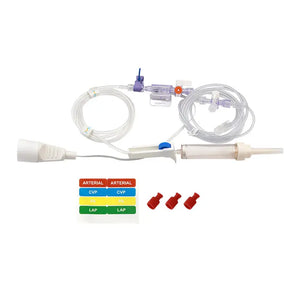
IBP Adapter Cables — Brand-specific cables connecting the disposable transducer to the monitor's IBP port. A Philips IBP cable won't work with a Mindray monitor. Compatible with Philips, Mindray, GE, Edwards, Abbott, Dräger, and more.
Pressure Infusion Bags — Pressurize the flush-solution bag (typically to 300 mmHg) to maintain continuous slow flush through the arterial line, helping prevent clotting. See our pressure infusion bag guide.
⚠️ Infection Control Critical: IBP transducer kits are strictly single-use — never reprocess or reuse. Per common clinical practice, arterial catheter dwell time should not exceed 96 hours, and heparinized saline flush bags are changed per protocol (commonly every 24 hours). Always follow your facility's policy.
Browse MedLinket IBP cables and transducers → All IBP Products
6. EtCO2 Monitoring Accessories
EtCO2 (end-tidal CO2) monitoring measures carbon dioxide concentration at the end of exhalation to assess ventilation status. Normal EtCO2 is 35–45 mmHg. For a full clinical overview, see our What is EtCO2 and Why is It Monitored? guide.
EtCO2 is increasingly recognized as an important ventilation parameter; it is required for anesthetized patients under US ASA guidelines (since 1998) and is included in China's 2017 and 2023 clinical anesthesia monitoring guidelines as a baseline parameter.
Mainstream vs. Sidestream vs. Microstream
Understanding the difference is critical for selecting the correct accessories:
| Type | How It Works | Best For | Key Accessories |
|---|---|---|---|
| Mainstream | Sensor sits directly on the airway | Intubated patients; real-time, no delay | Airway adapter, sensor head |
| Sidestream | Pump draws gas sample via tubing to remote sensor | All patients; 2–5 second delay | Sampling lines, water traps |
| Microstream | Low-flow sidestream with inline drying | All patients; reduced moisture issues | Sampling lines with integrated drying |
Accessory Components
EtCO2 Sampling Lines — For sidestream/microstream monitors, these disposable tubes draw exhaled gas from the patient to the sensor module. MedLinket offers multiple configurations: T-type (intubated), L-type, nasal cannula style (non-intubated), oral-nasal, and combined O2/CO2 cannulas. Sampling lines are available with or without an integrated drying tube (Dryer); the dryer versions are designed for longer use intervals, helping manage moisture before it reaches the CO2 sensor.
Water Traps — For sidestream systems without inline drying, water traps prevent moisture from reaching the CO2 sensor. MedLinket offers compatible water traps for Philips M1657B and GE D-fend Pro systems, as well as GE M1182629 variants.
⚠️ Compatibility Warning: Water traps for different module generations can use physically different interfaces and may not be interchangeable despite looking similar. Always verify the specific module version before ordering replacement water traps.
Browse MedLinket EtCO2 accessories → All EtCO2 Products
Compatibility: The #1 Factor When Choosing Accessories
The most common — and most costly — mistake in patient monitor accessory purchasing is ordering the wrong connector or protocol. After two decades of handling compatibility questions from hospitals worldwide, MedLinket has identified three dimensions you must verify before ordering any accessory:
| Compatibility Dimension | What to Check | Common Pitfall |
|---|---|---|
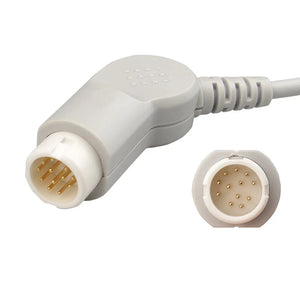
| Physical Connector | Pin count, connector shape, locking mechanism | A 12-pin round connector from one brand can look similar to another brand's 12-pin connector but NOT be interchangeable |
| Signal Protocol | Technology type (e.g., Masimo SET vs. Nellcor OxiMax for SpO2) | Two SpO2 sensors may physically fit the same port but produce inaccurate readings if the technology doesn't match |
| Patient Population | Adult, pediatric, infant, neonate sizing | An adult SpO2 sensor on a neonate can cause pressure injury and produce inaccurate readings |
💡 Real-World Example from MedLinket Tech Support: A hospital reported that one GE monitor model produced erratic SpO2 readings with sensors that worked perfectly on a different GE model, even though the physical connector looked identical. The issue was that the two models used different SpO2 technology modules — the same connector doesn't mean the same technology. Always confirm monitor model AND module type, not just brand.
For a complete guide on identifying what accessories your specific monitor requires, see: How to Identify Which Cables Your Monitor Needs.
How to Identify Which Accessories Your Monitor Needs
There are three reliable methods to identify the correct accessories for your monitor:
Method 1: By Monitor Brand and Model — The most reliable approach. Identify your monitor brand (Philips, GE, Mindray, etc.) and exact model number (e.g., IntelliVue MX800, CARESCAPE B650, BeneView T8). Then match to a verified compatibility list.
Method 2: By Existing Accessory OEM Number — Find the OEM part number on your current cable or sensor (usually printed on the connector or label). Search for compatible replacements using that number.
Method 3: By Connector Photo — If you can't identify the model or OEM number, photograph the connector end of your existing accessory and send it to the supplier for identification. MedLinket offers free compatibility verification — simply share your monitor brand, model number, and a photo of the existing connector at shopify@medlinket.com or WhatsApp +852 6467 3105.
For a detailed walkthrough with photos, see: How to Identify Which Cables Your Monitor Needs.
OEM vs Compatible: Making the Right Choice
One of the most frequent questions we receive from procurement managers is whether to purchase original equipment manufacturer (OEM) accessories or certified compatible alternatives. The short answer: for many clinical applications, quality compatible accessories from a certified manufacturer can deliver equivalent performance at a meaningfully lower cost.
We've written a detailed comparison covering cost analysis, clinical considerations, regulatory compliance, and when each option is appropriate: OEM vs Compatible Patient Monitor Accessories: What to Know.
When to Replace Your Accessories
Proactive replacement is usually cheaper than reactive replacement. A failed SpO2 sensor at 2 AM means a nurse scrambling to find a replacement, potentially missing critical desaturation events, and an emergency order at premium pricing.
We've created a complete replacement schedule with specific timelines and warning signs for every accessory type: Accessory Replacement Schedule: When to Change.
For troubleshooting monitors that show no readings at all, see: Patient Monitor Shows No Reading: Troubleshooting Checklist.
Why 2,000+ Hospitals Trust MedLinket for Patient Monitor Accessories
Since 2004, MedLinket (Shenzhen Med-Link Electronics Tech Co., Ltd. · Stock Code: 833505) has been a dedicated manufacturer of patient monitoring accessories spanning all six parameter categories covered in this guide. We offer a broad range of brand compatibility — covering major monitor brands including Philips, GE Healthcare, Mindray, Dräger, Masimo, Nellcor, Nihon Kohden, and more.
| Capability | Details |
|---|---|
| Manufacturing | Dual-factory base (Shenzhen + Shaoguan). Full closed-loop: R&D → mold making → cable extrusion → clean-room assembly → inspection → delivery |
| Certifications | ISO 13485:2016, MDSAP, ISO 9001:2015. Product certifications include FDA 510(k), CE, NMPA, CMDCAS (Canada), ANVISA (Brazil), and Japan FMA. (Counts vary by category; see our team for current scope.) |
| Intellectual Property | Multiple patents, including utility-model, invention, and design patents, plus software copyrights. Core eccentric-electrode structural patent CN202120112524.5. |
| Global Reach | Exported to 117+ countries and regions across six continents; 14 countries/regions with annual sales exceeding $1M. 2,000+ hospital end-customers. |
| Risk Protection | Product liability insurance with coverage up to $5 million, extendable to distributors as "additional insured." 1-hour remote support response, 2-day repair turnaround, and annual on-site inspection (per service terms). |
Ready to find the right accessories for your monitors? Contact us at shopify@medlinket.com or WhatsApp +852 6467 3105 for free compatibility verification and pricing. Sample orders available.
Frequently Asked Questions
What accessories does a patient monitor need?
A patient monitor requires different accessories for each parameter: SpO2 sensors and cables for oxygen saturation, ECG trunk cables, leadwires, and electrodes for heart monitoring, NIBP cuffs and hoses for blood pressure, temperature probes, and optionally IBP transducers and EtCO2 sampling lines for advanced monitoring. Each must be compatible with your specific monitor brand and model.
Do I need different accessories for different patient monitor brands?
Yes. Accessories are brand- and often model-specific due to different connector types, pin configurations, and signal protocols. A Philips-compatible SpO2 sensor won't work in a GE or Mindray monitor. Always verify compatibility before purchasing — see our cable identification guide.
How often should patient monitor accessories be replaced?
Replacement intervals vary by accessory type: disposable items (electrodes, single-use sensors, IBP transducers) after each patient; leadwires every 6–12 months; reusable sensors and cuffs every 12–18 months; trunk cables and hoses every 2–3 years. For a complete schedule with warning signs, see our accessory replacement schedule.
Will using compatible (non-OEM) accessories void my monitor's warranty?
In many jurisdictions, consumer-protection laws limit a manufacturer's ability to void a warranty solely for using third-party compatible accessories, but the specifics depend on your country and your equipment agreement. Review your warranty terms and local regulations, and consult the manufacturer or your legal/procurement team if unsure. For a detailed discussion, see our OEM vs compatible accessories guide.
How can I tell if an accessory problem is causing my monitor alarm?
Follow this principle: always assess the patient first, then check the equipment. If the patient appears clinically stable, check the accessory: is the sensor/electrode properly attached? Is the cable securely connected? Is the accessory within its expected lifespan? A good pleth waveform (SpO2) or clean ECG trace with consistent readings suggests a true clinical finding; a poor waveform with erratic readings suggests an accessory issue. For detailed alarm troubleshooting, see our false alarm prevention guide.
Where can I find compatible accessories for my monitor?
MedLinket offers compatible patient monitor accessories for major brands including Philips, GE, Mindray, Dräger, Masimo, Nellcor, Nihon Kohden, Comen, Biolight, and Edan. Browse by brand at med-linket-corp.com/collections/brand or contact us for free compatibility verification at shopify@medlinket.com.
Related Articles in This Series
This article is part of the Hospital Monitor Reading & Accessories Guide. Explore related topics:
Parameter Basics:
- What is SpO2 and What is a Normal SpO2 Level?
- What is a Normal Heart Rate on a Hospital Monitor?
- What Do ECG Numbers Mean on a Hospital Monitor?
- Understanding NIBP Readings: Systolic, Diastolic, MAP
- What is EtCO2 and Why is It Monitored?
Troubleshooting & Alarms:
- False Alarms on Patient Monitors: Causes and Prevention
- ECG Leads Off Alarm: How to Fix
- Blood Pressure Alarm on Monitor: Troubleshooting Guide
- Patient Monitor Shows No Reading: Troubleshooting Checklist
- Monitor Display Problems: Blank, Flickering, Frozen
- Patient Monitor Not Turning On: What to Check
- When to Call Biomed vs Troubleshoot Yourself
Accessories & Purchasing:
- How to Identify Which Cables Your Monitor Needs
- OEM vs Compatible Accessories: What to Know
- Accessory Replacement Schedule: When to Change
Disclaimer: This guide is intended for educational and informational purposes for healthcare professionals and clinical engineering staff. It does not constitute medical advice. Always follow your facility's policies and manufacturer guidelines for patient monitoring equipment. For clinical decisions, consult with qualified healthcare providers.
© 2026 MedLinket (Shenzhen Med-Link Electronics Tech Co., Ltd.) · Stock Code: 833505 · ISO 13485:2016 · FDA 510(k) Cleared · CE Marked
Declaration: All third-party brand names and model/OEM numbers (e.g., Philips, GE Healthcare, Mindray, Dräger, Masimo, Nellcor, Nihon Kohden, Edan, Edwards, Atom, and associated part numbers) are used for identification and compatibility-reference purposes only and do not imply any affiliation, partnership, or endorsement. MedLinket products are independently verified compatible alternatives. Product images and actual objects may differ slightly in appearance (e.g., connector design, color) but function the same.