What is EtCO₂ and Why is It Monitored? Normal Ranges & Clinical Guide
By the MedLinket Clinical Education Team · Updated February 2026 · 10 min read
Quick Answer: EtCO₂ (end-tidal carbon dioxide) measures the concentration of CO₂ in exhaled breath at the end of expiration. Normal EtCO₂ is 35–45 mmHg. Clinicians monitor EtCO₂ to assess ventilation in real time, confirm endotracheal tube placement, evaluate CPR quality, and detect respiratory depression early — often before SpO₂ shows any change.
Walk into any ICU, operating room, or post-anesthesia care unit and you'll likely see a number on the patient monitor labeled "EtCO₂" beside a slowly scrolling waveform. For nurses new to critical care, this parameter can feel less familiar than heart rate or oxygen saturation — yet experienced clinicians often call EtCO₂ the most underappreciated vital sign on the screen.
This guide explains what EtCO₂ is, what the numbers and waveform tell you, when it's used, and what accessories keep it running accurately. It's part of our Hospital Monitor Reading & Accessories Guide series.
What Does EtCO₂ Mean?
EtCO₂ stands for end-tidal carbon dioxide — the partial pressure of CO₂ measured at the very end of an exhaled breath. Because the last portion of exhaled gas comes directly from the alveoli, EtCO₂ closely reflects how well the lungs are eliminating CO₂, making it a real-time window into ventilation, perfusion, and metabolism.
The technology behind it is called capnography. A capnography device displays both a numerical EtCO₂ value (capnometry) and a graphical waveform (capnogram). The number tells you how much CO₂ is present; the waveform shape tells you how ventilation is occurring.
Put simply: pulse oximetry tells you about oxygenation — is enough oxygen reaching the blood? EtCO₂ tells you about ventilation — is the patient actually moving air in and out effectively? These are two distinct processes, and monitoring both gives a far more complete respiratory picture. For a detailed comparison of oxygenation parameters, see our guide on understanding SaO₂, PaO₂, and the PaO₂/FiO₂ ratio.
Normal EtCO₂ Values and What They Mean
A healthy patient with normal lung function produces an EtCO₂ of 35–45 mmHg (approximately 4.6–5.9 vol%), consistent regardless of age, sex, or body size. The table below breaks down the key clinical ranges:
| Clinical Situation | EtCO₂ Range | Interpretation |
|---|---|---|
| Normal ventilation | 35–45 mmHg | Adequate gas exchange |
| Hyperventilation | <35 mmHg | CO₂ "blown off" too fast — anxiety, pain, metabolic acidosis |
| Hypoventilation | >45 mmHg | CO₂ building up — sedation, opioid depression, airway obstruction |
| Effective CPR | 10–20 mmHg | Confirms cardiac output generated by compressions |
| Poor CPR / prolonged arrest | <10 mmHg | Compressions may be inadequate, or patient cannot be resuscitated |
| ROSC indicator | Sudden rise >40 mmHg | Return of spontaneous circulation — check for a pulse immediately |
EtCO₂ vs SpO₂: Why You Need Both
Many clinicians wonder why EtCO₂ monitoring matters when the patient already has SpO₂ on the screen. The short answer: they measure different things and catch different problems.
| Feature | SpO₂ (Pulse Oximetry) | EtCO₂ (Capnography) |
|---|---|---|
| Measures | Oxygenation | Ventilation |
| Detection speed | Lags — may delay 30–60 sec, especially on supplemental O₂ | Real-time — changes visible within a single breath |
| Detects apnea? | Delayed — oxygen reserves mask the event | Immediate — waveform disappears at the first missed breath |
| Sensor type | SpO₂ sensors (finger clip, adhesive wrap) | CO₂ sensor + sampling line or airway adapter |
A practical scenario many ICU nurses describe: a post-operative patient on supplemental oxygen via nasal cannula slowly develops opioid-induced respiratory depression. SpO₂ reads 98% because the supplemental oxygen keeps saturations high. Meanwhile, EtCO₂ has climbed from 40 to 55 mmHg and the waveform shows progressively slower breaths. Without capnography, the first sign of trouble might not appear until SpO₂ finally drops — by which point the patient may already be in significant distress.
This is exactly why the American Society of Anesthesiologists (ASA) and China's 2017 & 2023 Clinical Anesthesia Monitoring Guidelines make EtCO₂ monitoring a required standard for patients under general anesthesia or deep sedation. If your monitor triggers a false alarm or an unexpected alarm, understanding the capnography waveform helps you quickly tell a real respiratory event from an equipment issue.
When Is EtCO₂ Monitoring Used?
End-tidal CO₂ monitoring applies across a broad range of clinical settings. Below are the most common use cases and the rationale for each.
1. Confirming Endotracheal Tube Placement
Capnography is widely regarded as the gold standard for verifying that an endotracheal tube is in the trachea, not the esophagus. A normal rectangular waveform with consistent EtCO₂ confirms correct placement; an absent or rapidly diminishing waveform signals esophageal intubation — a critical finding that demands immediate action.
2. CPR Quality Assessment
During CPR, EtCO₂ reflects how effectively chest compressions generate cardiac output. An EtCO₂ above 10 mmHg suggests adequate compressions; if it drops below 10 mmHg, the compressor may be fatigued and need replacing. A sudden spike above 40 mmHg often signals return of spontaneous circulation (ROSC) — sometimes before a pulse is palpable.
3. Procedural Sedation Monitoring
Patients sedated for endoscopy, pain procedures, or emergency interventions are at risk of respiratory depression. EtCO₂ detects hypoventilation and apnea in real time — a safety net that pulse oximetry alone cannot offer.
4. Ventilation Management in Intubated Patients
In the ICU and OR, continuous EtCO₂ helps titrate ventilator settings, detect circuit disconnections, and identify conditions like bronchospasm or circuit leaks immediately. For patients with elevated intracranial pressure, maintaining a specific PaCO₂ target (guided by EtCO₂ trends) is a key neuroprotective strategy.
5. Post-Anesthesia Recovery (PACU)
After surgery, patients emerging from general anesthesia are vulnerable to airway obstruction, residual neuromuscular blockade, and opioid-induced respiratory depression. EtCO₂ monitoring in the PACU catches these complications early. For a broader overview of what each vital sign means during recovery, see our Hospital Monitor Reading & Accessories Guide.
Understanding the EtCO₂ Waveform (Capnogram)
The waveform is as important as the number. A normal capnogram has a characteristic rectangular shape with four distinct phases:
- Phase I (Inspiratory Baseline): CO₂ near zero — dead-space gas from the airway.
- Phase II (Expiratory Upstroke): rapid rise as alveolar gas reaches the sensor.
- Phase III (Alveolar Plateau): CO₂ levels off; the peak at the end of this plateau is the EtCO₂ value shown on the monitor.
- Phase 0 (Inspiratory Downstroke): sharp drop as fresh gas is inhaled.
When the waveform shape changes, it tells you something specific is happening:
| Waveform Pattern | Appearance | Possible Cause |
|---|---|---|
| "Shark fin" shape | Slanted upstroke, no clear plateau | Bronchospasm, COPD, asthma |
| Elevated baseline | CO₂ does not return to zero | CO₂ rebreathing, exhausted CO₂ absorber, or contaminated sensor |
| Absent waveform | Flat line | Esophageal intubation, apnea, disconnection, or equipment failure |
| Curare cleft | Notch in the plateau | Patient attempting a spontaneous breath during mechanical ventilation |
| Gradually rising EtCO₂ | Normal shape but values climb over time | Hypoventilation, increased metabolism, fever, or malignant hyperthermia |
Mainstream vs Sidestream Capnography: Which Does Your Unit Use?
Capnography devices come in two main configurations, and the choice affects which accessories you need to stock.
| Feature | Mainstream | Sidestream / Microstream |
|---|---|---|
| Sensor location | Directly at the airway (between ET tube and circuit) | Inside the monitor; gas drawn via sampling line |
| Response time | Real-time, no delay | 2–5 second delay (transit time through tubing) |
| Patient types | Intubated patients only | Both intubated and non-intubated (via nasal cannula) |
| Sample rate | N/A — sensor is in-line | 50–200 mL/min (microstream as low as 50–60 mL/min) |
| Moisture management | Not an issue (no sampling line) | Requires a water trap or inline drying tube |
| Key accessories | Airway adapter, EtCO₂ sensor | Sampling lines, water traps, nasal cannula adapters |
Sidestream and microstream systems are by far the most common across hospital settings because they work with both intubated and spontaneously breathing patients. However, they require regular replacement of disposable sampling lines and water traps to prevent moisture-related occlusion and maintain accuracy. When moisture blocks the sampling line, the waveform degrades and false alarms become more frequent.
EtCO₂ Monitoring Equipment and Accessories
Reliable EtCO₂ monitoring depends on properly functioning accessories. Here is what a typical sidestream/microstream setup requires:
| Accessory | Function | Replacement Frequency |
|---|---|---|
| Sampling line (nasal/oral cannula) | Delivers exhaled gas from patient to sensor | Every 24 hours (single-use) |
| Water trap | Removes moisture before gas reaches the sensor | Per manufacturer spec (typically 24–72 hours) |
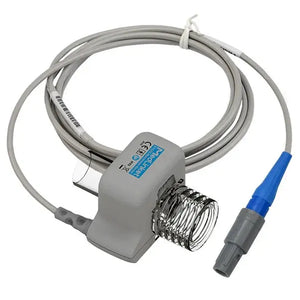
| EtCO₂ sensor / module | Infrared CO₂ detection | Durable — based on manufacturer lifecycle |
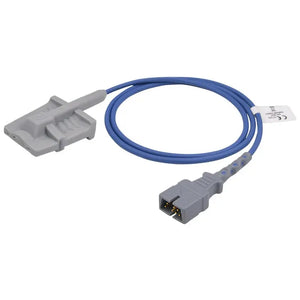
| Adapter cable | Connects sensor/module to patient monitor | 2–3 years with proper care |
For a complete overview of all accessories across every monitored parameter — SpO₂ sensors, ECG cables, NIBP cuffs, temperature probes, and more — see our Patient Monitor Accessories: Complete Guide by Parameter Type. If you're unsure which cable or connector fits your monitor, our cable identification guide can help.
Water Trap vs Disposable Sampling Line: A Cost Comparison
Traditional reusable water traps require daily draining, cleaning, and sterilization — a recurring cost once you factor in staff time and sterilization consumables, and reprocessing of respiratory accessories must follow your facility's CSSD (Central Sterile Supply Department) policy. By comparison, modern single-use disposable sampling lines with an integrated drying tube can remove the need for a separate water trap, lower infection-control risk, and reduce nursing workload. To evaluate the total cost difference for your facility, we offer a 14-day trial program — contact us at shopify@medlinket.com for details.
Water Trap Compatibility Reference
Different monitor brands use different water trap designs. Philips G1/G5 modules and the newer G7m module, for example, have physically different connectors and cannot be interchanged. Always verify compatibility by monitor brand and module type before ordering. MedLinket offers compatible water traps for major brands including:
- Philips-compatible water traps (M1657B replacement)
- GE Healthcare–compatible D-Fend Pro water traps (M1200227 replacement)
- GE Healthcare–compatible D-Fend Pro water traps (M1182629 replacement)
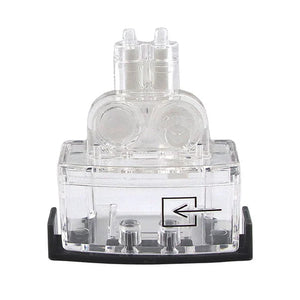
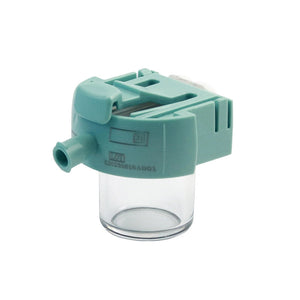
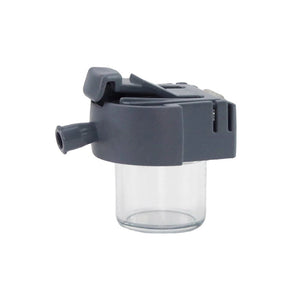
💡 Water traps are brand- and module-specific — Philips G-series and GE D-Fend Pro use physically different connectors and are not interchangeable. Confirm your monitor's gas module and OEM part number before ordering. Prices follow each listing's pack size (Philips per unit; GE per box of 25).
Need help identifying the right accessories? See our guide on OEM vs Compatible Accessories, or check our accessory replacement schedule for recommended change intervals across all parameter types.
Troubleshooting Common EtCO₂ Problems
When the EtCO₂ reading suddenly drops, disappears, or shows an abnormal waveform, use this quick-reference approach:
| Problem | Likely Cause | Solution |
|---|---|---|
| No waveform / reading shows "---" | Sampling line disconnected, kinked, or blocked by moisture | Check connections; replace sampling line if occluded |
| Waveform present but EtCO₂ value is zero | Sampling line on wrong port or water trap saturated | Verify port connection; replace water trap |
| Erratic or noisy waveform | Leak in sampling line, or patient mouth-breathing around a nasal cannula | Check for leaks; consider an oral-nasal sampling cannula |
| Gradually decreasing EtCO₂ | Hyperventilation, decreasing cardiac output, or hypothermia | Assess the patient clinically; check ventilator settings |
| "Check adapter" or sensor error | Sensor malfunction or cable issue | Reconnect; try a known-good sensor. If it persists, call Biomed |
For a systematic approach to any parameter showing no reading, see our Patient Monitor No Reading Troubleshooting Checklist. If the issue is the monitor display itself, our guides on display problems and a monitor not turning on can help.
Why MedLinket for EtCO₂ Accessories?
MedLinket (Shenzhen Med-Link Electronics Tech Co., Ltd.) has been manufacturing patient monitoring accessories since 2004 — over two decades of experience supplying hospitals in 117+ countries and regions. Our EtCO₂ line includes disposable sampling lines, water traps, EtCO₂ sensors, and adapter cables compatible with major brands including Philips, GE Healthcare, Mindray, and Dräger.
Quality credentials that matter for procurement decisions:
- FDA 510(k) cleared products (verify current listings at the FDA CDRH database)
- CE marked under the EU medical device framework
- ISO 13485:2016 certified quality management system, plus MDSAP and ISO 9001:2015
- Thousands of molds and product variants across the company's own factories (Shenzhen and Shaoguan)
- Product liability insurance with coverage up to $5 million USD — individual certificates available for distributors
All products undergo 100% factory testing before shipment, and our facilities have passed on-site audits from NMPA, ANVISA (Brazil), and major OEMs including Mindray and Philips.
Frequently Asked Questions
What does low EtCO₂ mean?
Low EtCO₂ (below 35 mmHg) indicates hyperventilation — the patient is exhaling CO₂ faster than the body produces it. Common causes include anxiety, pain, metabolic acidosis compensation, or excessive mechanical ventilation. During CPR, persistently low EtCO₂ (below 10 mmHg) may indicate ineffective chest compressions or prolonged cardiac arrest.
What does high EtCO₂ mean?
High EtCO₂ (above 45 mmHg) indicates hypoventilation — CO₂ is building up because the patient isn't ventilating adequately. Common causes include opioid-induced respiratory depression, airway obstruction, COPD exacerbation, or a ventilator set too low. A gradually climbing EtCO₂ with rising body temperature may be an early warning sign of malignant hyperthermia.
Is EtCO₂ the same as PaCO₂?
No. EtCO₂ is a non-invasive estimate of PaCO₂ (arterial carbon dioxide). In healthy lungs the gradient is only 2–5 mmHg; in significant V/Q mismatch (such as COPD or PE), the gap widens considerably.
Why is EtCO₂ monitored during CPR?
During CPR, EtCO₂ reflects how effectively chest compressions generate cardiac output. An EtCO₂ above 10 mmHg suggests adequate compressions; a sudden spike above 40 mmHg often signals ROSC — sometimes before a pulse is palpable. EtCO₂ below 10 mmHg after prolonged resuscitation may indicate a poor prognosis.
What accessories are needed for EtCO₂ monitoring?
A typical sidestream setup requires disposable sampling lines (replaced every 24 hours), water traps (every 24–72 hours), an EtCO₂ sensor/module, and an adapter cable. For help selecting parts for your monitor, see our accessories guide by parameter type.
Related Articles in This Series
This article is part of the Hospital Monitor Reading & Accessories Guide. Explore related topics:
- What is SpO₂ and What is a Normal SpO₂ Level?
- What is a Normal Heart Rate on a Hospital Monitor?
- What Do ECG Numbers Mean on a Hospital Monitor?
- Understanding NIBP Readings: Systolic, Diastolic, MAP
- Temperature Monitoring: Core vs Peripheral
- Patient Monitor Accessories: Complete Guide by Parameter Type
Medical Disclaimer: This article is intended for educational purposes for healthcare professionals and clinical staff. It does not constitute medical advice. Always follow your facility's protocols and consult qualified medical professionals for patient care decisions.
Need EtCO₂ accessories for your facility? Contact MedLinket for compatibility verification and pricing: shopify@medlinket.com · WhatsApp +852 6467 3105