Written by the MedLinket Clinical Engineering Team · Founded 2004 · ISO 13485 & FDA 510(k) Certified Manufacturer · Stock Code: 833505 · Last updated: February 2026 · Estimated reading time: 12 minutes
⚡ Quick Answer: Quality compatible (third-party) patient monitor accessories that carry FDA 510(k), CE, and ISO 13485 certifications are clinically safe, functionally equivalent to OEM originals, and typically cost 40–70% less. Using certified compatible accessories does not void your monitor's warranty under US law (Magnuson-Moss Warranty Act). The key differentiator is not "OEM vs. compatible" — it's "certified vs. uncertified." A properly certified compatible accessory manufactured under ISO 13485 quality systems is a legitimate, widely used alternative in hospitals worldwide.
🔑 Key Takeaways
- OEM accessories are designed by the monitor manufacturer; compatible accessories are made by third-party manufacturers to match OEM specifications and connector compatibility.
- The safety question isn't "OEM or not?" — it's "what certifications and quality systems does the manufacturer have?"
- Under US law (Magnuson-Moss Warranty Act), a manufacturer cannot void your monitor warranty simply for using third-party accessories. They must prove the accessory caused the damage.
- Certified compatible accessories save 40–70% on accessory budgets. For a 200-bed hospital, this can mean $60,000–$100,000+ saved annually.
- Not all compatible manufacturers are equal. Our 10-point due diligence checklist separates quality suppliers from uncertified risks.
If you manage patient monitor accessories for a hospital, clinic, or distributor, you've faced this question: should we buy from the original equipment manufacturer (OEM), or switch to a compatible alternative from a third-party manufacturer? It's a decision with real financial and clinical consequences.
OEM manufacturers naturally argue that only their accessories guarantee safety and performance. Third-party manufacturers argue their products meet the same standards at a fraction of the cost. The truth, as with most things in healthcare procurement, requires nuance.
This guide provides an honest, evidence-based comparison — written by MedLinket (yes, a compatible accessories manufacturer, and we'll be transparent about that perspective) — so you can make informed decisions for your facility.
📚 This article is part of our Hospital Monitor Reading & Accessories Guide. For a complete overview of all accessory types, see Patient Monitor Accessories: Complete Guide by Parameter Type. For help identifying the right cables for your monitors, see How to Identify Which Cables Your Monitor Needs.
📖 In This Guide
- Defining the Terms: OEM vs. Compatible vs. Generic
- Head-to-Head Comparison
- The Safety Question
- The Warranty Question
- The Cost Question: Real Savings by Accessory Type
- When OEM Is the Right Choice
- When Compatible Is the Smart Choice
- The 10-Point Supplier Due Diligence Checklist
- Practical Transition: Moving from OEM to Compatible
- Frequently Asked Questions
First: Defining the Terms
Before comparing, let's clarify what we're actually talking about. These terms are often used loosely in the industry, but they mean different things — and the distinction matters for both safety and purchasing decisions.
| Term | Definition | Example |
|---|---|---|
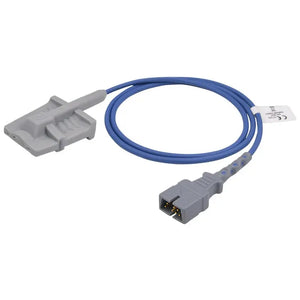
| OEM Accessory | Made or authorized by the monitor manufacturer. Sold under the monitor brand's name and part number. | A Philips-branded SpO2 sensor sold by Philips for IntelliVue monitors |
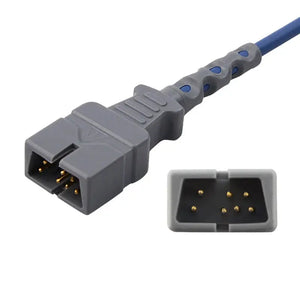
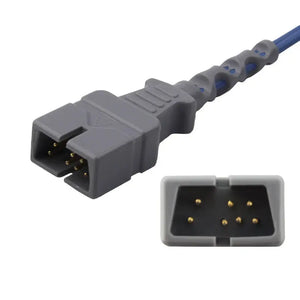
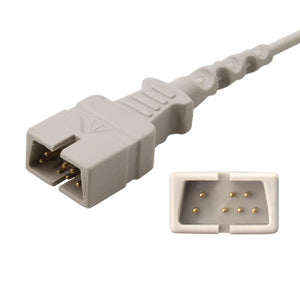
| Compatible / Equivalent Accessory | Made by a third-party manufacturer, designed to match OEM specifications and connector compatibility. Sold under the third party's own brand. Carries independent regulatory clearances. | A MedLinket SpO2 sensor compatible with Philips IntelliVue monitors |
| Generic / Unbranded | Made by unknown manufacturers, often without traceable regulatory clearances, quality systems, or product liability insurance. Sold primarily on price. | Unbranded cables from unverified online marketplaces |
⚠️ Critical Distinction: This article compares OEM vs. quality compatible accessories — not OEM vs. unbranded generics. Unbranded accessories without verifiable certifications are a genuine safety risk and can contribute to false alarms, no-reading failures, and potentially hazardous inaccurate readings. The compatible accessories category includes established medical device manufacturers with their own R&D, quality systems, regulatory clearances, and insurance.
Head-to-Head Comparison: OEM vs. Compatible
| Factor | OEM | Quality Compatible |
|---|---|---|
| Safety & Performance | Designed and tested as part of the integrated system. Access to proprietary data. | Designed to match OEM specs. Independently tested under same ISO/FDA/CE standards. Verified pin-for-pin and protocol compatibility. |
| Regulatory Status | Cleared as part of the monitor system's regulatory submission (510(k), CE). | Holds independent 510(k) clearance and CE marking. Manufactured under ISO 13485. |
| Price | Full retail. Includes brand premium and exclusive distribution markup. | Typically 40–70% less than OEM pricing. |
| Warranty on the Accessory | Covered under OEM accessory warranty (typically 90 days–1 year). | Covered under the compatible manufacturer's own warranty. MedLinket: 12 months standard. |
| Effect on Monitor Warranty | No effect (same brand). | Cannot void warranty under US Magnuson-Moss Act unless accessory directly caused damage. |
| Availability | OEM supply chains can have longer lead times (weeks to months), particularly for older/discontinued models. | Compatible manufacturers often stock faster. MedLinket: 3–7 day delivery for stocked items. |
| Product Range | Covers only their own monitor brand. | Covers multiple brands from a single supplier. MedLinket: 30+ brands, 16,651+ variants. |
| Technical Support | OEM support teams with proprietary diagnostic tools. | Varies by manufacturer. Top-tier compatibles offer dedicated engineering support and free compatibility verification. |
| Product Liability Insurance | Covered under OEM's corporate insurance. | Varies. MedLinket: $5M product liability, extendable to distributors as "additional insured." |
The Safety Question: Are Compatible Accessories Safe?
This is the central concern — and it deserves a thorough answer.
OEM manufacturers (understandably) argue that their accessories undergo testing as part of an integrated system, and that third parties lack access to proprietary design data. This is a legitimate point — for a specific subset of accessories. SpO2 sensors, in particular, involve complex signal processing algorithms where protocol compatibility is critical (Masimo SET vs. Nellcor OxiMax vs. proprietary — learn more in our Masimo compatibility guide and SpO2 technology explained).
However, the argument is much weaker for simpler accessories like ECG cables, ECG leadwires, NIBP cuffs, NIBP hoses, and temperature probes, which are primarily passive electrical conductors or mechanical components. There is no proprietary algorithm in an NIBP hose.

The regulatory framework provides the objective safety floor:
| Certification | What It Means |
|---|---|
| FDA 510(k) Clearance | The FDA has reviewed the product and confirmed it is "substantially equivalent" to a legally marketed predicate device in safety and effectiveness. |
| CE Mark (MDR 2017/745) | The product meets EU Medical Device Regulation requirements. Involves conformity assessment by a Notified Body for Class II devices. |
| ISO 13485:2016 | The manufacturer operates under a quality management system specifically designed for medical devices, with documented processes for design control, risk management, and traceability. |
| MDSAP | Medical Device Single Audit Program — a single audit accepted by the US (FDA), Canada, Australia, Japan, and Brazil. The most rigorous multi-market quality audit available. |
A compatible accessory holding these certifications has been independently verified to meet safety standards equivalent to those applied to OEM products. The regulatory pathway is the same; the manufacturer is simply different.
💡 The Practical Reality: Compatible patient monitor accessories are already used in the majority of hospitals worldwide. The practice is well-established, clinically validated, and accepted by accreditation bodies including The Joint Commission and CMS. The question has shifted from "should we use compatibles?" to "which compatible manufacturer meets our quality and risk standards?"
An important related consideration: accessory quality directly impacts false alarm rates. Studies show 85–99% of hospital monitor alarms are false or clinically insignificant, and poor-quality cables, sensors, and electrodes are a leading cause. A quality compatible accessory from a certified manufacturer may actually reduce false alarms compared to worn-out OEM accessories that have exceeded their recommended replacement schedule.
The Warranty Question: Will Compatible Accessories Void My Monitor Warranty?
This is the second most common concern — and one that OEM sales representatives sometimes use as a deterrent. Here's the legal and practical reality.
US Legal Framework
The Magnuson-Moss Warranty Act (15 U.S.C. § 2301 et seq.) is a federal law enacted in 1975 that explicitly prohibits manufacturers from conditioning warranties on the use of branded parts or services. The Act states that warranties "cannot be conditioned on the consumer's use of any article or service identified by brand, trade, or corporate name."
In practical terms: a monitor manufacturer cannot void your warranty simply because you used a third-party SpO2 sensor or ECG cable. The manufacturer must demonstrate that the specific third-party accessory directly caused the defect they are refusing to cover.
The FTC reinforced this position in 2021 by unanimously voting to ramp up enforcement against manufacturers attempting to void warranties over third-party parts.
⚠️ Important Nuance: While using certified compatible accessories cannot automatically void your warranty, using a defective or incompatible accessory that physically damages the monitor's internal port or circuitry could give the OEM legitimate grounds to deny a warranty claim for that specific damage. This is why quality and compatibility verification matter — and why we emphasize the importance of properly identifying which cables your monitor needs before ordering.
EU Framework
EU consumer protection law and the Medical Device Regulation (MDR 2017/745) do not require hospitals to use OEM-only accessories. A CE-marked compatible accessory used according to its own Instructions for Use (IFU) is fully compliant.
The Cost Question: How Much Can You Actually Save?
Based on MedLinket's pricing data across thousands of hospital procurement orders, here are representative savings by accessory type:
| Accessory Type | Typical OEM Price (USD) | Typical Compatible Price (USD) | Savings |
|---|---|---|---|
| Reusable SpO2 Sensor | $80–$250 | $25–$85 | 50–65% |
| SpO2 Adapter Cable | $80–$200 | $25–$75 | 50–65% |
| ECG Trunk Cable | $120–$350 | $35–$140 | 40–60% |
| ECG Leadwires | $40–$150 | $12–$55 | 45–65% |
| Reusable NIBP Cuff | $25–$80 | $10–$40 | 40–55% |
| Temperature Probe | $30–$120 | $12–$50 | 40–60% |
| IBP Transducer Kit | $15–$45 | $8–$28 | 35–50% |
| EtCO2 Water Trap | $15–$40 | $8–$22 | 40–55% |
💡 Annual Budget Impact: For a 200-bed hospital spending approximately $150,000 annually on OEM monitoring accessories, switching to certified compatible accessories could save $60,000–$100,000 per year. These savings can be redirected to upgrading monitors, adding monitoring capabilities (such as EtCO2 monitoring for units that currently lack it), or investing in other clinical priorities.
Many MedLinket distributor partners report that accessory cost reduction is a primary driver for their hospital clients' purchasing decisions — particularly in facilities with multi-brand monitor fleets where managing separate OEM relationships for Philips, Mindray, GE, Dräger, and Nihon Kohden accessories creates procurement complexity and higher costs.
When OEM Is the Right Choice
We're a compatible manufacturer, and we'll still tell you: there are legitimate scenarios where OEM accessories are the better choice.
| Scenario | Why OEM May Be Preferred |
|---|---|
| Monitor still under OEM warranty from a manufacturer with a history of disputing third-party claims | While legally protected under Magnuson-Moss, the administrative burden of disputing a warranty denial may outweigh the accessory cost savings during the warranty period. |
| Proprietary locked-protocol accessories | Some OEMs use encrypted communication or digital handshake protocols between the monitor and accessories. If compatible manufacturers cannot legally or technically replicate this, OEM is the only option. |
| Regulatory or institutional OEM-only policy | Some hospital systems or government purchasing contracts mandate OEM-only accessories. Compliance may override cost considerations. |
| Unable to verify compatible manufacturer's certifications | If a compatible supplier cannot provide verifiable FDA 510(k), CE, and ISO 13485 documentation, default to OEM. The risk isn't worth the savings. |
| Extremely high-risk neonatal applications at tertiary NICUs with OEM-only policies | Some Level IV NICUs maintain OEM-only policies for SpO2 sensors and temperature probes as part of internal risk management — even though certified compatibles are used safely in neonatal settings worldwide. |
When Compatible Is the Smart Choice
For the majority of hospitals and clinical settings, certified compatible accessories are the practical, cost-effective, and clinically appropriate choice — particularly in these scenarios:
| Scenario | Why Compatible Makes Sense |
|---|---|
| Multi-brand monitor fleet | Instead of managing separate OEM relationships with Philips, Mindray, GE, Dräger, etc., a single compatible supplier covers all brands from one source. |
| Monitor out of OEM warranty | No warranty risk. Compatible accessories may be the only option if the OEM has discontinued the model. |
| High-consumption accessories | ECG leadwires, disposable SpO2 sensors, NIBP cuffs, and ECG electrodes are replaced frequently. The cost difference on high-volume items is substantial. |
| Emerging markets and budget-conscious facilities | Compatible accessories allow facilities to maintain the same monitoring quality at a price point that keeps patient monitoring financially sustainable. |
| OEM accessory supply disruption | OEM supply chains can experience delays (weeks to months). A certified compatible supplier provides a reliable backup source. |
| Standardizing consumables across departments | Compatible manufacturers often offer broader size ranges (e.g., MedLinket's NIBP cuffs from 3–54 cm) and packaging options that simplify inventory. |
The 10-Point Supplier Due Diligence Checklist
Not all compatible manufacturers are created equal. Here's how to evaluate a medical cable supplier before committing to a purchase. A quality supplier should satisfy all 10 points without hesitation.
| # | Checkpoint | What to Ask For |
|---|---|---|
| 1 | ISO 13485:2016 Certification | Current certificate from an accredited body. Check expiry date. |
| 2 | FDA 510(k) Clearance | 510(k) number(s). Verify on FDA database (accessdata.fda.gov). How many clearances? |
| 3 | CE Marking (MDR) | CE certificate with Notified Body number. Which device classes are covered? |
| 4 | Product Liability Insurance | Certificate of insurance with coverage amount ($1M minimum, $5M preferred). Can they extend to list you as additional insured? |
| 5 | Own Manufacturing | Do they manufacture in-house or outsource? Own factory = better quality control. Ask for factory photos or schedule a visit. |
| 6 | Quality Inspection Process | What percentage of outgoing products are inspected? (100% is gold standard.) What tests are performed? |
| 7 | Compatibility Verification | How do they verify compatibility? Pin-for-pin testing? Signal protocol testing? Testing on actual monitors? |
| 8 | Traceability | Can they trace any accessory back to raw material lots, production date, and test results? Required by ISO 13485. |
| 9 | Customer References | Can they provide references from hospitals or distributors in your region? How many hospitals use their products? |
| 10 | Sample Availability | Will they provide free evaluation samples before purchase? A confident manufacturer welcomes testing. |
MedLinket: How We Score on the 10-Point Checklist
MedLinket (Shenzhen Med-Link Electronics Tech Co., Ltd. · Stock Code: 833505) is one of the few compatible patient monitor accessory manufacturers worldwide that satisfies all 10 evaluation points:
| Checkpoint | MedLinket Status |
|---|---|
| Quality & Regulatory | ISO 13485:2016 + MDSAP + FDA 510(k) ×19 clearances + CE MDR ×48 categories + NMPA ×33 Class II + BSCI. Passed on-site audits by Mindray, Philips, and Brazilian ANVISA. |
| Manufacturing | 3 own factories (Shenzhen HQ, Shaoguan, Indonesia). Full vertical integration: R&D → mold making (3,500+ molds) → cable extrusion → clean room assembly → 100% outgoing inspection. |
| Insurance & Risk | $5M product liability insurance, extendable to distributors as "additional insured." Patented over-temperature SpO2 auto-shutdown at 41°C. |
| Patents | 45 utility model + 8 invention + 26 design + 1 PCT international + 13 software copyrights. |
| Scale & References | 2,000+ hospitals in 120+ countries. 30+ compatible brands. 16,651+ product variants. Reference customers include Royal Victoria Hospital (UK) and Institut Hospitalier Jacques Cartier (France). Free evaluation samples. |
Practical Transition: Moving from OEM to Compatible
If your facility decides to explore compatible accessories, here's a practical phased approach that minimizes risk and maximizes stakeholder confidence.
Phase 1: Pilot Testing (Weeks 1–4)
Start with one accessory type — we recommend ECG leadwires or NIBP cuffs (simple, low-risk, high-consumption items). Request free samples from the compatible supplier. Test on 5–10 monitors across different clinical areas. Have nursing and Biomed staff evaluate fit, function, and durability. Document any issues including "Leads Off" alarm frequency and false alarm rates.
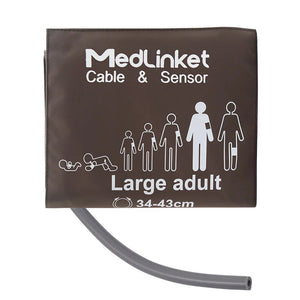
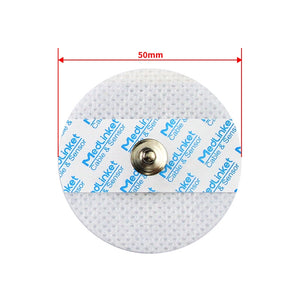
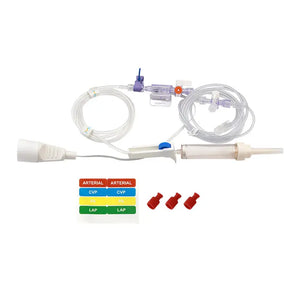
💡 About $36.70 puts three certified (FDA/CE/ISO 13485) accessories across three parameters on one test bed — low-cost, high-rotation items to validate fit, alarm behavior, and durability before a phased rollout. Request free evaluation samples first.
Phase 2: Clinical Evaluation (Weeks 5–12)
Expand to a full nursing unit. Compare compatible vs. OEM performance metrics: alarm frequency, connection reliability, durability over the evaluation period. Collect feedback from bedside nurses and BMETs. For troubleshooting reference during evaluation, share our no-reading troubleshooting guide and BP alarm troubleshooting guide with the clinical team.
Phase 3: Committee Review and Decision
Present findings to your Value Analysis Committee (VAC) or equivalent. Include: clinical performance data, cost comparison, supplier certifications, product liability coverage, and staff feedback. If approved, negotiate volume pricing and delivery terms.
Phase 4: Phased Rollout
Don't switch everything at once. Roll out by accessory type over 3–6 months. Start with the highest-volume, lowest-risk items. Build confidence before expanding to more complex accessories like SpO2 sensors and IBP transducers. Establish a replacement schedule based on the compatible manufacturer's lifespan data.
💡 Who to Involve: Successful OEM-to-compatible transitions involve four stakeholders: Nursing (clinical usability), Biomed/Clinical Engineering (technical compatibility — see when to call Biomed), Procurement (cost analysis), and Risk Management (liability review). Missing any one of these perspectives creates resistance later.
Frequently Asked Questions
Q: Do compatible (third-party) patient monitor accessories void the monitor warranty?
In most jurisdictions, no. Under the US Magnuson-Moss Warranty Act, a manufacturer cannot void a warranty simply because a third-party part was used — they must prove the accessory directly caused the defect. In the EU, similar protections apply. However, if a low-quality compatible accessory damages the monitor, the OEM could legitimately deny that specific claim. Use certified compatibles with product liability insurance for full protection.
Q: Are compatible SpO2 sensors as accurate as OEM originals?
Quality certified compatible SpO2 sensors (FDA 510(k), CE, ISO 13485) match OEM accuracy specifications — typically ±2% SpO2 in the 70–100% range. The critical factor is signal protocol compatibility: the sensor must match the monitor's SpO2 technology (Masimo, Nellcor, or proprietary). Protocol mismatch causes inaccuracy regardless of build quality. For a full explanation of what SpO2 measures and normal ranges, see our SpO2 guide.
Q: How much cheaper are compatible accessories compared to OEM?
Typically 40–70% less. Savings vary by type: SpO2 sensors 50–65%, ECG cables 40–60%, NIBP cuffs 40–55%, temperature probes 40–60%. For a 200-bed hospital, this can mean $60,000–$100,000+ saved annually.
Q: What certifications should a compatible accessory manufacturer have?
Minimum: ISO 13485, CE marking, and FDA 510(k). Stronger signals: MDSAP, product liability insurance ($5M preferred), 100% outgoing inspection, on-site factory audit records, and traceable manufacturing under documented quality systems. Use the 10-point checklist above to evaluate any supplier.
Q: When should I definitely use OEM accessories instead of compatible alternatives?
When: the monitor is under OEM warranty from a manufacturer known to dispute claims, the accessory uses a proprietary locked protocol, your institution has an OEM-only policy, you cannot verify the compatible manufacturer's certifications, or the supplier lacks product liability insurance.
Q: Can I mix OEM and compatible accessories on the same monitor?
Yes. Many hospitals use a hybrid approach: OEM for high-complexity accessories (like certain SpO2 sensors with proprietary algorithms) and compatible for high-consumption items (ECG leadwires, NIBP cuffs, ECG electrodes, temperature probes). This maximizes savings while managing risk. For help identifying which accessories your specific monitors need, see our cable identification guide.
Ready to Evaluate Compatible Accessories? Request free evaluation samples for your monitors. We'll confirm compatibility, provide certifications, and let you test before committing. Zero obligation.
📧 Email: shopify@medlinket.com · 💬 WhatsApp: +852 6467 3105
Related Articles in This Series
This article is part of the Hospital Monitor Reading & Accessories Guide. Explore related topics:
Accessories & Purchasing:
- Patient Monitor Accessories: Complete Guide by Parameter Type
- How to Identify Which Cables Your Monitor Needs
- Accessory Replacement Schedule: When to Change
Parameter Basics:
- What is SpO2 and What is a Normal SpO2 Level?
- What is a Normal Heart Rate on a Hospital Monitor?
- What Do ECG Numbers Mean on a Hospital Monitor?
- Understanding NIBP Readings: Systolic, Diastolic, MAP
- What is EtCO2 and Why is It Monitored?
Troubleshooting & Alarms:
- False Alarms on Patient Monitors: Causes and Prevention
- ECG Leads Off Alarm: How to Fix
- Blood Pressure Alarm on Monitor: Troubleshooting Guide
- Patient Monitor Shows No Reading: Troubleshooting Checklist
- Monitor Display Problems: Blank, Flickering, Frozen
- Patient Monitor Not Turning On: What to Check
- When to Call Biomed vs Troubleshoot Yourself
Disclaimer: This guide is intended for educational and informational purposes for healthcare professionals, clinical engineering staff, and medical device procurement teams. It does not constitute legal advice. For warranty disputes, consult with qualified legal counsel. For clinical decisions, consult with qualified healthcare providers. MedLinket is a compatible accessories manufacturer and has disclosed this perspective throughout this article.
© 2026 MedLinket (Shenzhen Med-Link Electronics Tech Co., Ltd.) · Stock Code: 833505 · ISO 13485:2016 · FDA 510(k) Cleared · CE Marked