Written by the MedLinket Clinical Engineering Team · Founded 2004 · ISO 13485 & FDA 510(k) Certified Manufacturer · Stock Code: 833505 · Last updated: February 2026 · Estimated reading time: 11 minutes
⚡ Quick Answer: Replace patient monitor accessories on a proactive schedule — not when they fail. ECG electrodes: every 24 hours. ECG leadwires: every 6–12 months. ECG trunk cables: every 2–3 years. Reusable SpO2 sensors: every 12 months. NIBP cuffs: every 12–18 months. NIBP hoses: every 2–3 years. Temperature probes: every 12–24 months. IBP transducers: single-use, replace after each patient. ICU and OR departments should use the shorter end of each range. Proactive replacement reduces false alarms, prevents clinical disruption, and saves 15–25% compared to emergency reactive replacement.
🔑 Key Takeaways
- Worn accessories are the #1 cause of false alarms, inaccurate readings, and unnecessary Biomed calls.
- Proactive (scheduled) replacement saves 15–25% compared to reactive (break-fix) replacement through bulk purchasing and avoided downtime costs.
- ICU/OR accessories degrade 25–40% faster than general ward accessories due to higher usage intensity and more aggressive disinfection.
- Post-COVID cleaning protocols with stronger germicides have shortened accessory lifespans by an estimated 20–30%.
- A printable replacement checklist at the end of this article can be posted at each nursing station for immediate use.
| Target Audience | Biomed, Nursing, Procurement |
| Difficulty | Beginner |
| Covers | 6 parameter categories |
| Printable Checklist | Included |
Most hospitals replace patient monitor accessories only when they visibly fail — a cracked SpO2 sensor, a fraying ECG cable, a leaking NIBP cuff. By that point, the accessory has likely been producing degraded readings for weeks or months, contributing to false alarms, clinician frustration, and potentially missed clinical changes.
Based on MedLinket's 20 years of manufacturing monitoring accessories and analyzing failure data from 2,000+ hospitals across 120+ countries, this guide provides a complete, evidence-based replacement schedule for every accessory category. It includes department-specific adjustments, visual inspection triggers, the business case for proactive replacement, and a printable checklist your team can implement immediately.
📚 This article is part of our Hospital Monitor Reading & Accessories Guide. For a complete overview of all accessory types, see Patient Monitor Accessories: Complete Guide by Parameter Type. For help identifying exact replacements, see How to Identify Which Cables Your Monitor Needs.
📖 In This Guide
- Master Replacement Schedule
- Visual Inspection Guide: What to Check Each Shift
- Factors That Shorten Accessory Lifespan
- Department-Specific Recommendations
- Proactive vs. Reactive Replacement: The Business Case
- How to Build Your Facility's Replacement Program
- Printable Quick-Reference Checklist
- Frequently Asked Questions
Master Replacement Schedule
This is the core reference table. Clip it, print it, share it with Biomed and nursing leadership. These intervals are based on manufacturer IFU recommendations, industry best practices, and MedLinket's failure analysis data across thousands of hospital installations.
| Accessory | General Ward | ICU / OR | Immediate Replace If... | MedLinket Range |
|---|---|---|---|---|
| ECG Electrodes (disposable) | Every 24h | Every 24h (or sooner if gel dries) | Edges peeling, gel dried, poor waveform quality | Eccentric electrodes |
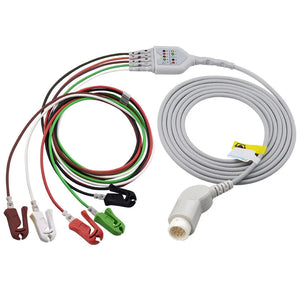
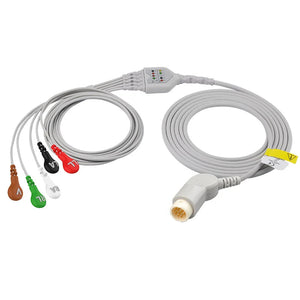
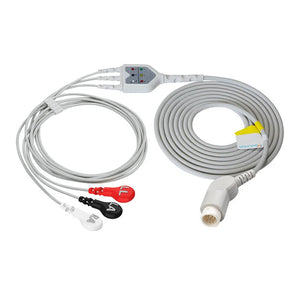
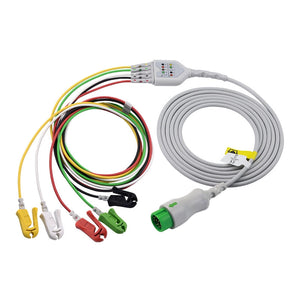
| ECG Leadwires | Every 12 months | Every 6–9 months | Corroded snaps, broken clips, persistent "Leads Off" | Mindray 5-lead · Philips 3-lead · GE 5-lead |
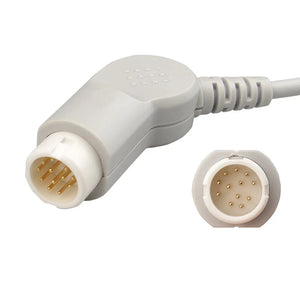
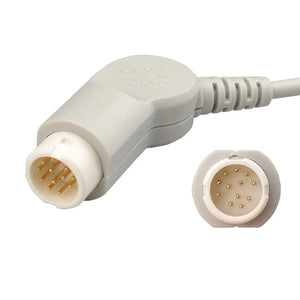
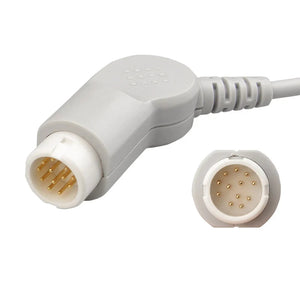
| ECG Trunk Cables | Every 2–3 years | Every 18–24 months | Intermittent signal, loose connector, fraying jacket | Mindray 3-lead · Mindray 5-lead |
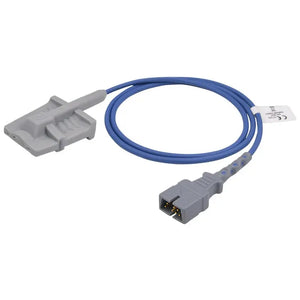
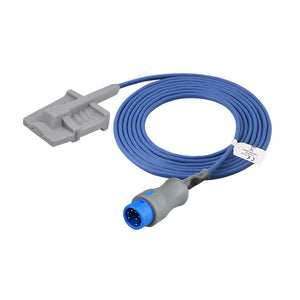
| SpO2 Sensor (reusable) | Every 12 months | Every 9–12 months | Cracked housing, dim LED, intermittent readings | Mindray adult · Biolight adult · Comen adult |
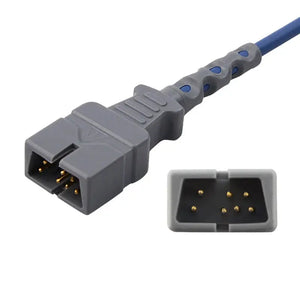
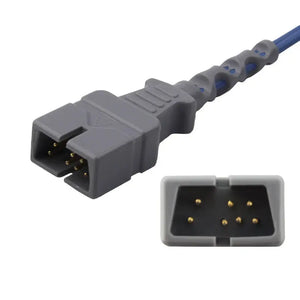
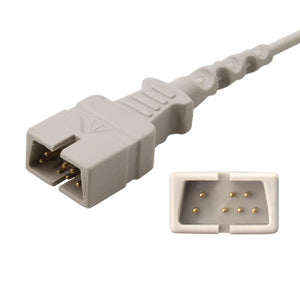
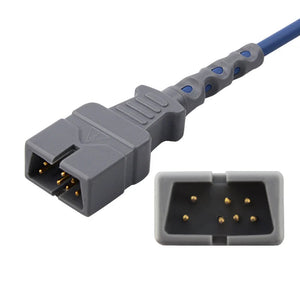
| SpO2 Adapter Cable | Every 2–3 years | Every 18–24 months | Bent pins, intermittent connection, cracked jacket | Masimo adapter |
| NIBP Cuff (reusable) | Every 12–18 months | Every 9–12 months | Air leaks, faded markings, stiff bladder, worn Velcro | Adult reusable · Adult disposable |
| NIBP Hose | Every 2–3 years | Every 18–24 months | Kinks, cracking, loose connectors on either end | Browse hoses |
| Temperature Probe (reusable) | Every 12–24 months | Every 12 months | Readings drift, slow response, visible cable damage | Dräger incubator · Disposable skin |
| IBP Transducer Kit | Single-use: replace after EACH patient | Never reuse. Replace if packaging compromised. | Disposable IBP | |
| EtCO2 Sampling Line | Every 24–72h or per infection control policy | Moisture in line, occlusion, reading drift | Sampling lines · Water traps | |
| Monitor Battery | Every 2–4 years | Runtime <80% of original, won't charge, swelling | — | |
For a detailed breakdown of what each accessory type does and how it works, see our Patient Monitor Accessories: Complete Guide by Parameter Type.
Visual Inspection Guide: What to Check Each Shift
Scheduled replacement covers the time-based dimension. But accessories can also degrade prematurely from rough handling, disinfection, or manufacturing defects. A quick visual check at the start of each shift catches problems before they affect patient monitoring.
ECG Cables & Leadwires
- ☐ Connector pins: clean, straight, no corrosion (green/white residue = replace)
- ☐ Cable jacket: no cracks, cuts, fraying, or exposed wires
- ☐ Strain relief: intact, no separation at connector junction
- ☐ Snap/grabber ends: firm spring tension, no corrosion on contact surfaces
- ☐ Cable flexibility: bends smoothly without kinking
- ☐ Monitor connection: firm click, no wobble
Persistent "Leads Off" alarms after replacing electrodes usually indicate worn leadwire snaps/clips — not a monitor problem. Replace leadwires before calling Biomed. Also see: ECG Lead Placement Mistakes and What ECG Numbers Mean.
SpO2 Sensors & Cables
- ☐ Sensor housing: no cracks, chips, or damaged hinge
- ☐ Optical window: clear, no discoloration or residue buildup
- ☐ LED illumination: red LED visibly glows when connected to powered monitor
- ☐ Cable: no kinks, particularly near the sensor body (this is the #1 failure point)
- ☐ Clip spring tension: adequate grip without excessive force
If the monitor displays an SpO2 value but the pleth waveform is absent or erratic, suspect sensor degradation or a technology mismatch. Learn more: What is SpO2 and Normal Levels | SpO2 Sensor Technology Explained.
NIBP Cuffs & Hoses
- ☐ Cuff bladder: inflate manually and check for air leaks (listen for hissing)
- ☐ Velcro: adequate grip strength (worn Velcro causes cuff slippage → inaccurate readings)
- ☐ Size markings and artery marker: still visible and legible
- ☐ Hose: no kinks, cracks; connectors firm on both ends
If BP readings are erratic or the monitor throws blood pressure alarms, check cuff size first (correct sizing is the #1 factor in NIBP accuracy). See: How to Choose a Suitable Blood Pressure Cuff | Understanding NIBP Readings.
Temperature Probes
- ☐ Probe tip: smooth, no damage or deformation
- ☐ Cable: no kinks, cuts, or exposed wires
- ☐ Connector: clean pins, no corrosion, firm fit
- ☐ Response test: hold probe in hand — temperature should rise steadily to ~32–34°C
💡 The 10-Second Shift Check: Train nursing staff to visually scan all five connection points (ECG, SpO2, NIBP, Temp, power) at the start of every shift. This takes 10 seconds per monitor and catches 90% of accessory issues before they affect patient monitoring, reducing false alarm calls by 30–40%. If a problem is found, use our no-reading troubleshooting guide to determine whether it's an accessory issue or a monitor issue.
Factors That Shorten Accessory Lifespan
The replacement intervals in the Master Schedule assume standard conditions. Several real-world factors accelerate degradation significantly:
| Factor | Impact | Most Affected Accessories |
|---|---|---|
| Aggressive disinfection | Degrades cable jacketing, corrodes connectors, cracks sensor housings. Post-COVID protocols with stronger germicides have shortened lifespans by an estimated 20–30%. | All reusable accessories, especially SpO2 sensors and ECG leadwires |
| High patient turnover | More connect/disconnect cycles accelerate connector wear. ED and same-day surgery units see the most impact. | ECG leadwires and SpO2 sensors |
| Frequent patient transport | Cables caught on bed rails, stepped on, run over during transfers. | ECG trunk cables, SpO2 cables, NIBP hoses |
| Pediatric/neonatal use | Smaller accessories are more fragile. More frequent handling required. | Neonatal SpO2 sensors, neonatal NIBP cuffs |
| Improper storage | Cables tightly wrapped around monitors develop permanent kinks and crack. UV exposure degrades plastics. | All cables and hoses |
| Bariatric patients | Larger cuffs under higher stress. Cables stretched to reach. | NIBP cuffs, ECG cables |
⚠️ The Disinfection Dilemma: Infection control is non-negotiable, but choosing the right disinfectant matters. Most manufacturers recommend 70% isopropyl alcohol or mild soapy water. Bleach-based solutions and quaternary ammonium compounds are substantially harsher on cable jacketing and connector plating. Check the accessory IFU and coordinate with infection control for a compatible cleaning protocol. MedLinket cables use chemical-resistant TPU cable jacketing specifically formulated to withstand hospital-grade disinfectants — extending usable lifespan by an estimated 15–20% compared to standard PVC jacketing.
Department-Specific Recommendations
| Department | Usage Intensity | Key Adjustments |
|---|---|---|
| ICU | Very High | Shortest replacement intervals across all accessory types. Stock 2× spare leadwires and sensors per bed. Continuous monitoring means 24/7 wear on connectors. False alarm prevention is critical here. |
| Operating Room | High | Replace ECG leadwires every 6–9 months. Disposable SpO2 sensors and disposable temp probes preferred for infection control. |
| Emergency Department | High | Expect 30–40% shorter lifespan vs. general ward. Keep backup cables accessible at each bay. Post a quick troubleshooting reference at each station. |
| NICU | Moderate but high sensitivity | Replace neonatal accessories at 75% of adult intervals. Use neonatal-specific sensors and neonatal cuffs. MedLinket's transparent neonatal NIBP cuffs allow visual skin inspection without removal. |
| General Med/Surg | Moderate | Standard intervals from Master Schedule. Focus on electrode change compliance (24h rule is frequently missed on med-surg floors). |
| Telemetry | Moderate | ECG leadwires wear fastest due to patient ambulation. Replace every 6–9 months. Snap-type connectors wear faster than grabber-type in ambulatory settings. |
Proactive vs. Reactive Replacement: The Business Case
The most common objection to scheduled replacement is cost: "Why replace something that still works?" The data shows this approach is actually more expensive:
| Cost Factor | Reactive (Break-Fix) | Proactive (Scheduled) |
|---|---|---|
| Purchase price | Individual units at full price + rush premium | Bulk orders at volume discount (10–20% off) |
| Biomed call-out | $75–$150 per troubleshooting call (many turn out to be worn accessories) | Dramatically reduced — fresh accessories eliminate most accessory-related calls |
| Monitor downtime | 15–60 min per incident while sourcing replacement | Minimal — replacements done during planned PM windows |
| False alarm burden | Degraded accessories generate up to 40% more false alarms | Fresh accessories = fewer alarms, saving 30–45 min nursing time per shift per bed |
| Total savings | — | 15–25% lower total cost of ownership |
💡 Implementation Tip: Align accessory replacement with your monitor preventive maintenance schedule. When Biomed performs annual PM (see patient monitor troubleshooting for common PM checks), replace leadwires and inspect all accessories simultaneously. This avoids additional labor costs and ensures everything is fresh at the same time.
Using certified compatible accessories rather than OEM-only parts amplifies the savings further — typically 40–70% lower per-unit cost with equivalent clinical performance. See our detailed OEM vs. Compatible comparison guide for the full analysis.
How to Build Your Facility's Replacement Program
Step 1: Inventory Audit
Document every monitor and its accessories: brand, model, accessory types, approximate age, and condition. Use the 5-step cable identification method for any accessories with worn-off labels. A one-time walkthrough takes approximately 5 minutes per monitor.
Step 2: Create Department-Specific Schedules
Use the Master Schedule above, adjusting by department (see Department-Specific Recommendations). ICU/OR: shorter intervals. Med-surg: standard intervals. Print and post at each nursing station.
Step 3: Establish a Supplier Relationship
A single compatible accessory supplier covering all brands simplifies procurement enormously — especially for facilities with multi-brand monitor fleets. MedLinket offers annual supply agreements with locked pricing for 30+ monitor brands.
Step 4: Integrate with PM Schedule
Tag accessory replacement dates in your CMMS alongside monitor PM dates. Set 30-day advance alerts for upcoming replacements. Coordinate with your Biomed team to include accessory inspection in their routine PM workflow.
Step 5: Track and Optimize
After 6–12 months, review which accessories wear out faster than expected. Document premature failures by department and accessory type to identify systemic issues (e.g., a particular disinfectant causing accelerated degradation, a specific department with higher-than-expected leadwire attrition).
Why MedLinket for Scheduled Replacement Programs
MedLinket (Shenzhen Med-Link Electronics Tech Co., Ltd. · Stock Code: 833505) has manufactured patient monitor accessories since 2004 across all six core parameter categories. Our scheduled replacement programs are designed for hospitals and distributors managing multi-brand monitor fleets.
| Capability | Details |
|---|---|
| Brand Coverage | 30+ brands from a single source: Philips, GE, Mindray, Dräger, Masimo, Nellcor, Nihon Kohden, Comen, Biolight, Edan, Medtronic, and more. 16,651+ product variants. |
| Durability Design | Chemical-resistant TPU cable jacketing. Gold-plated connectors on high-wear models. Patented SpO2 over-temperature protection (auto-shutdown at 41°C). MedLinket's eccentric ECG electrodes reduce motion artifact by 7× (7,000μV vs. 1,000μV threshold) — extending effective electrode lifespan between changes. |
| Certifications | FDA 510(k) ×19, CE MDR ×48, ISO 13485:2016, MDSAP, NMPA ×33. Passed Mindray, Philips, and ANVISA on-site factory audits. |
| Manufacturing | 3 own factories (Shenzhen HQ, Shaoguan, Indonesia). Full closed-loop from R&D through 100% outgoing QC inspection. 3,500+ proprietary connector molds. |
| Risk Protection | $5M product liability insurance, extendable to distributors. 12-month standard warranty. Free replacement for manufacturing defects. |
Printable Quick-Reference Checklist
Print this table and post at each nursing station. Check dates monthly. Update when accessories are replaced.
| Accessory | Replace Interval | Last Replaced | Next Due | Status |
|---|---|---|---|---|
| ECG Electrodes | Every 24h | ____/____ | ____/____ | ☐ OK ☐ Replace |
| ECG Leadwires | 6–12 mo | ____/____ | ____/____ | ☐ OK ☐ Replace |
| ECG Trunk Cable | 2–3 yr | ____/____ | ____/____ | ☐ OK ☐ Replace |
| SpO2 Sensor | 12 mo | ____/____ | ____/____ | ☐ OK ☐ Replace |
| SpO2 Adapter Cable | 2–3 yr | ____/____ | ____/____ | ☐ OK ☐ Replace |
| NIBP Cuff | 12–18 mo | ____/____ | ____/____ | ☐ OK ☐ Replace |
| NIBP Hose | 2–3 yr | ____/____ | ____/____ | ☐ OK ☐ Replace |
| Temperature Probe | 12–24 mo | ____/____ | ____/____ | ☐ OK ☐ Replace |
| Monitor Battery | 2–4 yr | ____/____ | ____/____ | ☐ OK ☐ Replace |
Monitor: _________________ Brand/Model: _________________ Room: _______
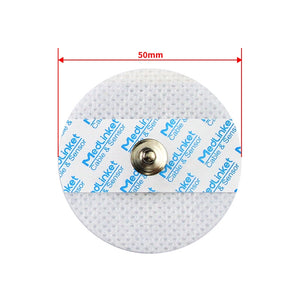
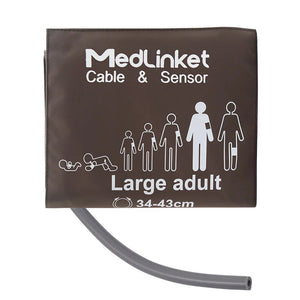
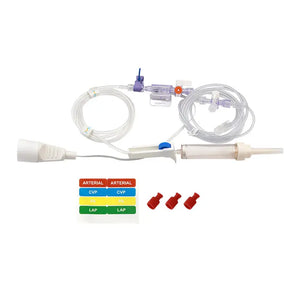
💡 About $36.70 covers the three highest-rotation items for one bed across three replacement cadences — consumable (24 h), reusable (12–18 mo), and single-use (per-patient) — so a scheduled program can start on a single monitor today.
Frequently Asked Questions
Q: How often should patient monitor accessories be replaced?
Intervals vary by accessory type and department. Key intervals: ECG electrodes every 24 hours, ECG leadwires every 6–12 months, ECG trunk cables every 2–3 years, reusable SpO2 sensors every 12 months, NIBP cuffs every 12–18 months, NIBP hoses every 2–3 years, and temperature probes every 12–24 months. ICU and OR departments should use the shorter end of each range.
Q: How do I know if a cable needs replacing before its scheduled date?
Replace immediately if you observe: visible damage (cracks, fraying, exposed wires), intermittent readings that resolve when you wiggle the cable, loose or corroded connectors, stiff cable that won't flex naturally, air leaks in NIBP cuffs, dim SpO2 LED, or dried electrode gel. A "swap test" with a known-good accessory confirms whether the cable or the monitor is the problem. See our troubleshooting decision guide for when to call Biomed vs. handle it yourself.
Q: Should ICU accessories be replaced more often than general ward?
Yes — at approximately 60–75% of standard lifespan intervals. ICU accessories face higher usage intensity (24/7 continuous monitoring), more aggressive disinfection protocols, and greater physical stress from frequent patient repositioning and transport.
Q: Does frequent disinfection shorten accessory lifespan?
Significantly. Harsh disinfectants (especially bleach-based and quaternary ammonium compounds) degrade cable jacketing, corrode connectors, and crack sensor housings. Post-COVID protocols with stronger germicides have shortened accessory lifespans by an estimated 20–30%. Using 70% isopropyl alcohol (where infection control permits) and ensuring full drying before reuse extends lifespan. MedLinket cables use chemical-resistant TPU jacketing to mitigate this effect.
Q: How much can proactive replacement save vs. reactive?
Proactive scheduled replacement saves 15–25% on total cost of ownership through bulk purchasing discounts, eliminated rush premiums, reduced Biomed troubleshooting calls, and minimized monitor downtime. It also reduces false alarms by up to 40%, saving an estimated 30–45 minutes of nursing time per shift per bed. Using certified compatible accessories amplifies savings further (40–70% lower unit cost).
Q: Can I use compatible (non-OEM) accessories in a scheduled replacement program?
Yes. Certified compatible accessories with FDA 510(k), CE, and ISO 13485 certifications are functionally equivalent to OEM originals and are used in the majority of hospitals worldwide. Using a single compatible supplier covering multiple monitor brands simplifies procurement and reduces per-unit costs by 40–70%. See our OEM vs. Compatible guide for the full comparison.
Need Help Building Your Replacement Schedule? Share your monitor fleet details — brand, model, quantity, and departments — and we'll provide a customized annual supply plan with locked pricing and scheduled delivery across all accessory categories.
📧 Email: shopify@medlinket.com · 💬 WhatsApp: +852 6467 3105
Related Articles in This Series
This article is part of the Hospital Monitor Reading & Accessories Guide. Explore related topics:
Accessories & Purchasing:
- Patient Monitor Accessories: Complete Guide by Parameter Type
- How to Identify Which Cables Your Monitor Needs
- OEM vs. Compatible Accessories: What to Know
Parameter Basics:
- What is SpO2 and What is a Normal SpO2 Level?
- What is a Normal Heart Rate on a Hospital Monitor?
- What Do ECG Numbers Mean on a Hospital Monitor?
- Understanding NIBP Readings: Systolic, Diastolic, MAP
- What is EtCO2 and Why is It Monitored?
Troubleshooting & Alarms:
- False Alarms on Patient Monitors: Causes and Prevention
- ECG Leads Off Alarm: How to Fix
- Blood Pressure Alarm on Monitor: Troubleshooting Guide
- Patient Monitor Shows No Reading: Troubleshooting Checklist
- Monitor Display Problems: Blank, Flickering, Frozen
- Patient Monitor Not Turning On: What to Check
- When to Call Biomed vs Troubleshoot Yourself
Disclaimer: This guide is intended for educational and informational purposes for healthcare professionals, clinical engineering staff, and medical device procurement teams. Replacement intervals are recommendations based on manufacturer guidelines and industry best practices — actual lifespan varies by usage conditions, disinfection protocols, and facility-specific factors. Always follow your facility's policies and manufacturer IFU.
© 2026 MedLinket (Shenzhen Med-Link Electronics Tech Co., Ltd.) · Stock Code: 833505 · ISO 13485:2016 · FDA 510(k) Cleared · CE Marked