Getting weird SpO2 readings? You're not alone. A Reddit user in r/Biomedical recently posted: "Our SpO2 keeps showing 85% on a patient who's clearly breathing fine. Changed the sensor three times. What am I missing?" This guide breaks down the 7 most common causes of inaccurate SpO2 readings—and exactly how to fix each one.
Why SpO2 Accuracy Matters: The Numbers Don't Lie
Here's a concerning fact: A 2022 FDA safety communication reported over 500 adverse events related to pulse oximeter inaccuracies in a single year. Some led to delayed treatment. Others led to unnecessary interventions.
SpO2 (peripheral oxygen saturation) is often called the "fifth vital sign." Along with heart rate, blood pressure, respiratory rate, and temperature, it gives clinicians a quick snapshot of how well oxygen is getting to your patient's tissues.
But here's what many people don't realize: SpO2 accuracy depends heavily on the quality and condition of your sensor.
📊 Quick Stats: SpO2 Accuracy Standards
- FDA requirement: ±3% accuracy for SpO2 readings between 70-100%
- Clinical threshold: SpO2 below 90% typically requires intervention
- Sensor lifespan: Reusable sensors last 1-2 years with proper care; disposables are single-patient use
The problem? Most facilities don't have a clear protocol for troubleshooting SpO2 issues. When readings look wrong, the default response is often "change the sensor and hope for the best."
That's not good enough. Let's dig into the real causes.

7 Common Causes of Inaccurate SpO2 Readings
Based on feedback from biomedical engineers on Reddit's r/Biomedical and r/BiomedicalEngineering communities, plus our 21+ years of experience manufacturing SpO2 sensors, here are the most frequent culprits:
Poor Sensor Placement (The #1 Cause)
The Problem: The sensor isn't positioned correctly on the patient's finger, toe, or ear.
SpO2 sensors work by shining red and infrared light through tissue. If the light emitter and detector aren't aligned properly, you get garbage data.
✅ Quick Fix Checklist:
- Make sure the light source (LED) is directly over the nail bed
- The detector should be on the opposite side (finger pad)
- No gaps between sensor and skin
- Finger should be inserted fully into clip-style sensors
- For wrap-style sensors, ensure snug (not tight) fit
"We started putting small stickers on our sensors showing the correct orientation. SpO2 complaints dropped by 40%."
— BMET, r/Biomedical communityPatient Motion Artifact
The Problem: The patient is moving, shivering, or restless.
Motion creates "noise" in the signal. The sensor picks up movement as changes in light absorption, which gets misinterpreted as changes in oxygen saturation.
How to Spot It: Look at the plethysmograph (pleth) waveform on your monitor. If it's jagged, irregular, or has lots of spikes, motion artifact is likely the culprit.
🔧 Solutions:
- Use sensors with motion-tolerant technology. Med-Linket's COX801 and COX601 pulse oximeters feature advanced motion tolerance algorithms that filter out movement noise.
- Try a different sensor site. Ears are often more stable than fingers for restless patients.
- Secure the cable. A loose cable adds to motion artifact.

Poor Peripheral Perfusion
The Problem: Not enough blood flow to the measurement site.
This is common in:
- Hypothermic patients (low body temperature)
- Patients in shock
- Patients on vasopressors
- Patients with peripheral vascular disease
When there's not enough pulsatile blood flow, the sensor can't detect the signal it needs.
🔧 Solutions:
- Check the Perfusion Index (PI). If your monitor shows PI, a value below 0.4% indicates poor perfusion.
- Warm the extremity. Use warming blankets or warm packs.
- Try a different site. The ear lobe or forehead often has better perfusion than fingers.
- Use a sensor designed for low perfusion. Med-Linket's silicone soft sensors are optimized for challenging patients.
Ambient Light Interference
The Problem: External light sources (sunlight, surgical lamps, phototherapy lights) interfere with the sensor's optical readings.
SpO2 sensors use specific wavelengths of red (660nm) and infrared (940nm) light. Bright ambient light can "flood" the detector and corrupt the signal.
🔧 Solutions:
- Shield the sensor. Cover with a towel or opaque material.
- Reposition away from direct light.
- Use sensors with ambient light rejection. Higher-quality sensors have built-in shielding.
"In NICUs, phototherapy for jaundice is a common culprit. We had to completely cover our SpO2 sensors with foil tape during bili light treatment to get reliable readings."
— NICU nurse, r/NICU communityNail Polish, Artificial Nails, or Skin Pigmentation
The Problem: Anything that affects how light passes through tissue can impact readings.
- Dark nail polish (especially blue, black, or green) can absorb light
- Acrylic or gel nails create a barrier
- Heavy skin pigmentation has been shown in studies to affect accuracy (FDA issued guidance on this in 2021)
🔧 Solutions:
- Remove nail polish if possible
- Position sensor sideways on the finger (side-to-side rather than top-to-bottom)
- Use an ear clip or forehead sensor instead
- For patients with darker skin tones, consider using sensors validated across diverse populations
Damaged or Worn-Out Sensors
The Problem: Reusable sensors degrade over time. Cables fray. LEDs dim. Connectors corrode.
This is one of the most overlooked causes of SpO2 problems. Many facilities use sensors well past their useful life.
⚠️ Signs Your Sensor Needs Replacement:
- Visible damage to the cable or housing
- Intermittent readings or frequent dropouts
- Consistently lower readings than expected
- Sensor more than 2 years old (for reusable types)
- Failed during routine biomedical testing
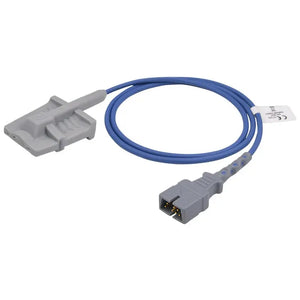
Med-Linket Solution: Our reusable SpO2 sensors are designed for extended durability with reinforced cables and medical-grade materials. We offer compatible sensors for all major monitor brands including Mindray, GE Healthcare, and Biolight.

Incompatible or Low-Quality Sensors
The Problem: Not all "compatible" sensors are created equal.
The SpO2 market is flooded with cheap knockoffs that technically fit your monitor but don't deliver accurate readings. These sensors often:
- Use inferior LEDs with inconsistent wavelengths
- Have poor quality control in manufacturing
- Lack proper calibration for your specific monitor
- Fail to meet FDA accuracy standards
🏭 Why Med-Linket is Different
Med-Linket has been manufacturing SpO2 sensors for 21+ years. We're the first listed patient monitoring accessories company in China, and our products are exported to 120+ countries serving 2,000+ hospitals.
Our sensors aren't just "compatible"—they're engineered to match OEM specifications with calibrated coefficients, full traceability, and ISO 13485 certified manufacturing.
Quick Troubleshooting Flowchart
Use this decision tree when you encounter SpO2 problems:
🔍 SpO2 Troubleshooting Steps
- Check sensor placement → Is it positioned correctly? → If no, reposition and wait 30 seconds
- Look at the pleth waveform → Is it smooth and regular? → If jagged, suspect motion or poor perfusion
- Check perfusion index → Is PI > 0.4%? → If low, warm the site or change location
- Inspect the sensor → Any visible damage? → If yes, replace sensor
- Check for interference → Bright lights? Nail polish? → Shield or change site
- Try a known-good sensor → Does it work? → If yes, original sensor was faulty
- Try a different patient → Does sensor work on another patient? → If yes, patient-specific issue
- Check the monitor → Try sensor on different monitor → If still fails, sensor is bad

How Sensor Quality Affects Accuracy: A Closer Look
Let's get technical for a moment. SpO2 measurement relies on the Beer-Lambert Law—the principle that light absorption is proportional to the concentration of the absorbing substance (in this case, oxygenated vs. deoxygenated hemoglobin).
For this to work accurately, you need precise components:
| Component | What It Does | Cheap Sensors | Med-Linket Sensors |
|---|---|---|---|
| LED Emitters | Produce red (660nm) and infrared (940nm) light | Wavelength varies ±10nm or more | Wavelength controlled to ±2nm |
| Photodetector | Measures light that passes through tissue | Lower sensitivity, more noise | High-sensitivity silicon photodiode |
| Calibration | Converts raw data to SpO2 value | Generic calibration curves | Monitor-specific calibration coefficients |
| Cable Shielding | Protects signal from electromagnetic interference | Minimal or no shielding | Full EMI/RFI shielding |
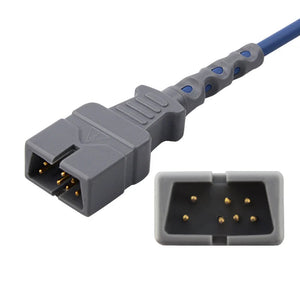
| Connector | Interfaces with patient monitor | May not mate properly, loose fit | Precision-machined to OEM specifications |
The bottom line? A $5 sensor that gives you a reading 5% off isn't actually saving you money. It's putting patients at risk and creating headaches for your clinical and biomedical teams.
When to Replace Your SpO2 Sensors: A Practical Guide
For Reusable Sensors:
- Routine replacement: Every 12-24 months, depending on usage
- After visible damage: Frayed cables, cracked housing, bent connector pins
- After failed QA testing: Include SpO2 sensors in your preventive maintenance program
- When readings become inconsistent: If you're constantly troubleshooting the same sensor, replace it
For Disposable Sensors:
- Single-patient use only: Never reuse on another patient
- Replace every 24-72 hours: Even on the same patient, adhesive degradation affects accuracy
- Replace if adhesive fails: A sensor that won't stay in place won't give accurate readings
💡 Product Recommendations from Med-Linket
For High-Volume Facilities (ICU, OR):
Consider our disposable SpO2 sensors for single-patient use. They eliminate cross-contamination risk and ensure every patient gets a "fresh" sensor.
- Nellcor MAX-A Compatible Disposable Sensor (Adult)
- Nellcor MAX-P Compatible Disposable Sensor (Pediatric)
- Nellcor MAX-N Compatible Disposable Sensor (Neonate/Adult)
- Masimo LNCS NEO Compatible Disposable Sensor
For Cost-Conscious Facilities:
Our reusable sensors offer excellent durability and accuracy at a fraction of OEM prices.
FAQ: Your SpO2 Troubleshooting Questions Answered
Q: Why does my SpO2 reading differ between fingers?
This is usually due to differences in perfusion. The index finger typically has better blood flow than the pinky. If you see more than 2% difference between fingers, check for peripheral vascular issues or position the sensor on the finger with the strongest pulse.
Q: Can I use any SpO2 sensor with any monitor?
No. SpO2 sensors must be calibrated for specific monitor algorithms. Using a Masimo sensor on a Nellcor monitor (or vice versa) will give inaccurate readings. Med-Linket manufactures sensors specifically calibrated for each major monitor brand.
Q: How do I know if my SpO2 sensor is compatible with my monitor?
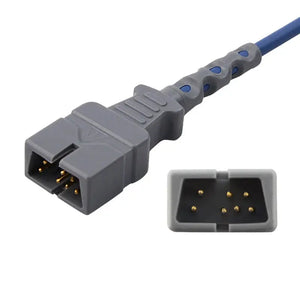
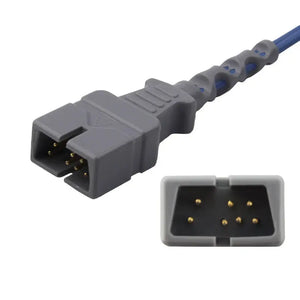
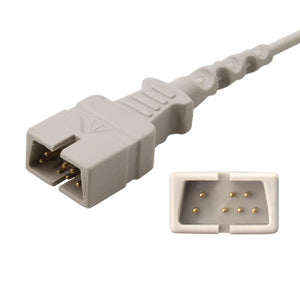
Check the connector type and the monitor's SpO2 technology. Med-Linket product pages clearly list compatible monitors and connector types. When in doubt, contact our technical support team.
Q: My patient's SpO2 reads 100% but they're clearly hypoxic. What's happening?
This could indicate carbon monoxide poisoning (carboxyhemoglobin). Standard pulse oximeters can't distinguish between oxygenated hemoglobin and CO-bound hemoglobin. In suspected CO poisoning cases, use a CO-oximeter or send blood gas for lab analysis.
Q: How often should I calibrate SpO2 sensors?
SpO2 sensors themselves aren't "calibrated" by users—the calibration is built into the monitor's algorithm. However, you should perform functional testing during preventive maintenance (typically annually) to verify accuracy against a known reference.
Q: Are compatible SpO2 sensors as accurate as OEM sensors?
High-quality compatible sensors from reputable manufacturers like Med-Linket meet or exceed FDA accuracy requirements. The key is choosing a supplier with proper quality certifications (ISO 13485), documented testing data, and a track record of reliability.
Summary: Get Accurate SpO2 Readings Every Time
SpO2 troubleshooting doesn't have to be frustrating. By understanding the 7 common causes of inaccurate readings—and following a systematic approach to diagnosis—you can resolve most issues quickly.
🔑 Key Takeaways
- Sensor placement is the #1 cause of inaccurate readings—always check this first
- The pleth waveform tells you more than the number—learn to read it
- Poor perfusion requires site changes or warming, not just new sensors
- Sensor quality matters—cheap sensors cost more in the long run
- Have a replacement schedule—don't wait for sensors to fail
Need Reliable SpO2 Sensors?
Med-Linket offers compatible SpO2 sensors for all major monitor brands at competitive prices—without compromising on quality.
- 21+ years of manufacturing experience
- ISO 13485 certified quality system
- Compatible with Mindray, GE, Philips, Nellcor, Masimo, and more
- Disposable and reusable options available
- Bulk pricing for distributors and healthcare facilities
Questions? Contact our technical team for compatibility verification and bulk pricing.
Browse Our Complete SpO2 Sensor Catalog →