Quick answer. A NIBP cuff that won't inflate almost always has a problem in one of three places: a leak (cuff bladder, hose, or connector), an occlusion (kinked hose, pinched bladder, wrong cuff position), or a monitor-side fault (pump, valve, or a safety timeout triggered for a real reason). Work the chain from patient to monitor in that order. The single most common true cause in our return-sample analysis was a leak at the cuff-to-hose connector or a hairline split in the bladder seam — not a monitor fault.
Why "cuff won't inflate" is usually misdiagnosed
When a NIBP measurement fails, the monitor often shows a generic message — "NIBP failed," "cuff loose," "air leak," "retry" — and the natural assumption is "the cuff is bad, throw it away." In our return-sample analysis, a meaningful share of cuffs sent back as "won't inflate" were functionally fine: the real fault was the hose, the connector, the monitor, or the application technique. Replacing the cuff "fixed" it only because the replacement also came with a fresh hose and a correct connection.
That matters for two reasons. First, you waste money discarding good cuffs. Second — and worse — if the real fault is monitor-side or hose-side, a new cuff does not fix it, and you have a recurring failure you cannot explain.
The NIBP pneumatic chain
A NIBP system is a closed air loop. Any leak, blockage, or fault along this loop produces an inflation failure:
Test each junction in order, patient end to monitor end, before condemning any component.

9 causes, ranked by frequency in our return-sample analysis
At a glance — work top to bottom; the first few are free to fix at the bedside, the last three are monitor-service items:
| # | Cause | Where | Action |
|---|---|---|---|
| 1 | Leak at cuff-to-hose connector | Accessory | Re-seat / replace O-ring / match connector type |
| 2 | Hairline split in bladder seam | Accessory | Replace cuff |
| 3 | Kinked, crushed or cracked hose | Accessory | Reposition / replace hose |
| 4 | Wrong cuff size for the limb | Technique | Re-size by circumference |
| 5 | Cuff applied too loosely | Technique | Re-wrap snugly |
| 6 | Monitor safety timeout / abort (valid) | Monitor logic | Read exact message; address root cause |
| 7 | Monitor pump weak or failing | Monitor | Refer to biomedical engineering |
| 8 | Monitor valve stuck or leaking | Monitor | Refer to biomedical engineering |
| 9 | Blocked NIBP port / internal filter | Monitor | Refer to biomedical engineering |
1. Leak at the cuff-to-hose connector — most common
The connector between the cuff and the hose (bayonet, screw or push type) is not fully seated, is cross-threaded, has a worn O-ring, or is the wrong connector type for the cuff.

How to test: disconnect and firmly re-seat the connector. Listen for a hiss during inflation — a connector leak is often audible. Apply a soapy-water film to the connector during a manual inflation; bubbles confirm the leak.
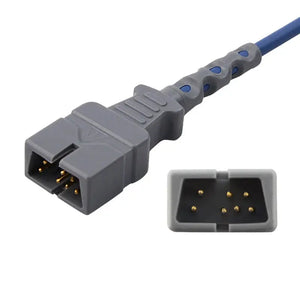
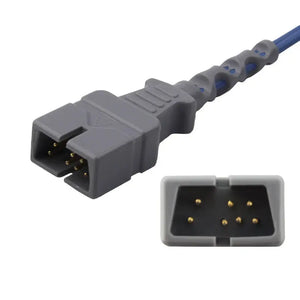
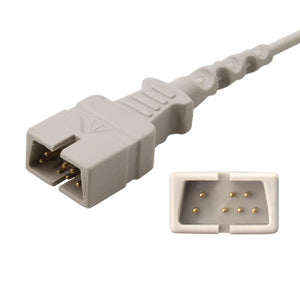
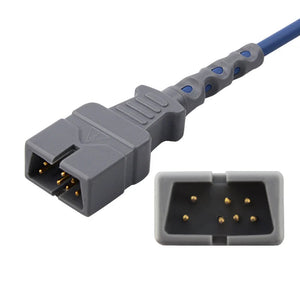
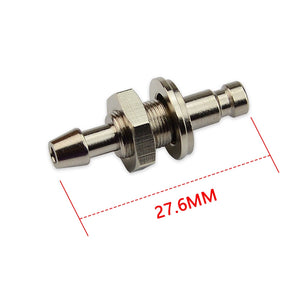
Fix: re-seat correctly; replace a worn O-ring; confirm the connector type matches (bayonet vs DINACLICK vs screw vs submin — these are not interchangeable). A connector-type mismatch alone causes the failure. For the underlying standards, see NIBP hose & connector specifications; to match a connector to your monitors, browse NIBP connectors (for example the male metal 2.5 mm Rectus connector ($8.00, 20% off), the A37 male luer-lock, or the female luer-lock).
2. Hairline split in the bladder seam
A small split where the bladder is seamed or welded, often invisible until the bladder is under pressure.
How to test: inflate the cuff off-patient (rolled around a rigid form) and hold. A good cuff holds pressure for the monitor's hold window. A seam leak shows as slow, steady pressure loss. Submerging an inflated bladder briefly and watching for bubbles localises the split.
Fix: replace the cuff. A bladder seam split is not repairable. Glued or welded two-piece bladders accounted for a disproportionate share of seam failures in our return analysis — a properly welded one-piece bladder lasts longer. Reusable options are in the reusable NIBP cuff collection.
3. Kinked, crushed, or cracked hose
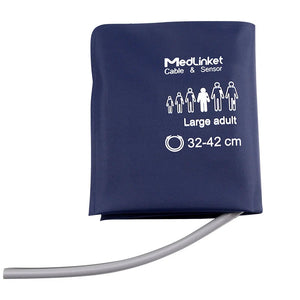
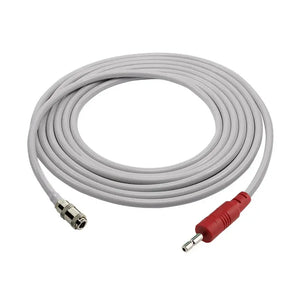
How to test: run the full length of the hose by hand, straightening as you go. Inflate and listen for a hiss along the hose. Flex suspect sections — a crack often leaks only when flexed.
Fix: reposition to remove the kink; replace a cracked or crushed hose. The hose is a wear item and should be on a replacement schedule, not used until failure. Replacement hoses are in the NIBP hoses collection.
4. Wrong cuff size for the limb
A cuff too large cannot build adequate pressure against the artery; a cuff too small may inflate but fails the measurement and can trigger a retry/abort that looks like "won't inflate."
How to test: check the range index line printed inside the cuff against the limb circumference. The limb circumference must fall within the cuff's marked range.
Fix: select the correct cuff size. NIBP cuff sizing is by limb circumference, not by "adult/child" label alone — see how to choose a suitable blood-pressure cuff.
5. Cuff applied too loosely
A correctly sized cuff wrapped too loosely inflates into the slack instead of compressing the limb, and the monitor may abort.

How to test: two fingers should fit snugly under the cuff edge — no more. A cuff that balloons visibly on inflation is too loose.
Fix: re-wrap snugly with the artery marker over the artery. This is technique, not a hardware fault.
6. Monitor safety timeout / abort triggered for a real reason
The monitor's NIBP software aborts inflation if it does not see expected pressure behaviour. This is a feature, not a fault — it prevents prolonged limb occlusion.
How to test: read the specific monitor message, not just "failed." Messages distinguishing "air leak" from "weak signal / artifact" from "cuff overpressure" point to different causes. Retry on a still limb.
Fix: address the underlying cause the monitor detected. If the monitor consistently aborts with a clean cuff and hose on a still patient, move to monitor-side checks below.
7. Monitor pump weak or failing
How to test: with a known-good cuff and hose, does inflation start but stall below target? Try the same cuff/hose on a second monitor — if it inflates normally there, the first monitor's pump is suspect.
Fix: monitor service issue — refer to biomedical engineering for pump service or module replacement. A new cuff will not fix a weak pump.
8. Monitor valve stuck or leaking
How to test: if the monitor inflates but pressure will not climb or hold even with a sealed, known-good cuff, and the pump is audibly running, a leaking internal valve is likely.
Fix: monitor service issue — refer to biomedical engineering.
9. Blocked or contaminated monitor NIBP port / internal filter
How to test: inspect the monitor's NIBP port. Compare inflation behaviour against a second monitor with the same cuff and hose.
Fix: monitor service issue. Internal filter cleaning or replacement is a biomedical engineering task per the monitor's service manual. For systematic monitor-side NIBP faults, see NIBP measurement errors troubleshooting (BMET).
A fast field decision tree
When a cuff won't inflate at the bedside, this is the quickest path to isolating the cause:
- Read the exact monitor message. "Air leak" vs "weak signal" vs "cuff overpressure" point in different directions.
- Check size and fit. Right cuff size? Wrapped snugly? Artery marker placed correctly? (Causes 4–5 — free to fix.)
- Re-seat the connector and inflate off-patient. Audible hiss or no pressure hold? → connector or bladder leak (causes 1–2).
- Run the hose by hand, flex it, listen. Hiss or crack? → hose (cause 3).
- Swap to a known-good cuff + hose set. Now it works? → original cuff / hose was the fault. Still fails? → monitor-side.
- Try the known-good set on a second monitor. Works on monitor B, fails on monitor A? → monitor A needs service (causes 7–9).
Steps 2–4 are free and fix the majority of cases. Step 5 is the single most informative test: it cleanly separates accessory faults from monitor faults.
How to prevent NIBP inflation failures
- Treat the hose as a wear item. Put NIBP hoses on a replacement schedule. Most "won't inflate" recurrences trace to an ageing hose nobody scheduled to replace.
- Match connector standards deliberately. Bayonet, DINACLICK-type, screw and submin connectors are not interchangeable. Stock cuffs and hoses with connectors that match your monitors.
- Size by circumference, not by label. Keep the right range of cuff sizes stocked for your patient population and train staff to read the range index line.
- Choose durable bladder construction. A properly welded bladder resists seam splits far better than a cheap two-piece glued bladder — the failure mode behind cause 2.
- Inspect on a schedule. A quick inflate-and-hold check off-patient catches a developing leak before it strands a clinician mid-shift. See also cleaning & maintaining reusable NIBP cuffs.
What this guide does not cover
- Inaccurate readings (not failure to inflate). A cuff that inflates but reads a wrong blood pressure is a different problem — calibration, size, position, motion, arrhythmia — outside this guide's scope. See understanding NIBP readings (systolic / diastolic / MAP).
- Monitor-specific service procedures. Pump, valve and filter service (causes 7–9) must follow your monitor manufacturer's service manual and be performed by qualified biomedical engineering staff. This guide tells you how to isolate a monitor-side fault, not how to repair the monitor.
- Brand-specific NIBP error codes. Always interpret the exact wording against that monitor's operator manual.
Frequently asked questions
What's the most common reason a NIBP cuff won't inflate?
In our return-sample analysis the single most common true cause was a leak at the cuff-to-hose connector or a hairline split in the bladder seam — not a monitor fault. Re-seat and pressure-test the connector and bladder off-patient before condemning anything else.
How do I tell whether it's the cuff or the monitor?
Swap to a known-good cuff and hose set. If it works, the original cuff or hose was the fault. If it still fails, try that same known-good set on a second monitor — if it inflates on monitor B but fails on monitor A, monitor A needs service. This single swap test cleanly separates accessory faults from monitor faults.
Are NIBP cuff connectors interchangeable between monitors?
No. Bayonet, DINACLICK-type, screw and submin connectors are different standards and are not interchangeable; a connector-type mismatch alone causes an inflation failure. Stock cuffs and hoses whose connectors match your monitor fleet.
Should I throw away a cuff that won't inflate?
Not before testing it. A meaningful share of cuffs returned as "won't inflate" are functionally fine — the real fault was the hose, the connector, the monitor or the application technique. Work the pneumatic chain from patient to monitor first; only a confirmed bladder seam split or unrepairable damage justifies discarding the cuff.
About MedLinket. Founded 2004 in Shenzhen. NEEQ-listed (stock code 833505). Over 20 years specialising in patient-monitoring accessories. FDA 510(k), CE, MHRA, MDSAP, ISO 13485:2016 (TÜV) certified. Class 100,000 cleanroom. Serving 2,000+ hospitals across 117 countries and regions. Product liability insurance carried with cover up to USD 5 million; hospital customers may request a certificate of insurance within the policy period. Monitor brand names referenced are trademarks of their respective owners. NIBP troubleshooting that involves opening or servicing the monitor must be performed by qualified biomedical engineering staff following the monitor manufacturer's service documentation.