Cats are harder to monitor than dogs because they stress easily and run cool, low-perfusion peripheries. Favour central, well-perfused sites — the tongue first, then the ear pinna; the paw is often too cold to read. Keep the cat calm and warm, watch the Perfusion Index, and if peripheral sites fail, a lingual or rectal probe is the reliable fallback.
A pulse oximeter that behaves perfectly on a Labrador can go blank on a cat. Cats aren't just small dogs: they get stressed fast, which drives vasoconstriction, and their extremities run cold and poorly perfused — exactly the conditions that starve a pulse oximeter of the pulsatile signal it needs. The result is the classic feline frustration: a healthy-looking cat and a monitor showing a dash.
This is the cat-specific companion to our general placement and troubleshooting guides. If you haven't read them, start with Veterinary pulse oximeter sensor placement (all sites, dogs and cats) and Why your veterinary SpO₂ reading is inaccurate (the full troubleshooting tree). Here we focus on the two things that make cats their own problem: site selection under low perfusion and keeping a stressed patient readable. The physics of SpO₂ is the same as in any species — see how SpO₂ sensors work — so everything below is feline-specific.
Why cats are the hard case Pulse oximetry needs a pulsatile arterial signal. Stress-driven vasoconstriction and naturally cool peripheries both reduce perfusion, and low perfusion (Perfusion Index below ~0.3) is one of the physiological factors that degrade any SpO₂ reading. Cats are prone to both — so in cats, keeping the patient warm and calm is not comfort, it's signal quality.
Feline site priority: go central first
In dogs the paw is a reasonable option; in cats it's frequently the site that fails, because a stressed or cool cat clamps down its extremities. The practical order for cats shifts toward central, well-perfused tissue.
Feline site comparison
| Site | Suitability in cats | Why | Watch-out |
|---|---|---|---|
| Tongue | First choice | Central, well-perfused, minimal fur; holds up when peripheries are cold | Keep moist; easiest under anesthesia/sedation |
| Ear pinna | Strong backup | Thin, low-fur margin; often rivals the tongue in cats | Avoid cartilage/central vessels; clip a little fur |
| Lip / buccal fold | Useful | Central mucosa when the tongue is occupied | Keep moist; secure gently |
| Paw / toe web | Often fails | Peripheral — first to vasoconstrict in a cold or stressed cat | Warm the patient; clip fur; expect dropouts |
| Tail base | Situational | Thin skin; usable when other sites are occupied | Motion; secure fixation, clip fur |
| Rectal (lingual-type probe) | Reliable fallback | Well-perfused internal site when all surface sites fail | Use an appropriate probe; per clinic protocol |
Keeping a stressed cat readable
Half of feline SpO₂ success is technique, not the sensor. The goal is to raise perfusion and reduce movement so the monitor can find a pulse.

Approaches that veterinary teams find consistently helpful:
- Warm the cat. Active warming is the single biggest lever — a warm cat perfuses its peripheries and reads far better. Cold is the enemy of a feline trace.
- Lower the stress. A quiet space, minimal restraint, low light, and letting a fractious cat settle all reduce the vasoconstriction that kills the signal. A calm cat is a readable cat.
- Go central early. Don't waste minutes on a cold paw. Move to the tongue or ear at the first sign of a weak peripheral signal.
- Watch the pleth and PI, not just the number. A clean waveform tells you the value is real; a Perfusion Index climbing back above ~0.3 tells you your warming and site change are working.
- Rotate and re-check. Clip/wrap sensors apply pressure — on longer procedures move the site periodically and inspect the skin, especially on small, fragile cats.
A note on where these tips come from The mechanism and product facts here draw on MedLinket's clinical training materials. The hands-on technique points reflect practice commonly shared among veterinary technicians and clinicians in professional communities (for example r/VetTech and r/veterinary) — they're paraphrased general approaches, not a substitute for your own protocols or your attending veterinarian's direction.
The right probe for a difficult feline patient
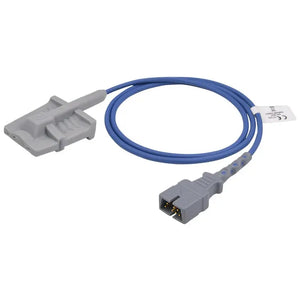
Because cats fail peripheral sites so often, the sensor choice matters more than in dogs: you want a probe that seats on the tongue and ear, plus a fallback for the shut-down patient.

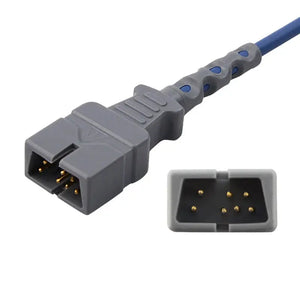
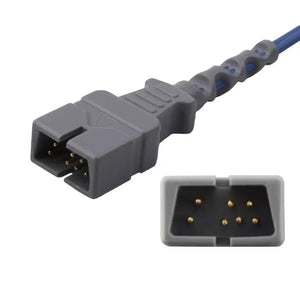
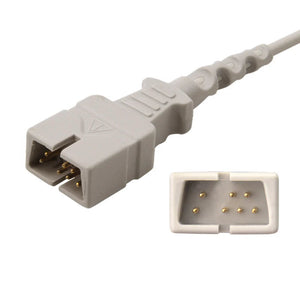
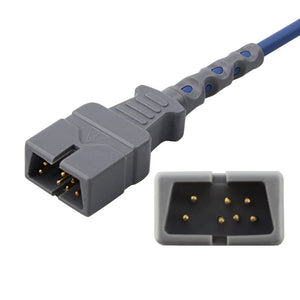
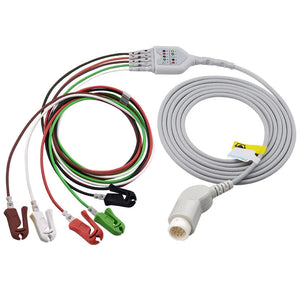
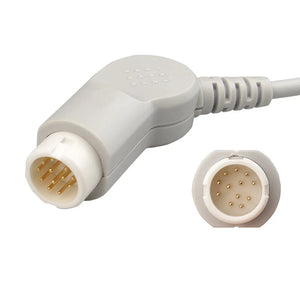
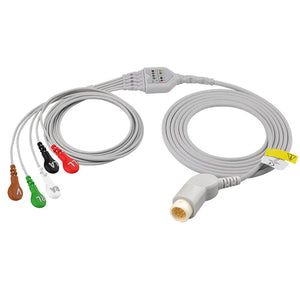
MedLinket's veterinary SpO₂ range is compatible with mainstream oximetry technologies — always verified against your specific monitor before it ships:
See the full range in Veterinary Supplies. Deciding between a dedicated tongue clip and a flexible multi-site sensor for a mixed feline/canine caseload? See Choosing a multi-site Y-type SpO₂ sensor for animals. Wondering whether a human sensor can stand in on a cat? See Veterinary vs human SpO₂ sensors: what actually differs.
Sensors for the animals that are hardest to read
A few facts about who makes these:
- A monitoring-accessory specialist since 2004, MedLinket (Shenzhen Med-link Electronics Tech Co., Ltd.) builds sensors, cables, and modules, with animal healthcare as one of four core clinical solution areas — including lingual and rectal veterinary SpO₂ probe styles for difficult patients.
- Dedicated SpO₂ validation. Company materials describe a multi-year investment in SpO₂ accuracy evaluation and state that clinical evaluation reports can be provided through partner clinical institutions. (Per company materials; specific trial figures are not published here.)
- Broad, honestly labeled compatibility. The veterinary range is designed for mainstream oximetry technologies; MedLinket is an independent third-party manufacturer, and "compatible with" never implies OEM manufacture or brand endorsement.
- Quality systems. Company materials cite ISO 13485:2016, MDSAP, and product certifications including FDA and CE, with products reaching 117 countries. Certificate numbers should be verified on request.
More at about MedLinket and certifications.
Frequently asked questions
Where do you put a pulse oximeter on a cat?
Why won't the pulse oximeter read on my cat?
Why is monitoring cats harder than dogs?
Can I use a rectal probe for SpO₂ on a cat?
What SpO₂ is normal for a cat?
This article is general educational information about veterinary monitoring accessories and reflects common veterinary monitoring practice. It is not a substitute for the clinical judgment of the attending veterinarian; if a cat shows clinical signs, act on clinical assessment and do not rely on a monitor reading alone. Product compatibility statements refer to signal/connector compatibility with third-party technologies and do not imply OEM manufacture or brand endorsement. Verify certifications and part compatibility for your specific equipment before purchase.