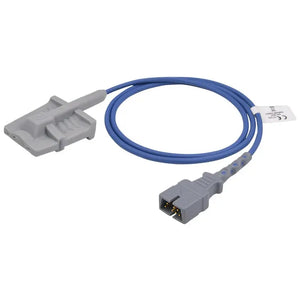
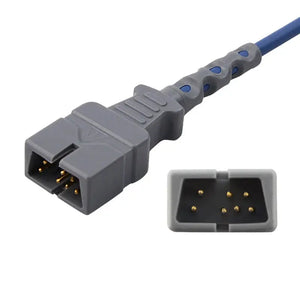
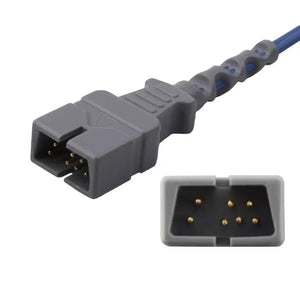
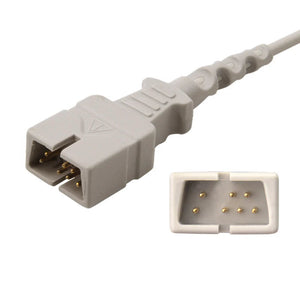
Select a dog or cat blood pressure cuff by the measured circumference of the limb or tail—not by breed or weight. For indirect veterinary blood pressure, cuff width is generally about 30%–40% of the cuff-site circumference. Use the cuff range and connector specified for the monitor, keep the site near heart level, and use the same method for repeat measurements.
A poorly selected cuff can distort a veterinary blood pressure result before the monitor or Doppler unit has a chance to measure anything. This matters most in cats, toy breeds, and small dogs, where a few centimeters can move the patient into a different cuff range. A label such as “small,” “medium,” or a breed name is not enough: the individual limb or tail circumference must be measured.
This guide covers dog blood pressure cuff and cat blood pressure cuff selection, cuff placement, a repeatable measurement protocol, and the practical differences between Doppler blood pressure in veterinary practice and automated oscillometric NIBP. For the broader anesthesia workflow, see small-animal anesthesia monitoring parameters .
How to choose a veterinary blood pressure cuff
The animal-specific decision is simple: measure the circumference at the exact site where the cuff will be applied, then select a cuff whose width is approximately 30%–40% of that measurement.

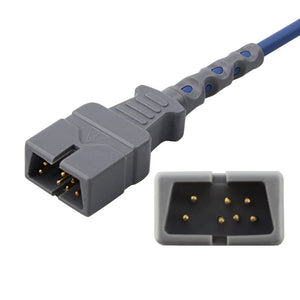
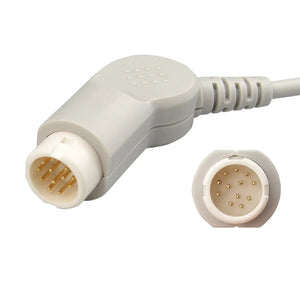
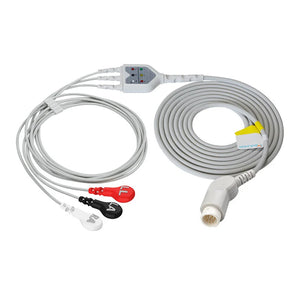
The cuff's printed circumference range must include the measured value, and the hose or connector must match the veterinary blood pressure monitor being used.
Why measurement comes first Cuff-width error follows the same pressure-measurement principle across applications. For a broader explanation, see how to choose a suitable blood pressure cuff . This guide then focuses on animal sites, Doppler technique, feline and canine limitations, and veterinary equipment.
Choose the site
Select a forelimb, hindlimb, or tail-base site that the patient will tolerate and that can remain close to heart level.
Measure the circumference
Wrap a flexible metric tape around the exact cuff site without compressing the tissue. Record the measurement in centimeters.
Match cuff and monitor
Choose a cuff about 30%–40% as wide as the measured site and confirm the labeled range, hose, connector, and device instructions.
Use a standardized veterinary blood pressure protocol
Cuff size alone cannot correct for stress, movement, inconsistent positioning, or a changing measurement method. For a repeatable dog or feline blood pressure measurement:

- Use a quiet area and allow the animal to acclimate for about 5–10 minutes.
- Use minimal, gentle restraint and keep the patient calm and as motionless as possible.
- Keep the selected cuff site near heart level and document the body position.
- Use the same device, method, cuff size, site, and operator when practical.
- Discard the first reading, then obtain and average 5–7 consecutive, consistent readings.
- Record the excluded values and repeat the series when variation remains excessive.
Why standardized technique matters A cuff-size chart without a measurement protocol can encourage false precision. The individual measurement and standardized series—not a breed label—determine whether a result is usable for veterinary interpretation.
Doppler vs oscillometric veterinary blood pressure
Indirect blood pressure in dogs and cats is commonly measured with Doppler ultrasound or an oscillometric veterinary monitor. Both methods use an inflatable cuff to occlude arterial flow; they differ in how flow or cuff oscillations are detected. The 30%–40% cuff-width rule applies to both, but the cuff, hose, and connector still must be compatible with the selected device.
Doppler: primarily a systolic measurement
In a canine Doppler blood pressure setup, an ultrasound probe is positioned over an artery distal to the cuff with coupling gel. The cuff is inflated until the audible flow signal disappears and slowly deflated; the pressure at which the signal returns is recorded primarily as systolic pressure. Doppler is operator-dependent, but it is commonly used for cats, toy breeds, and patients in which an oscillometric device has difficulty detecting a stable pulse signal.
Oscillometric NIBP: automated, device-derived values
An oscillometric monitor detects pressure oscillations in the cuff and uses its algorithm to derive systolic, diastolic, mean arterial pressure, and pulse values. Veterinary-specific systems can automate repeated cycles, which is useful during anesthesia and serial monitoring. Performance depends on the device, species, patient size, perfusion, movement, cuff choice, and clinical conditions, so use a veterinary device appropriate for the intended setting whenever possible.
| Decision point | Doppler | Oscillometric |
|---|---|---|
| Signal detection | Ultrasound flow signal distal to the cuff | Pressure oscillations detected through the cuff |
| Primary output | Systolic pressure | Device-derived SBP, DBP, MAP + pulse |
| Useful features | Manual confirmation; often practical for very small patients or weak oscillations | Automated repeated cycles and multi-value trending |
| Main limitations | Operator skill, probe placement, gel, and manual inflation | Motion, low pulse amplitude, patient size, and device algorithm |
| Cuff requirement | About 30%–40% of the measured site; use device-compatible cuff | About 30%–40% of the measured site; follow device-specific cuff guidance |
| Serial comparison | Keep the method, device, cuff, site, position, and protocol consistent | |
Do not mix methods within a trend Doppler and oscillometric readings are method-dependent. When monitoring change over time, use the same method, device, cuff, site, body position, and protocol whenever possible. A veterinarian should interpret unexpected or clinically important results.
Where to place the cuff on a dog or cat
Common veterinary NIBP sites include the mid-forelimb, distal hindlimb, and tail base. The best site is one the patient tolerates, that fits the correct cuff, and that can be kept close to heart level. With Doppler, leave room distal to the cuff for the probe over a palpable or detectable artery. Record the site because radial, tarsal, and coccygeal measurements should not be casually pooled in one trend.
Measurement-first guide by patient type
Breed and body weight can help staff anticipate which cuff to bring to the patient, but they cannot select the final cuff. The table below replaces unsupported “breed-to-cuff” estimates with the measurements and checks that actually determine fit.
| Patient / site | What to measure | Cuff target | Method note | Common error |
|---|---|---|---|---|
| Cat or kitten | Forelimb or tail-base circumference | Smallest compatible cuff with 30%–40% width and matching printed range | Doppler is common; veterinary oscillometric devices may also be used | Oversized cuff or stress-related elevation |
| Toy or small dog | Exact limb or tail site—not body weight | Small veterinary cuff; verify connector and hose | Doppler can help when pulse oscillations are difficult to detect | Guessing from breed or using a human home cuff |
| Medium dog | Chosen forelimb, hindlimb, or tail-base site | 30%–40% width and labeled range that includes the measurement | Either method may be suitable with consistent technique | Changing sites between serial readings |
| Large or giant dog | Individual site circumference; do not assume “large” fits | Correct width plus full bladder/cuff contact according to device instructions | Automated NIBP may simplify repeat cycles | Using a cuff that is too narrow |
| Tail-base site | Circumference where the cuff will remain stable | Same 30%–40% target, with tubing positioned to avoid pulling | Useful when limbs are inaccessible or poorly tolerated | Comparing tail readings directly with a different limb site |
Dogs: measure the individual limb, not the breed
Canine cuffs must cover an unusually wide range of body builds. A Chihuahua, a Dachshund, a Labrador, and a Great Dane may each require a different cuff and site, but breed does not provide the final answer. Measure the selected site, check the 30%–40% width target, and confirm that the measured circumference falls within the cuff's labeled range.
- Build changes circumference. Dogs of similar weight can have different limb shapes.
- Use one site for trending. Changing from a forelimb to the tail can change the measurement context.
- Keep the cuff stable. Hair, loose application, tubing pull, and movement can disrupt a cycle.
- Use a calm series. Do not base a decision on the first excited reading.
Cats: small cuffs, stress control, and method consistency
A feline blood pressure cuff is usually selected from the forelimb or tail-base measurement. Cats are especially sensitive to handling and environmental stress, while their small extremities leave less room for cuff-selection error. Acclimation, gentle restraint, quiet surroundings, and a consistent operator can be as important as the equipment.
Doppler is commonly used for feline systolic blood pressure, particularly when a small patient produces weak or inconsistent oscillations. A veterinary-specific oscillometric device may also be appropriate when its cuff range and performance suit the patient. The best comparison is a standardized series obtained with the same method at later visits—not a single number from a different device or site.
When the tail base is useful
The tail base can be a practical alternative when limbs are occupied by the procedure, the patient resists paw handling, or the selected limb cannot be maintained near heart level. Measure the tail at the exact cuff location, use the same cuff-width rule, and keep the tail relaxed and supported. Document “tail base” clearly so later readings use the same site.
Troubleshooting an unreliable veterinary BP reading

| Problem | What to check first |
|---|---|
| Reading unexpectedly high | Patient stress, cuff too narrow, cuff applied too tightly, site below heart level, movement |
| Reading unexpectedly low | Cuff too wide, site above heart level, poor perfusion, loose cuff, hose or connector leak |
| Oscillometric unit will not cycle | Patient movement, small cuff-site signal, low perfusion, incorrect cuff/connector, tubing kink |
| Doppler signal disappears | Probe position, coupling gel, distal artery location, excessive pressure, motion, weak flow |
| Large variation between readings | Repeat after acclimation; standardize site, position, operator, cuff, and method |
MedLinket veterinary blood pressure monitor and cuffs
MedLinket identifies ESM303 as a veterinary blood pressure monitor rather than a human home device. The product page lists an automatic oscillometric system supplied with five veterinary cuffs, while the veterinary NIBP N-series includes labeled limb-circumference ranges from 3–15 cm. This small-cuff coverage is relevant to a blood pressure monitor for small dogs, cats, and other small animal patients, but the individual circumference still determines the cuff.
Compatibility check before ordering Provide the monitor make and model, hose or connector details, intended patient range, and measured cuff-site circumference. “Compatible with” describes technical fit and does not imply that MedLinket is the original equipment manufacturer or is endorsed by a third-party brand.
Why source veterinary NIBP equipment from MedLinket
- Monitoring-accessory experience since 2004. MedLinket develops biomedical signal sensors, cables, cuffs, modules, and monitoring equipment.
- Dedicated veterinary product lines. MedLinket separates veterinary SpO₂, ECG, NIBP, temperature, and EtCO₂ accessories from human-use products.
- Defined small-animal cuff ranges. The veterinary NIBP N-series includes labeled 3–15 cm circumference options rather than relying on generic “small” wording.
- Compatibility-first support. Monitor model, connector, cuff range, and intended use should be confirmed before supply.
Learn more on the MedLinket company page and review product-specific documentation before purchase or clinical use.
Frequently asked questions
What size blood pressure cuff does my dog need?
What size blood pressure cuff does a cat need?
Is Doppler or oscillometric blood pressure better for dogs and cats?
Where should a veterinary blood pressure cuff be placed?
What happens if an animal blood pressure cuff is the wrong size?
Can a human blood pressure cuff or home monitor be used on a dog or cat?
How many veterinary blood pressure readings should be taken?
This article provides general educational and product-selection information. It is not a substitute for a veterinarian's diagnosis, device instructions, clinical judgment, or a validated blood pressure protocol. Indirect blood pressure results vary with the device, method, cuff, site, position, operator, patient stress, perfusion, and movement. Confirm product specifications and compatibility for the exact monitor and patient before purchase or use. Third-party brand references, when present, indicate compatibility only and do not imply OEM manufacture, authorization, affiliation, or endorsement.