BMET departments can cut accessory budgets 30–50% through four proven strategies: qualified compatible sourcing (saving 40–65% per unit), PM-driven lifecycle extension (stretching reusable accessory life 20–40%), connector family standardization across your monitor fleet, and volume purchasing consolidation. For a 200-bed hospital spending ~$150,000/year on OEM accessories, these strategies can return $60,000–$100,000 annually — without compromising patient safety or clinical performance.
🎯 Key Takeaways
- Qualified compatible sourcing from FDA-cleared, ISO 13485-certified manufacturers saves 40–65% per unit with clinically equivalent performance.
- Preventive maintenance extends reusable accessory life by 20–40%, eliminating one replacement cycle per year per sensor.
- Connector family standardization reduces SKU count, inventory carrying cost, and emergency cross-compatibility orders.
- The Magnuson-Moss Warranty Act protects U.S. hospitals: using certified compatible accessories does not void monitor warranties.
- A 90-day pilot on 1 nursing unit with ECG leadwires + NIBP cuffs can generate the VAC evidence needed for full rollout.
- The BMET Budget Reality
- Strategy 1: Qualified Compatible Sourcing
- Strategy 2: PM-Driven Lifecycle Extension
- Strategy 3: Connector Family Standardization
- Strategy 4: Volume Purchasing & Contracts
- Strategy 5: Waste Reduction & Inventory
- 90-Day Quick-Win Plan
- Interactive Savings Calculator
- MedLinket as a Partner
- Frequently Asked Questions
The BMET Budget Reality: Where Hospital Accessory Money Goes
Patient monitor accessories are the most underestimated recurring cost in biomedical engineering. Unlike capital equipment purchased once and depreciated over 7–10 years, accessories are consumed continuously — SpO2 sensors wear out, ECG electrodes dry out, NIBP cuffs develop leaks, and cables degrade from daily handling and chemical disinfection.
For a typical 200-bed hospital, annual accessory spending across SpO2, ECG, NIBP, IBP, and temperature parameters ranges from $100,000 to $200,000 depending on patient acuity mix, OEM pricing, and replacement frequency. The breakdown is typically weighted toward high-consumption items:
| Accessory Category | Typical Annual Spend (200-bed) | Savings Potential with Compatible | Browse Products |
|---|---|---|---|
| Disposable SpO2 sensors | $25,000–$45,000 | 50–65% | SpO2 collection |
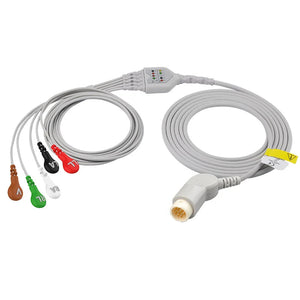
| ECG cables & leadwires | $20,000–$35,000 | 40–60% | ECG cables |
| NIBP cuffs & hoses | $15,000–$25,000 | 40–55% | NIBP cuffs |
| Temperature probes | $10,000–$20,000 | 40–60% | Temp probes |
| IBP transducers & cables | $8,000–$15,000 | 35–50% | IBP transducers |
| Disposable ECG electrodes | $8,000–$15,000 | 30–50% | ECG electrodes |
The key insight: most BMET departments treat these expenses as fixed costs. They are not. Every line item in this table can be reduced without affecting clinical outcomes — through the strategies outlined below.

Strategy 1: Qualified Compatible Sourcing (40–65% Savings Per Unit)
Qualified compatible sourcing means buying FDA-cleared, ISO 13485-certified accessories from non-OEM manufacturers at 40–65% lower cost. It is the single highest-impact cost reduction strategy available to BMET departments. Compatible accessories from qualified vendors deliver clinically equivalent performance at dramatically lower per-unit cost.
However, this strategy only works when implemented correctly. "Compatible sourcing" does not mean buying the cheapest option on the internet — it means sourcing from vendors who pass a formal qualification process.
The Right Way to Source Compatible Patient Monitor Accessories
- Use a formal vendor qualification process. Verify FDA registration, ISO 13485 certification (scope-verified), CE documentation, and clinical accuracy data. Our vendor qualification checklist provides the exact framework and weighted scorecard.
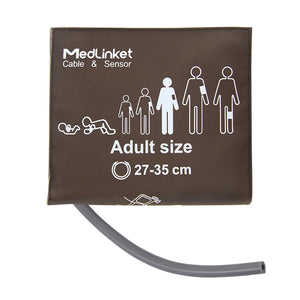
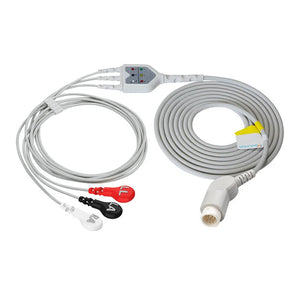
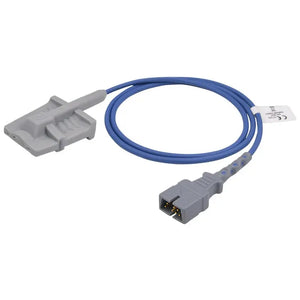
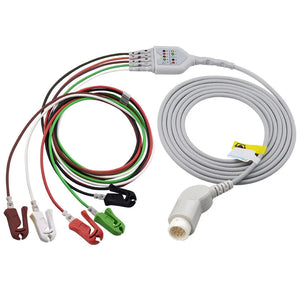
- Start with low-risk, high-volume items. ECG leadwires, reusable NIBP cuffs, and disposable ECG electrodes are ideal starting points — simple compatibility requirements, high consumption rates, and straightforward clinical evaluation.
- Verify compatibility for your specific monitor models. Physical connector fit does not guarantee technology compatibility, especially for SpO2 sensors where different signal protocols (Nellcor OxiMax, Masimo SET, Philips FAST, GE TruSignal) are electrically incompatible. See the multi-brand compatibility matrix for cross-reference.
- Run a controlled pilot. Test on 5–10 monitors across different clinical areas. Collect feedback from nursing and BMET staff. Document failure rates and connector durability vs. OEM baseline. Present findings to your Value Analysis Committee (VAC).
- Roll out incrementally. Expand by accessory type over 3–6 months, starting with items that proved out in the pilot.
Strategy 2: PM-Driven Lifecycle Extension (20–40% Longer Accessory Life)
A structured preventive maintenance program extends the usable life of reusable patient monitor accessories by 20–40%, directly reducing replacement frequency and annual spend. This strategy costs almost nothing to implement — it simply requires discipline.
Most accessory failures are gradual, not sudden. A SpO2 sensor cable develops micro-fractures at the strain relief long before the connector fails completely. An ECG trunk cable's shielding degrades over months of chemical disinfection exposure. An NIBP hose develops a slow leak that initially triggers only intermittent errors. PM catches these degradation patterns early, enabling low-cost repair or scheduled replacement rather than emergency purchasing at premium pricing.
Key PM Activities That Extend Accessory Life
| Accessory Type | PM Activity | Frequency | Life Extension |
|---|---|---|---|
| SpO2 sensors (reusable) | Connector inspection, cable flex test, LED window cleaning | Monthly | +30–40% |
| ECG trunk cables | Continuity testing, connector pin inspection, jacket integrity | Monthly | +25–35% |
| NIBP cuffs (reusable) | Bladder leak test, Velcro inspection, connector barb check | Quarterly | +20–30% |
| NIBP hoses | Pressure leak test, connector seating verification | Quarterly | +25–35% |
| Temperature probes (reusable) | Accuracy check vs. calibrated reference, cable inspection | Semi-annually | +20–30% |
| IBP cables | Zero/span verification, connector inspection, insulation resistance | Quarterly | +25–35% |
For the complete step-by-step PM protocol, download our patient monitor PM checklist.

Strategy 3: Connector Family Standardization for Multi-Brand Monitor Fleets
Multi-brand monitor fleets are expensive to supply. A hospital running Philips IntelliVue, GE CARESCAPE, Mindray BeneVision, and Dräger Infinity monitors across different units needs separate SpO2 cables, ECG trunks, NIBP hoses, and temperature adapters for each brand — each with different connectors, signal protocols, and part numbers.

This fragmentation creates three cost multipliers:
- SKU proliferation: More unique part numbers to stock, negotiate, and manage — increasing procurement overhead and inventory carrying costs.
- Emergency cross-compatibility failures: When one unit runs out of Mindray SpO2 sensors, the Philips sensors from the next unit cannot be used as backup — forcing expensive emergency orders.
- Reduced purchasing leverage: Splitting volume across four brands means lower volume per vendor, reducing negotiating power for bulk pricing.
Connector Standardization Tactics
Short-term (no capital required): For accessory types where connector adapters exist — such as SpO2 adapter cables and temperature adapter cables — standardize on one sensor family and use adapters to connect to different monitor brands. This reduces sensor SKUs while maintaining monitor diversity.
Medium-term (during replacement cycles): When monitors reach end of life, prioritize replacing them with the brand that already has the largest installed base. Each brand you consolidate eliminates an entire family of unique accessory connectors.
Long-term (capital planning): Include accessory ecosystem costs in monitor procurement decisions. A monitor that costs $2,000 less upfront but requires accessories that cost $3,000 more annually is the wrong economic choice. Factor in ECG cable connector types for each candidate brand when evaluating total cost of ownership.
Strategy 4: Volume Purchasing & Contract Consolidation
Once you have identified qualified compatible vendors and standardized where possible, consolidate your purchasing to maximize volume pricing leverage:
- Annual contracts vs. spot purchasing: Negotiate annual supply agreements with your qualified compatible vendor(s). Annual commitments typically unlock 10–20% additional discounts beyond standard compatible pricing — on top of the 40–65% savings vs. OEM.
- Multi-category bundling: If one qualified vendor covers SpO2, ECG, NIBP, temperature, and IBP accessories (as MedLinket's full product range does), bundle your purchasing. A vendor earning $80,000 in annual business offers better pricing than five separate vendors earning $16,000 each.
- Group Purchasing Organization (GPO) contracts: If your facility is a GPO member, check whether compatible accessory manufacturers are on contract. If not, the volume data from your pilot program can support adding them.
- Multi-site consolidation: Health systems with multiple facilities should centralize accessory procurement. Combined volume across 3–5 hospitals transforms your negotiating position.
Strategy 5: Waste Reduction & Inventory Optimization
Hidden costs often lurk in inventory management and clinical waste patterns:
Common Waste Sources in Hospital Accessory Programs
| Waste Pattern | Root Cause | Fix |
|---|---|---|
| Disposable sensors opened but not used | Wrong size pulled; patient transferred before application | Stock only 2 most common sizes at bedside; restock from central |
| Reusable accessories discarded prematurely | Clinical staff unable to distinguish "degraded but functional" from "failed" | Train clinical staff on basic cable/sensor assessment; mark replacement dates |
| Emergency orders at premium pricing | No par-level system; stockouts not caught until critical | Implement min/max par levels for each accessory type per unit |
| Expired disposable inventory | Over-ordering; poor FIFO discipline | Right-size orders based on actual 90-day consumption; enforce FIFO rotation |
| Accessories damaged during storage | Cables coiled too tightly; sensors stored in humid environments | Implement proper storage protocols per manufacturer specifications |
Track these waste metrics quarterly and include them in your BMET documentation and compliance records. Even modest waste reduction (10–15%) adds $5,000–$15,000 in annual savings for a mid-size facility.

90-Day Implementation Roadmap: Quick-Win Plan for BMET Managers
You do not need to implement all five strategies simultaneously. This 90-day roadmap sequences them by ROI speed and implementation effort:
Interactive Savings Calculator: Estimate Your Annual Impact
Enter your facility's bed count below to instantly estimate annual savings. Calculations are based on industry pricing data for FDA/CE/ISO 13485 certified compatible accessories vs. OEM list prices:
💰 Annual Savings Calculator
Adjust inputs below — results update in real time
* Estimates based on industry pricing benchmarks. Request a custom quote for your exact monitor fleet.
Representative Pricing Benchmarks (OEM vs. Compatible)
| Accessory | OEM Unit Price | Compatible Unit Price | Savings per Unit | Annual Units (200-bed) |
|---|---|---|---|---|
| Disposable SpO2 sensor | $18–$30 | $6–$12 | $10–$20 | 1,500–3,000 |
| Reusable SpO2 sensor | $100–$180 | $40–$70 | $60–$110 | 50–100 |
| ECG trunk cable (5-lead) | $80–$150 | $35–$65 | $45–$85 | 80–150 |
| Reusable NIBP cuff | $25–$50 | $9–$17 | $15–$35 | 200–400 |
| NIBP hose | $40–$80 | $15–$30 | $25–$50 | 60–120 |
| Disposable IBP transducer | $20–$40 | $8–$16 | $12–$24 | 500–1,200 |
🎯 Start Your Pilot with This Proven 3-Product Bundle
These are the same low-risk, high-volume items recommended in the 90-day roadmap
MedLinket as a Cost-Reduction Partner
MedLinket has been manufacturing compatible patient monitor accessories since 2004, serving 2,000+ hospitals across 120+ countries. Our product range covers every major accessory category — SpO2, ECG, NIBP, IBP, temperature, EtCO2, and EEG — with compatibility across Philips, GE Healthcare, Mindray, Dräger, Nihon Kohden, Masimo, Nellcor, and 30+ additional brands.
Why MedLinket Supports Every Strategy in This Guide
- Qualified compatible sourcing: ISO 13485 (TÜV-audited), 19 FDA 510(k) clearances, 48 EU CE Class II product categories. Three owned factories (Shenzhen, Shaoguan, Indonesia) with 3,500+ molds. Product liability insurance up to $5 million.
- Multi-category bundling: One vendor covers SpO2, ECG, NIBP, IBP, temperature, and EtCO2 — simplifying procurement and maximizing volume leverage.
- Multi-brand compatibility: Single-source supply across your entire monitor fleet, regardless of brand mix — reducing connector fragmentation and SKU count.
- PM support: Technical staff provide accessory-specific PM guidance, recommended replacement intervals, and cable inspection criteria.

Start Reducing Your Accessory Budget This Quarter
Request samples, pricing, and a complete vendor qualification package — FDA registration, ISO 13485 certificate (TÜV-audited), clinical accuracy data, and written compatibility statements for your specific monitors.
Frequently Asked Questions
How much can BMET departments realistically save by switching to compatible accessories?
Is it safe to use compatible (third-party) patient monitor accessories instead of OEM?
What is the best way to start transitioning from OEM to compatible accessories?
Does switching to compatible accessories void the patient monitor warranty?
How does preventive maintenance reduce accessory costs?
What does connector family standardization mean for hospital BMET budgets?
Ready to Build a Cost-Reduction Business Case?
MedLinket's team can provide custom pricing, samples, and qualification documentation for your specific monitor fleet — everything you need for a complete VAC presentation.