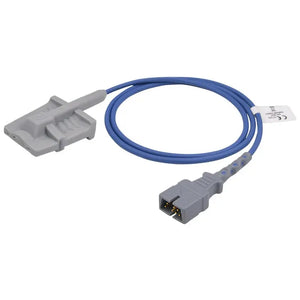
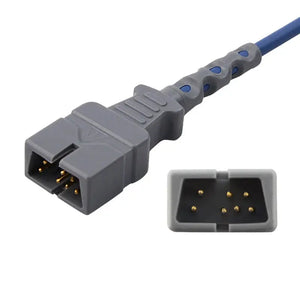
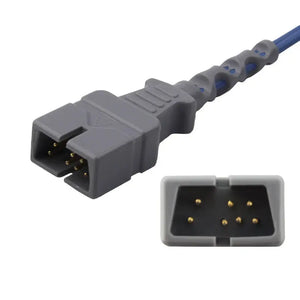
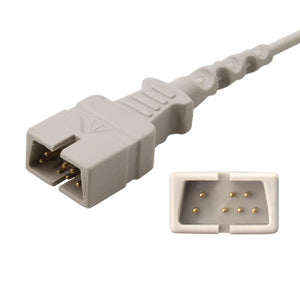
Quick Answer: Compatible patient monitor accessories can deliver equivalent clinical performance at 40–60% lower cost — but only when they carry proper regulatory clearances (FDA 510(k), CE marking, ISO 13485), match the original connector pinout and electrical specifications, and come from manufacturers with verified quality systems. This guide compares OEM and compatible accessories across six dimensions — regulatory, material, electrical, clinical, cost, and lifecycle — from the BMET technical perspective.

This guide provides a technical cost-quality comparison between OEM and compatible patient monitor accessories. It is written specifically for BMETs and clinical engineers making procurement decisions. For a structured process to evaluate a specific compatible product's technical suitability, see our third-party accessory evaluation framework. For qualifying the manufacturer behind compatible accessories, see our vendor qualification checklist. For budget reduction strategies beyond the OEM-vs-compatible choice, see our BMET cost-saving strategies guide.
1. Why This Comparison Matters for BMETs
Patient monitor accessories — SpO2 sensors, ECG cables, NIBP cuffs, IBP transducers, and temperature probes — represent a significant recurring expense for hospital clinical engineering departments. Industry data from ECRI Institute and AAMI publications indicate that accessory-related costs (purchase, replacement, and associated labor) account for a substantial portion of a BMET department's annual equipment budget, with some facilities reporting figures in the range of 15–25% of total clinical engineering spending.
Budget estimates based on ECRI Institute's Health Devices program data and AAMI BI&T (Biomedical Instrumentation & Technology) published surveys of hospital clinical engineering departments, 2022–2024.
The decision between OEM and compatible accessories is not a simple cheaper-vs-better binary. It requires evaluating regulatory status, material specifications, electrical compatibility, clinical accuracy, total cost of ownership, and lifecycle durability. BMETs are uniquely positioned to make this evaluation because they understand both the technical requirements and the operational realities.
2. Regulatory Clearance: FDA, CE & ISO Compared

Regulatory clearance is the first filter in the OEM vs compatible decision. Both OEM and compatible accessories must meet the same regulatory requirements to be legally marketed — the question is whether a specific compatible manufacturer actually holds these clearances.
| Regulatory Dimension | OEM Accessories | Qualified Compatible Accessories |
|---|---|---|
| FDA 510(k) Clearance | Cleared under the monitor manufacturer's 510(k) submission | Must hold independent 510(k) clearance demonstrating substantial equivalence to the predicate device |
| CE Marking (EU MDR) | Covered under monitor manufacturer's CE certificate | Must hold independent CE marking (typically Class IIa under MDR 2017/745) with a Notified Body assessment |
| ISO 13485:2016 | Monitor manufacturer maintains QMS for all accessories | Compatible manufacturer must maintain its own ISO 13485 certified QMS, independently audited |
| MDSAP | Some OEMs hold MDSAP; not all | MDSAP certification covers US, Canada, Japan, Australia, Brazil in one audit — a strong quality indicator |
Regulatory requirements per FDA 21 CFR 860 (device classification) and EU MDR 2017/745, Article 52 (conformity assessment procedures for Class IIa devices).
3. Material Quality & Biocompatibility
Patient-contacting accessories must use biocompatible materials tested per ISO 10993 (Biological evaluation of medical devices). This applies equally to OEM and compatible products — the standard does not differentiate by manufacturer type.

Key Material Considerations
- SpO2 sensor adhesives — Must be hypoallergenic and pass ISO 10993-5 (cytotoxicity) and ISO 10993-10 (irritation/sensitization) testing. Low-quality adhesives can cause skin breakdown, particularly in neonatal and long-term monitoring applications.
- ECG cable jacket materials — Medical-grade TPU (thermoplastic polyurethane) or PVC with plasticizers that comply with REACH regulations and are DEHP-free. Cable flexibility and durability depend directly on jacket material quality. See our medical cable specifications guide for detailed requirements.
- NIBP cuff bladder material — Must withstand thousands of inflation cycles without delamination or porosity changes. Inferior bladder materials lead to premature air leaks and false NIBP error codes.
- Connector housing — Medical-grade plastics with appropriate flame rating (UL 94 V-0 minimum per IEC 60601-1). Connector pin plating (gold or nickel) affects contact resistance and insertion cycle life.
4. Electrical Compatibility & Signal Integrity
Electrical compatibility is where the BMET's technical expertise is most critical. A compatible accessory must match the OEM product's connector pinout, signal characteristics, and electromagnetic compatibility specifications.

Connector Pinout Match
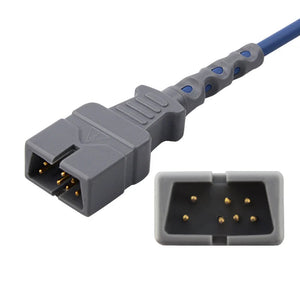
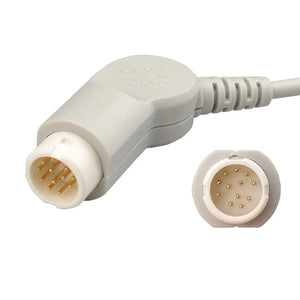
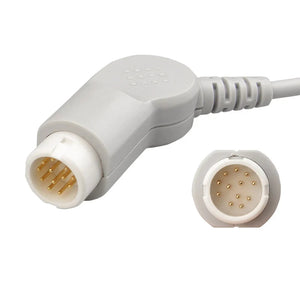
The connector pinout must be an exact match — every pin must carry the same signal as the OEM original. For SpO2, this includes LED drive lines, photodiode return, and sensor ID coding. For ECG, this includes lead signal routing and shield connections. Verify against our technology-specific pinout references:
- SpO2 connector pinout reference — Nellcor, Masimo, Philips, GE, Mindray wiring diagrams
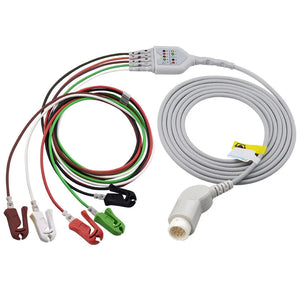
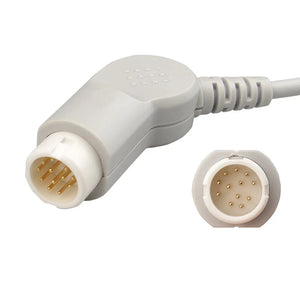
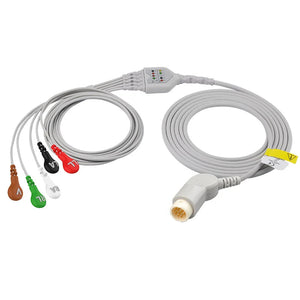
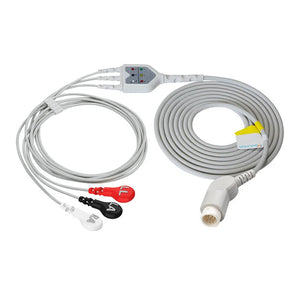
- ECG cable connector types identification — AAMI/IEC, snap/grabber/banana connectors
- NIBP hose connector specifications — Fitting types and dimensions by brand
- IBP cable pinout and signal specifications — Excitation voltage and bridge resistance
Signal Integrity
Beyond pinout, the cable's electrical properties affect signal quality. ECG cables require specific shielding effectiveness (typically >60 dB attenuation per IEC 60601-1-2:2014 EMC requirements) and controlled impedance to prevent artifact. SpO2 cables must maintain low-noise signal paths for the microamp-level photodiode current. IBP cables must maintain precise excitation voltage delivery and signal return with minimal resistance.
EMC requirements per IEC 60601-1-2:2014, §8.9 (emissions) and §8.10 (immunity). Shielding effectiveness measurement per IEC 62153-4-3.
5. Clinical Accuracy Validation
The ultimate test: does the compatible accessory produce the same clinical measurements as the OEM original?

Regulatory clearance implies this, but verification through bench testing and clinical comparison provides additional confidence.
| Parameter | Accuracy Standard | What to Request from Compatible Manufacturer |
|---|---|---|
| SpO2 | Arms ≤ 2–3% (70–100% SpO2 range) per ISO 80601-2-61:2019 | Controlled desaturation study data or bench test comparison against OEM sensor on same monitor |
| ECG | Signal fidelity per IEC 60601-2-27:2011 (amplitude accuracy ±5%, timing ±1%) | ECG signal comparison: amplitude, noise floor, frequency response test reports |
| NIBP | Mean difference ≤ ±5 mmHg, SD ≤ 8 mmHg per AAMI/ISO 81060-2:2018 | Cuff accuracy data, air leak test results (inflate-hold-deflate cycle testing) |
| IBP | Accuracy ±1 mmHg or ±1% of reading per AAMI BP22 | Transducer calibration data, zero stability, sensitivity verification |
| Temperature | ±0.1 °C in clinical range per manufacturer specs (aligned with ASTM E1112) | Thermistor accuracy data at 25 °C, 37 °C, 42 °C reference points |
Accuracy requirements per ISO 80601-2-61:2019 (SpO2), IEC 60601-2-27:2011 (ECG), AAMI/ISO 81060-2:2018 (NIBP), AAMI BP22 (IBP), ASTM E1112-00 (temperature).
6. Total Cost of Ownership Analysis
Unit price is only one component of the total cost of ownership (TCO). A comprehensive comparison must include replacement frequency, failure rates, administrative overhead, and downstream costs.

| Cost Component | OEM | Qualified Compatible | Advantage |
|---|---|---|---|
| Unit Purchase Price | Higher (baseline) | 40–60% lower | Compatible |
| Replacement Frequency | Per manufacturer lifecycle specs | Comparable when properly qualified | Even |
| Failure Rate | Low (established manufacturing) | Comparable from ISO 13485 manufacturers | Even |
| Procurement Admin | Simple — one vendor per brand | Requires initial vendor qualification effort | OEM (marginally) |
| Inventory Complexity | Brand-specific SKUs only | Multi-brand compatible SKUs can consolidate inventory | Compatible |
| Product Liability | Covered by OEM manufacturer | Must verify compatible manufacturer's liability insurance | Even (if verified) |
| Annual TCO (100-bed facility, est.) | Higher baseline | 30–50% net savings after accounting for all factors | Compatible |
Cost estimates based on aggregated procurement data from hospital group purchasing organizations (GPOs) and published case studies in AAMI BI&T, 2022–2024. Individual facility results vary based on fleet composition and volume.
MedLinket offers compatible accessories at 40–60% below OEM pricing, with ISO 13485 certification, FDA 510(k) clearances, and product liability insurance up to $5 million USD.
Browse All Compatible Accessories7. Lifecycle & Durability Comparison
Lifecycle durability depends on material quality and manufacturing precision, not on whether the product is OEM or compatible. Key durability metrics that BMETs should track:
- Connector insertion cycles — Medical connectors are typically rated for 5,000–10,000 insertion cycles (per IEC 60601-1, §8.6 requirements for mechanical strength). Both OEM and quality compatible accessories should meet this threshold.
- Cable flex life — The number of flex cycles before conductor breakage. Medical-grade cables should withstand ≥100,000 flex cycles at the rated bend radius. Cable jacket material and shield construction are the primary determinants.
- SpO2 sensor LED degradation — LED output degrades over time. Reusable SpO2 sensors typically have a rated life of 12–24 months of normal use, regardless of OEM or compatible origin.
- NIBP cuff bladder cycles — Reusable cuffs should withstand ≥10,000 inflation cycles. Disposable cuffs are single-patient use.

Track replacement frequency in your CMMS to build facility-specific lifecycle data. This empirical data is more valuable than manufacturer claims. Document all replacements per your documentation and compliance requirements. Regular preventive maintenance extends lifecycle for both OEM and compatible accessories — see our patient monitor PM checklist.
8. Head-to-Head Comparison Table
OEM Strengths
- Guaranteed compatibility — designed by the monitor manufacturer
- Single-source procurement simplicity
- No additional evaluation effort required
- Warranty integration with monitor
Compatible Strengths
- 40–60% lower unit cost
- Multi-brand inventory consolidation
- Independent regulatory clearance validates quality
- Competitive pressure drives OEM price negotiation
| Evaluation Dimension | OEM | Qualified Compatible | Winner |
|---|---|---|---|
| Regulatory compliance | Covered by monitor 510(k) | Independent 510(k) required | Even (both regulated) |
| Material quality | Established supply chain | Depends on manufacturer; verify ISO 10993 | Even (if qualified) |
| Electrical compatibility | Guaranteed match | Requires pinout verification | OEM (convenience) |
| Clinical accuracy | Validated per monitor submission | Must meet same ISO/AAMI standards | Even (if certified) |
| Unit price | Baseline | 40–60% lower | Compatible |
| Total cost of ownership | Higher overall | 30–50% net savings | Compatible |
| Procurement effort | Lower — existing vendor | Higher initial (qualification) | OEM (initially) |
| Product availability | Subject to OEM supply chain | Often faster lead times | Compatible |
9. Warranty & Legal Considerations
One of the most common concerns about compatible accessories is the impact on the patient monitor's warranty. Understanding the legal framework clarifies this issue:
Magnuson-Moss Warranty Act (US)
Under the Magnuson-Moss Warranty Act (15 U.S.C. §§2301-2312), a manufacturer cannot void a warranty solely because a compatible third-party accessory was used. The FTC has specifically addressed this in enforcement guidance: the warrantor must demonstrate that the third-party product caused the specific failure in order to deny a warranty claim. Using FDA-cleared, ISO 13485-certified compatible accessories does not automatically void the monitor warranty.
Legal reference: Magnuson-Moss Warranty Act, 15 U.S.C. §§2301-2312; FTC enforcement guidance on aftermarket products and warranties. Consult your facility's legal counsel for specific warranty situations.
Product Liability Insurance
Verify that the compatible manufacturer carries adequate product liability insurance. Reputable manufacturers provide certificates of insurance upon request. MedLinket, for example, maintains product liability coverage up to $5 million USD and can issue separate insurance certificates listing distributors as additional insured parties.
10. When to Choose OEM (Decision Framework)
OEM remains the appropriate choice in specific situations:
- During the monitor warranty period — While the Magnuson-Moss Act protects against blanket warranty voidance, using OEM accessories during the initial warranty period eliminates any potential dispute.
- When no qualified compatible alternative exists — Some proprietary accessories (particularly module-specific components) may not have a compatible equivalent that meets all qualification criteria.
- For technology-locked parameters — SpO2 modules with proprietary digital handshakes (e.g., Masimo SET's sensor identification system) require technology-specific sensors regardless of OEM or compatible designation.
- When the price differential is minimal — For low-volume specialty accessories where the OEM price is already competitive.
- During initial clinical validation — When introducing a new monitor model, using OEM accessories establishes the performance baseline before evaluating compatible alternatives.
11. When Compatible Is the Right Choice
Compatible accessories make strong economic and technical sense when:
- The compatible manufacturer holds FDA 510(k) + CE + ISO 13485 — This is the non-negotiable minimum threshold.
- The accessory type has well-defined electrical specifications — ECG cables, NIBP hoses, temperature probes, and IBP cables have standardized signal interfaces that compatible manufacturers can precisely match.
- Your facility has a multi-brand monitor fleet — Compatible manufacturers often support Philips, GE, Mindray, Dräger, and Nihon Kohden from a single catalog, simplifying inventory management. See our Philips & GE monitor guide and Mindray technical resources for brand-specific compatibility details.
- Volume justifies the initial evaluation effort — The one-time cost of vendor qualification (see our vendor qualification checklist) is amortized across all future orders.
- Post-warranty equipment — The majority of a monitor's lifecycle is post-warranty, where compatible accessories deliver the highest ROI.
MedLinket provides compatible accessories for Philips, GE, Mindray, Dräger, Nihon Kohden, and other major brands — all ISO 13485 certified with FDA 510(k) clearances and complete regulatory documentation.
Philips GE Mindray Dräger Nihon Kohden12. Documentation Requirements for Compatible Use
When your department uses compatible accessories, proper documentation creates the audit trail needed for Joint Commission and CMS compliance. Record the following for every compatible accessory deployment:
- Regulatory clearance verification — FDA 510(k) number, CE certificate reference, ISO 13485 registration number of the compatible manufacturer.
- Equivalency rationale — Document what makes the compatible accessory equivalent: matching connector pinout (reference our SpO2 pinout, ECG connector, or NIBP specs guides), electrical specifications, and material compatibility.
- Post-installation functional test — Record the test results confirming the compatible accessory performs as expected on the specific monitor.
- Approval chain — Document who approved the compatible accessory (BMET manager, clinical engineering director, value analysis committee).
For complete documentation field requirements, see our BMET documentation and compliance guide. For testing procedures, see our medical cable inspection and testing methods.
Frequently Asked Questions
Are compatible patient monitor accessories as accurate as OEM?
Compatible accessories from ISO 13485 certified manufacturers with FDA 510(k) clearance must demonstrate substantial equivalence to the predicate (OEM) device. They must meet the same accuracy specifications — SpO2 sensors must achieve Arms ≤ 2–3% per ISO 80601-2-61, NIBP cuffs must meet AAMI/ISO 81060-2 requirements. Request bench testing and clinical validation data from the compatible manufacturer.
What regulatory clearances should compatible accessories have?
At minimum: FDA 510(k) clearance, CE marking (Class IIa under MDR 2017/745), and ISO 13485:2016 certification. Additional certifications like MDSAP provide further assurance. For a structured qualification process, see our vendor qualification checklist.
How much can hospitals save by switching to compatible accessories?
Compatible accessories typically cost 40–60% less at the unit price level. After factoring in total cost of ownership — failure rates, replacement frequency, administrative overhead — net savings typically range 30–50%. See our BMET cost-saving strategies guide for additional budget reduction approaches.
Do OEM manufacturers void warranties if compatible accessories are used?
Under the Magnuson-Moss Warranty Act (15 U.S.C. §§2301-2312), a manufacturer cannot void a warranty solely because a compatible accessory was used. They must demonstrate the compatible product caused the specific failure. However, using properly certified compatible accessories from qualified manufacturers is important to maintain this protection.
What is the difference between compatible and counterfeit accessories?
Compatible accessories are legally manufactured by third-party companies with their own regulatory clearances and quality systems. Counterfeit accessories are unauthorized copies that illegally use OEM branding without proper regulatory clearance. Always verify that compatible accessories carry the manufacturer's own name and independent regulatory clearances. For evaluation criteria, see our third-party accessory evaluation framework.
How should BMETs document the use of compatible accessories?
Record the compatible manufacturer's regulatory clearances, ISO 13485 certification, equivalency rationale (matching connector pinout, electrical specs, material biocompatibility), and post-installation functional test results. This creates an audit trail for Joint Commission and CMS surveys. See our documentation and compliance guide for required fields.
Related BMET Resources
- Return to BMET Resource Hub — Complete technical library
- BMET cost-saving strategies — Budget reduction beyond the OEM-vs-compatible choice
- Vendor qualification checklist — Scoring template for compatible manufacturers
- How to evaluate third-party medical accessories — Product-level evaluation framework
- SpO2 connector pinout reference — Verify electrical compatibility
- ECG cable connector types identification
- NIBP hose connector specifications
- IBP cable pinout and signal specifications
- YSI 400 vs 700 temperature probe comparison
- Medical cable specifications
- Patient monitor accessory compatibility matrix
- Philips & GE monitor service guide
- Mindray monitor technical resources
- Patient monitor error codes troubleshooting
- Patient monitor PM checklist
- Medical cable inspection and testing methods
- Calibration requirements
- BMET documentation and compliance
Related Guides & Product Collections
- Patient monitor accessories guide — Overview for clinical staff
- How to identify which cables your monitor needs
- Understanding SpO2 sensors — Masimo, Nellcor, and neonatal options
- Accessory replacement schedule
- All compatible accessories — Full catalog
- SpO2 sensors and adapter cables
- ECG cables and leadwires
- NIBP cuffs and hoses
- IBP cables and transducers
- Temperature monitoring accessories
- Philips compatible · GE compatible · Mindray compatible · Dräger compatible · Nihon Kohden compatible