
This hub matches the right MedLinket accessory to each clinical scenario on a Philips IntelliVue MX-series fleet (MX400 through MX850). The decisive factor is never the chassis model — it is the SpO₂ module label on the back of the monitor, which can be native Philips FAST, Masimo SET, or Nellcor OxiMax. Below you'll find the selection rule, accessory recommendations by clinical unit, and a complete directly-linked accessory list by family (SpO₂, ECG, NIBP, IBP, temperature, EtCO₂).
What determines MX-series compatibility — module, not chassis
The single most important framing for accessory ordering on the MX-series:
A Philips IntelliVue MX500 can ship with any of three SpO₂ module configurations:
| Module label | What it means | Sensor connector you need |
|---|---|---|
| Philips FAST SpO₂ (native) | Philips's own algorithm | Philips 8-pin |
| Masimo SET | Licensed Masimo algorithm | Masimo LNCS or M-LNCS |
| Nellcor OxiMax | Licensed Nellcor algorithm | Nellcor OxiMax 9-pin |
The same MX500 chassis can require three different SpO₂ sensor families. Photograph the module label before ordering; when the label is unreadable, document the socket, connector face, and current patient-cable part number. ECG, NIBP, IBP, temperature, and EtCO₂ must be verified against their own connectors and configuration. Unsure which connector you have? See the Philips SpO₂ connector identification guide.
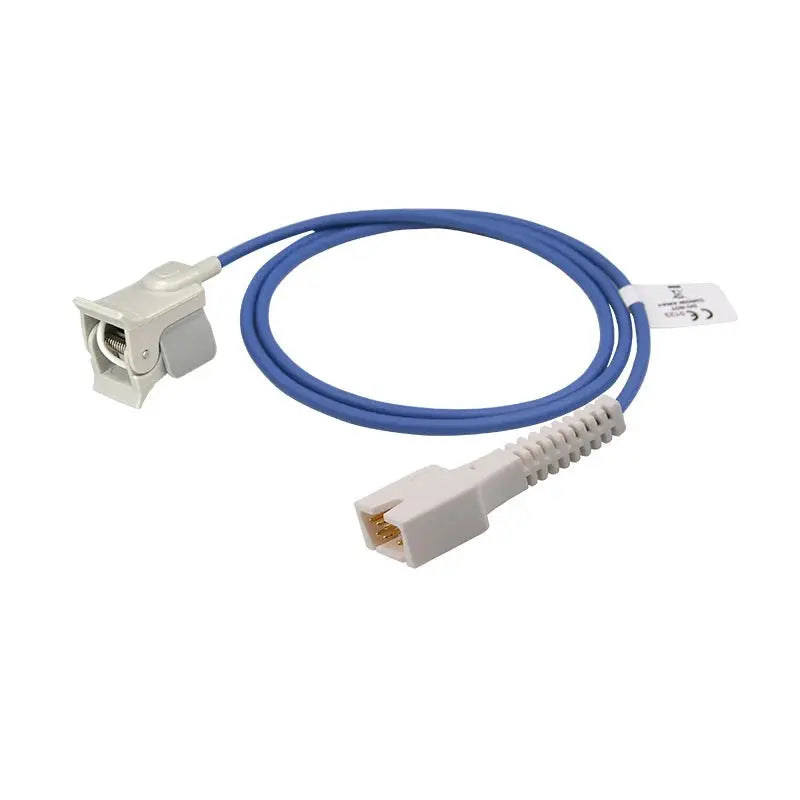
Models covered by this hub
| Model | Typical use | Modules commonly fitted |
|---|---|---|
| MX400 / MX430 | General ward, step-down, mid-acuity | SpO₂, 3/5-lead ECG, NIBP, temperature |
| MX450 | General ward, telemetry, mid-acuity | SpO₂, ECG, NIBP, temperature; optional IBP |
| MX500 / MX550 | ICU, step-down, OR | SpO₂, 5/12-lead ECG, NIBP, IBP, temperature, optional EtCO₂ |
| MX600 / MX700 | ICU, OR | SpO₂, 12-lead ECG, NIBP, multi-IBP, temperature, EtCO₂ |
| MX750 / MX800 / MX850 | ICU, OR, anesthesia | Full multi-parameter; cardiac output, gas analyzer, depth-of-anesthesia optional |
Accessory families are shared across the entire MX-series — a Philips FAST SpO₂ sensor for an MX400 is the same sensor that connects to an MX850, provided both monitors carry Philips FAST modules.
Reading path by clinical scenario
Use the scenario that matches your unit. Each gives the recommended accessory configuration and the substitutions to avoid.
Operating room
Typical monitors: MX550, MX600, MX700, MX750, MX800, and MX850. Long procedures, electrosurgical interference, fluid exposure, multiple IBP lines, and continuous EtCO₂ monitoring may shape accessory selection.
- SpO₂: a reusable adult clip can suit compatible modules when the facility has an appropriate cleaning and reprocessing workflow — M1191A compatible (Philips FAST module) or Masimo LNCS compatible (Masimo SET module). Follow the sensor instructions and the facility's cleaning and reprocessing protocol between patients.
- ECG: 5-lead or 12-lead reusable trunk cable plus disposable electrodes.
- NIBP: reusable adult cuff plus quick-connect hose.
- IBP: single-use or reusable pressure-transducer sets selected for the installed interface and local protocol.
- EtCO₂: mainstream or sidestream depending on the airway.
Avoid: patient-size mismatch, damaged cables, unverified connector substitutions, and accessories whose instructions do not cover the intended procedure or cleaning process.
Adult ICU
Typical monitors: MX450, MX500, MX550, MX600, and MX700. Continuous monitoring, frequent line changes, central-station integration, and transport in and out of the unit can increase accessory wear.
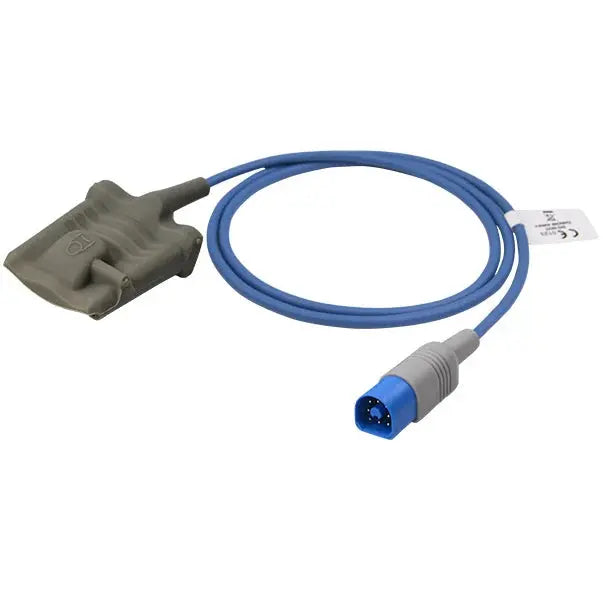
- SpO₂: reusable clips or disposable adhesive sensors selected according to patient size, skin condition, perfusion, intended duration, and local protocol. The reusable M1191A compatible is the workhorse.
- ECG: 5-lead reusable trunk cable with leadwires; disposable electrodes replaced according to the product instructions and local protocol.
- NIBP: reusable cuffs in adult and large-adult sizes; quick-connect hoses.
- IBP: single-use transducer sets are commonly selected where required by the facility's infection-control protocol.
Avoid: leaving a sensor at one site longer than permitted by its instructions or the facility’s skin-assessment protocol. Do not treat an adapter’s mechanical fit as proof of signal-technology compatibility.
NICU
Typical monitors: MX450 or MX500. The installed SpO₂ technology varies by unit and configuration, while neonatal skin condition, patient size, and monitoring duration require patient-specific sensor selection.
- SpO₂: use a neonatal wrap or infant strap whose instructions cover the patient’s size, measurement site, monitoring duration, and installed module. For Philips FAST configurations, examples include M1193A-compatible and M1195A-compatible sensor styles.
- ECG: disposable electrodes formulated for neonatal skin, 3-lead configuration.
- NIBP: neonatal cuffs in sizes 1–5 per patient weight band.
Avoid: adult or pediatric finger clips on neonatal patients unless the product instructions explicitly permit that use. Inspect the skin and rotate the site according to the sensor instructions, patient condition, and facility protocol.

Pediatric ward / PICU
Typical monitors: MX450 and MX500. Pediatric patients may cross sensor and cuff size ranges, so selection should follow the product’s specified patient range and actual measurement site.
- SpO₂: M1192A compatible pediatric clip for 10–50 kg; transition to M1191A adult clip above 50 kg. Stock both.
- ECG: 5-lead reusable trunk, pediatric-sized leadwires, pediatric-formulated electrodes.
- NIBP: pediatric cuffs in multiple sizes; transition sizes as the patient grows.
Avoid: using a sensor outside its specified patient range or when the clip no longer fits the measurement site correctly. Stock patient-appropriate pediatric and adult options when the unit serves both populations.
Patient transport
Typical monitors: MX400, MX450, portable MX500 configurations, or the X3 transport monitor. Motion, cable strain, and rapid transfers make secure routing and suitable cable length important.
- SpO₂: reusable clip with a shorter cable to reduce strain; an adhesive sensor may be considered when permitted by the product instructions and patient condition.
- ECG: pre-apply electrodes before transport rather than during.
- Cable management: clip the cable to the patient gown to reduce strain on connectors.
Avoid: cable lengths that can catch on stretcher hardware, damaged strain relief, and unverified adapter combinations in high-acuity transport.
PACU (post-anesthesia care unit)
Typical monitors: MX400, MX450, and MX500. Short monitoring periods and high patient turnover make reprocessing workflow, patient-size changes, and quick connector checks especially important.
- SpO₂: reusable or disposable sensors selected according to patient turnover, infection-control policy, skin condition, and the facility's reprocessing workflow.
- ECG: 5-lead reusable, electrodes continued from the OR.
- NIBP: reusable adult cuff with quick-connect.
Avoid: incomplete reprocessing between patients and patient-size mismatch when sensors or cuffs are moved between beds.
Compatible accessories by family — direct links
Every MedLinket accessory below is built for the Philips IntelliVue MX-series. Confirm your SpO₂ module type before ordering sensors (see the rule above). For anything not listed, browse the full Philips compatible accessories collection.
SpO₂ sensors Philips FAST 8-pin
All Philips SpO₂| OEM cross-reference | Patient / type |
|---|---|
| M1191A compatible | Adult finger clip, reusable |
| M1191BL compatible | Adult, direct-connect |
| M1194A compatible | Adult, direct-connect |
| M1196A compatible | Adult clip |
| M1192A compatible | Pediatric finger clip (10–50 kg) |
| M1192T compatible | Pediatric, short |
| M1193A compatible | Neonatal wrap (under 3 kg) |
| M1195A compatible | Infant strap (3–10 kg) |
| Masimo LNCS (1864) compatible | Adult — for MX with a Masimo SET module |
SpO₂ adapter / extension cables
All SpO₂ cables| OEM cross-reference | Configuration |
|---|---|
| M1940A compatible | 12-pin to female 8-pin |
| M1941A compatible | 8-pin to female 8-pin |
| M1943NL compatible | Adapter cable |
| M1943A / 989803128651 compatible | Adapter cable |
| 989803148221 compatible | Adapter cable |
| M1900B compatible | Adapter cable |
ECG cables & leadwires
All ECG| OEM cross-reference | Type |
|---|---|
| M1500A compatible | ECG trunk cable |
| M1663A compatible | ECG trunk cable |
| M1668A compatible | ECG trunk cable |
| M1669A compatible | ECG trunk cable |
| M1671A compatible | Leadwire set |
| M1673A compatible | Leadwire set |
| M1603A compatible | Leadwire set |
| M1605A compatible | Leadwire set |
| M1623A compatible | Leadwire set |
| M1625A compatible | Leadwire set |
| M1644A compatible | Leadwire set |
| M1968A compatible | Leadwire set |
| M1624A compatible | Infant/neonatal 3-lead miniclip |
| M1975A compatible | Direct-connect ECG cable |
| M1977A compatible | Direct-connect ECG cable |
| M3703C compatible | 10-lead direct-connect (4mm banana, IEC) |
NIBP cuffs & hoses
All NIBP| OEM cross-reference | Size / type |
|---|---|
| M1571A compatible | Reusable, infant |
| M1572A compatible | Reusable, pediatric |
| M1573A compatible | Reusable, small adult |
| M1574A compatible | Reusable, adult |
| M1575A compatible | Reusable, adult large |
| M1576A compatible | Reusable, adult thigh |
| M4573B compatible | Disposable, pediatric |
| M4574B compatible | Disposable, small adult |
| M4575B compatible | Disposable, adult |
| M4576B compatible | Disposable, adult long |
| M4577B compatible | Disposable, adult large |
| M4579B compatible | Disposable, adult thigh |
| M1866A compatible | Disposable neonatal, size 1 |
| M3918A compatible | Adult NIBP hose |
| M1599B compatible | NIBP hose |
| M1596B compatible | Infant / neonate NIBP hose |
| 989803209771 compatible | Quick-connect NIBP hose |
IBP cables
All IBP cables| OEM cross-reference | Transducer interface |
|---|---|
| 650-206 compatible | Utah transducer |
| Philips IBP (Argon) | Argon transducer, 12 ft |
| 684081 compatible | BD transducer |
| M1634A compatible | B. Braun transducer |
| 42661-27 compatible | Abbott transducer |
| 896083021 compatible | Edwards transducer |
Pair these cables with single-use disposable IBP transducers selected by your connector standard.
Temperature probes & adapters
All temperature| OEM cross-reference | Type |
|---|---|
| 21078A compatible | Reusable skin probe |
| 21075A compatible | Reusable adult esophageal/rectal |
| 21076A compatible | Reusable probe |
| M1837A compatible | Disposable probe |
| 21082A compatible | Temperature adapter cable |
| 5020411A compatible | Temperature adapter cable |
EtCO₂ & gas
All EtCO₂| OEM cross-reference | Type |
|---|---|
| CAPNOSTAT 5 compatible | Mainstream EtCO₂ sensor (8-pin) |
| M1657B compatible | Water trap (anesthetic gas) |
Common procurement pitfalls — what we see in the field
The following selection errors can cause avoidable returns, delays, or unsuitable accessory orders:
- Ordering by chassis model instead of module label. An MX500 can have different SpO₂ modules. Document the installed module, socket, and current patient cable before ordering.
- Confusing Nellcor OxiSmart 7-pin with OxiMax 9-pin. Both shells look identical; the pin counts differ. See the DS-100A product page for identification detail.
- Confusing Masimo LNCS, M-LNCS and RD. All three are rectangular Masimo connectors; the keying differs. See the LNCS compatible product page.
- Using an adapter cable for permanent deployment rather than bridge inventory. Adapter cables solve the connector mismatch but not the algorithm mismatch — see the Adapter Lab study.
- Standardising on one sensor size across mixed-population units. Stock at least two sensor sizes per unit, more if the patient distribution warrants.
How to get a configuration review
For a new purchase, fleet refresh, or standardization project, send the chassis model, installed SpO₂ module, patient population, cable length, and clinical unit. MedLinket can review the configuration and suggest compatible accessory families. Final selection should be confirmed against the monitor label, connector, product documentation, and local procurement requirements.

Frequently asked questions
How do I tell which SpO₂ module my MX monitor has?
Photograph the SpO₂ module label on the back of the monitor. When the label is unreadable, document the socket, connector face, patient-cable part number, and monitor model. Philips FAST, Masimo SET, and Nellcor OxiMax use different sensor families, so confirm the installed configuration before ordering.
Can one SpO₂ sensor cover my whole MX fleet?
Only if every monitor in the fleet carries the same SpO₂ module. If the fleet mixes Philips FAST and Masimo SET modules, you need two sensor families — for example the M1191A compatible for Philips FAST monitors and the Masimo LNCS (1864) compatible for Masimo SET monitors. Inventory the module per monitor before standardizing.
Are MX-series accessories the same as MP-series accessories?
For most accessory families, yes — provided the module configuration matches. A Philips FAST SpO₂ sensor works on an MP70 and an MX800 alike if both carry Philips FAST modules. See the MP-series hub for mixed-fleet planning.
Compatibility and trademark notice. MedLinket accessories are independently manufactured compatible alternatives and are not presented as original Philips, Masimo, Nellcor, Covidien, or Medtronic products. Brand names, monitor models, and OEM cross-references are used only to identify intended compatibility. Confirm the exact monitor, module, connector, firmware or configuration requirements, patient range, product instructions, registration status, and market availability before purchase or clinical deployment.
About MedLinket. MedLinket manufactures patient-monitoring accessories including SpO₂ sensors and adapter cables, ECG cables and leadwires, NIBP cuffs and hoses, IBP cables, temperature probes, and EtCO₂ accessories. Product registrations, certifications, specifications, availability, and verified compatibility vary by SKU, device configuration, and market; request current documentation for the exact product before purchase or clinical deployment.
