
This hub covers accessory selection for Philips IntelliVue MP-series fleets (MP2 through MP90) — many of which remain in active clinical service. The MP-series accessory challenge differs from a new MX-series fleet: original patient cables are aging out, module configurations have been retrofitted over the years, and inventory often needs to migrate to a replacement platform. As with the MX-series, the decisive factor is the SpO2 module label, not the chassis model. Jump to the complete directly-linked accessory list by family below.
Many Philips IntelliVue MP-series monitors remain in clinical service, often alongside newer platforms. This selection hub is the companion to the MX-series hub — anyone managing mixed MP and MX inventory should read both.
What determines MP-series compatibility — module, not chassis
MP-series monitors shipped with three possible SpO2 module configurations, and many monitors have had modules swapped or retrofitted over their service life:
| Module label | What it means | Sensor connector you need |
|---|---|---|
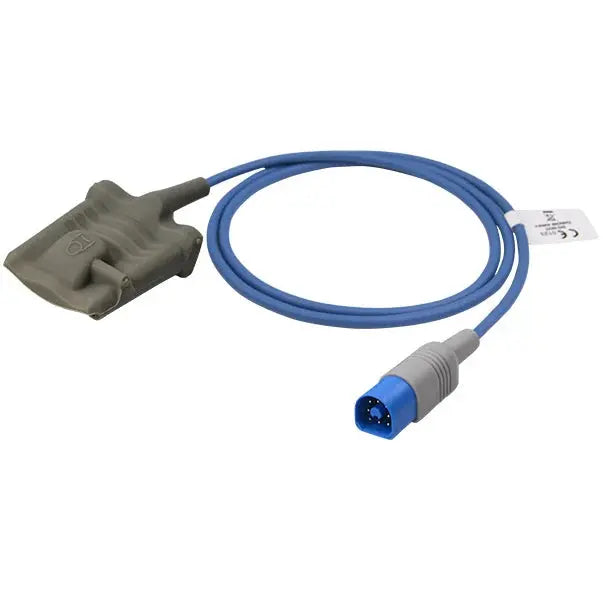
| Philips FAST SpO2 (native) | Philips's own algorithm | Philips 8-pin |
| Masimo SET | Licensed Masimo algorithm | Masimo LNCS or M-LNCS |
| Nellcor OxiMax | Licensed Nellcor algorithm | Nellcor OxiMax 9-pin |
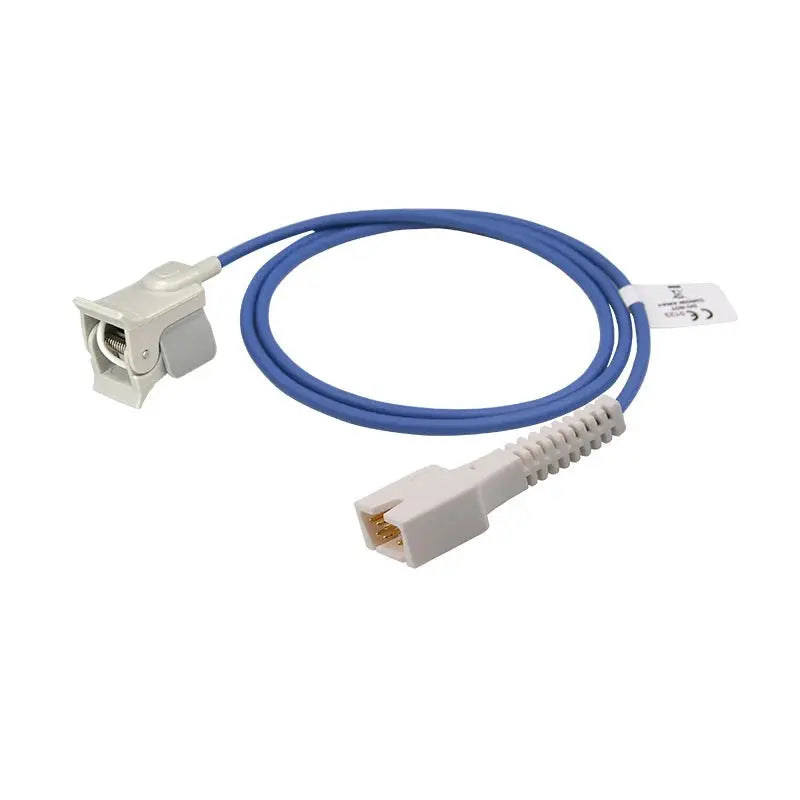
Some older MP-series configurations may use a legacy Nellcor OxiSmart connector rather than OxiMax. Do not infer the sensor family from the chassis or purchase date. Photograph the module label, socket, connector face, and current sensor part number, then compare them with the Philips SpO₂ connector identification guide.
Models covered by this hub
| Model | Typical use | Modules commonly fitted |
|---|---|---|
| MP2 | Portable, transport, general ward | SpO2, ECG, NIBP |
| MP5 / MP5T | General ward, telemetry | SpO2, ECG, NIBP, temperature |
| MP20 / MP30 | General ward, step-down | SpO2, ECG, NIBP, temperature, optional IBP |
| MP40 / MP50 | Step-down, ICU, OR | SpO2, ECG, NIBP, temperature, IBP, optional EtCO2 |
| MP60 / MP70 / MP80 / MP90 | OR, anesthesia, ICU | Full multi-parameter; cardiac output, gas analyzer, depth-of-anesthesia optional |
Many installed MP-series monitors are now mature assets. Accessory selection therefore needs to account for cable condition, past module retrofits, incomplete service records, and migration planning.
Mature-fleet maintenance — what is different about the MP-series
1. Patient cables are aging out
On a mature MP fleet, patient cables may be older than the sensors connected to them. The practical implication: you may diagnose a sensor problem when the actual fault is the aging patient cable. When evaluating a misbehaving SpO2 reading on an older MP monitor, swap the patient cable as part of troubleshooting — it is often the older, less-replaced component in the signal chain.
2. Module configurations have been retrofitted over time
A 20-year-old MP70 may have had its SpO2 module replaced once or twice. The current configuration may not match what the monitor originally shipped with. Document the current module configuration of each monitor, not the factory configuration — the current one determines accessory ordering.
3. Service documentation may be incomplete
For monitors in service since 2003–2010, original service records may be lost or archived to inaccessible systems. When ordering accessories for older MP monitors you may need to rely on physical evidence — connector inspection and module labels. Clear photographs of the module label, socket, connector face, and existing part number can support a compatibility review when service documentation is incomplete.
4. Mixed MP and MX inventory is common
Most hospitals that bought MP-series during 2003–2015 also bought MX-series afterwards, and one BMET department manages both. The good news: most compatible accessory families work across both MP and MX, provided the module configuration matches — a Philips FAST M1191A-compatible sensor works on an MP70 with a Philips FAST module and an MX800 with a Philips FAST module alike.
5. End-of-service planning
Each MP-series monitor reaches a point where OEM parts and service support end. The monitor then migrates to a less-acute setting, is donated to a lower-resource setting, or is decommissioned. In all three cases the associated accessory inventory needs a plan. Compatible accessories with longer support horizons are the path to extending monitor life into a less-acute setting safely.
Reading path by clinical scenario
The clinical scenario logic for the MP-series mirrors the MX-series — refer to the MX-series scenario reading path for OR, ICU, NICU, pediatric, transport and PACU configuration. The MP-specific overlay:
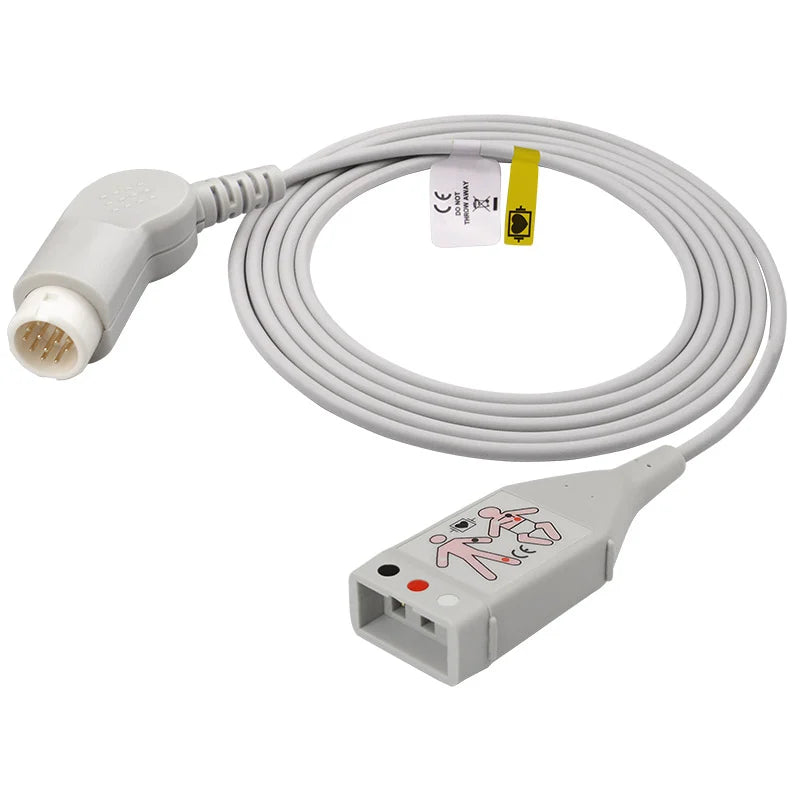
- OR (MP50–MP90): ECG trunk and IBP cables over 10 years old often develop intermittent contacts in the OR's high-interference environment. Replace aging trunk cables proactively — inspect and replace aging trunk cables according to condition, signal performance, service history, and the applicable instructions.
- Adult ICU (MP30–MP70): SpO2 sensors in continuous ICU use need frequent replacement. Stock the M1191A-compatible, LNCS-compatible, or DS-100A-compatible sensor depending on each monitor's module.
- NICU (MP20–MP50): NICU-deployed MP monitors are often the longest-serving in a hospital. Take a more conservative replacement schedule — replace cables, sensors and trunk leads at the first sign of intermittent behavior. Use the M1193A-compatible neonatal wrap for Philips FAST modules.
- Pediatric / PICU (MP30–MP50): as adult ICU plus the M1192A-compatible pediatric clip for the pediatric population.
- Transport (MP2, MP5): transport cables wear faster than ward cables. Stock replacement transport cables and sensors at higher reorder levels.
- PACU (MP20–MP40): high throughput plus older equipment makes cleaning-related cable degradation the common failure mode. Inspect cables at every weekly biomedical walk-through.
MP-to-MX migration planning
When an MP-series monitor is replaced with an MX-series monitor, several accessory decisions matter:
- Do accessories migrate with the patient? If a patient is being monitored on an MP70 and the monitor is swapped for an MX700, the accessories should ideally move with the patient — which requires the same module configuration. Confirm before the swap.
- What happens to MP-specific accessory inventory? If the old MP fleet used Philips FAST modules and the new MX fleet uses Masimo SET modules, the SpO2 sensor inventory does not migrate. Use existing Philips FAST sensors on remaining MP monitors until end-of-service, then transition to LNCS inventory.
- Are there accessories that span both? Yes, across all module families — standardising on one compatible inventory across both fleets reduces complexity during migration. See the MX-series hub for the matching accessory list.
Compatible accessories by family — direct links
The accessories below are organized as Philips IntelliVue MP-series compatibility cross-references. Confirm each monitor’s current SpO₂ module, connector, patient category, cable configuration, and intended use before ordering. For products not listed, browse the full Philips compatible accessories collection.
SpO2 sensors by module
All Philips SpO2| OEM cross-reference | Patient / type | Module |
|---|---|---|
| M1191A compatible | Adult finger clip, reusable | Philips FAST |
| M1191BL compatible | Adult, direct-connect | Philips FAST |
| M1194A compatible | Adult, direct-connect | Philips FAST |
| M1196A compatible | Adult clip | Philips FAST |
| M1192A compatible | Pediatric finger clip (10–50 kg) | Philips FAST |
| M1192T compatible | Pediatric, short | Philips FAST |
| M1193A compatible | Neonatal wrap (under 3 kg) | Philips FAST |
| M1195A compatible | Infant strap (3–10 kg) | Philips FAST |
| Masimo LNCS (1864) compatible | Adult | Masimo SET |
| DS-100A compatible | Adult clip — legacy fleets | Nellcor |
| DS-100-N0 compatible | Adult clip, short | Nellcor |
SpO2 adapter / extension cables
All SpO2 cables| OEM cross-reference | Configuration |
|---|---|
| M1940A compatible | 12-pin to female 8-pin |
| M1941A compatible | 8-pin to female 8-pin |
| M1943NL compatible | Adapter cable |
| M1943A / 989803128651 compatible | Adapter cable |
| 989803148221 compatible | Adapter cable |
| M1900B compatible | Adapter cable |
ECG cables & leadwires
All ECG| OEM cross-reference | Type |
|---|---|
| M1500A compatible | ECG trunk cable |
| M1663A compatible | ECG trunk cable |
| M1668A compatible | ECG trunk cable |
| M1669A compatible | ECG trunk cable |
| M1671A compatible | Leadwire set |
| M1673A compatible | Leadwire set |
| M1603A compatible | Leadwire set |
| M1605A compatible | Leadwire set |
| M1623A compatible | Leadwire set |
| M1625A compatible | Leadwire set |
| M1644A compatible | Leadwire set |
| M1968A compatible | Leadwire set |
| M1624A compatible | Infant/neonatal 3-lead miniclip |
| M1975A compatible | Direct-connect ECG cable |
| M1977A compatible | Direct-connect ECG cable |
| M3703C compatible | 10-lead direct-connect (4mm banana, IEC) |
NIBP cuffs & hoses
All NIBP| OEM cross-reference | Size / type |
|---|---|
| M1571A compatible | Reusable, infant |
| M1572A compatible | Reusable, pediatric |
| M1573A compatible | Reusable, small adult |
| M1574A compatible | Reusable, adult |
| M1575A compatible | Reusable, adult large |
| M1576A compatible | Reusable, adult thigh |
| M4573B compatible | Disposable, pediatric |
| M4574B compatible | Disposable, small adult |
| M4575B compatible | Disposable, adult |
| M4576B compatible | Disposable, adult long |
| M4577B compatible | Disposable, adult large |
| M4579B compatible | Disposable, adult thigh |
| M1866A compatible | Disposable neonatal, size 1 |
| M3918A compatible | Adult NIBP hose |
| M1599B compatible | NIBP hose |
| M1596B compatible | Infant / neonate NIBP hose |
| 989803209771 compatible | Quick-connect NIBP hose |
IBP cables
All IBP cables| OEM cross-reference | Transducer interface |
|---|---|
| 650-206 compatible | Utah transducer |
| Philips IBP (Argon) | Argon transducer, 12 ft |
| 684081 compatible | BD transducer |
| M1634A compatible | B. Braun transducer |
| 42661-27 compatible | Abbott transducer |
| 896083021 compatible | Edwards transducer |
Pair these cables with single-use disposable IBP transducers selected by your connector standard. On OR-deployed MP50–MP90 monitors over 10 years old, replace IBP cables proactively — intermittent contacts are a common aging failure.
Temperature probes & adapters
All temperature| OEM cross-reference | Type |
|---|---|
| 21078A compatible | Reusable skin probe |
| 21075A compatible | Reusable adult esophageal/rectal |
| 21076A compatible | Reusable probe |
| M1837A compatible | Disposable probe |
| 21082A compatible | Temperature adapter cable |
| 5020411A compatible | Temperature adapter cable |
EtCO2 & gas
All EtCO2| OEM cross-reference | Type |
|---|---|
| CAPNOSTAT 5 compatible | Mainstream EtCO2 sensor (8-pin) |
| M1657B compatible | Water trap (anesthetic gas) |
How to get a configuration review for MP-series fleets
Send the MP-series chassis model, current module labels, connector photographs, existing accessory part numbers, clinical unit, patient categories, and required quantities. MedLinket can return a model-specific accessory shortlist and identify items that may carry over to an MX-series fleet. Final compatibility should be documented for the exact monitor and accessory configuration.

Frequently asked questions
Our older MP monitor reports "sensor problem" — is the sensor really the fault?
Often not. On a monitor 10–20 years old, the patient cable is frequently the least-replaced component in the signal chain, and an aging cable produces symptoms that look like a sensor fault. Swap the patient cable as part of troubleshooting before condemning the sensor.
The module label on our MP monitor has worn off — how do I identify it?
The connector and socket geometry can help identify the family when the label is unreadable. Photograph the module area, socket, connector face, and current sensor part number, then request a compatibility review before ordering.
Can we still get accessories for the oldest MP monitors?
Compatible accessories may remain available for older connector families, but availability must be confirmed for the exact part, configuration, intended use, and market. Continued accessory supply does not replace the hospital’s service-life, safety, and decommissioning criteria.
Compatibility and trademark notice. MedLinket compatible accessories are independently manufactured and are not presented as Philips, Masimo, Nellcor, Covidien, or Medtronic original products. Third-party names and part numbers are used only to identify the equipment, technology, or cross-reference being matched. Confirm the exact monitor model, current module, connector, patient category, cable configuration, firmware requirements where applicable, and intended use before clinical deployment. This page is intended for trained biomedical, clinical engineering, procurement, and healthcare personnel and does not replace the monitor or accessory instructions for use.
About MedLinket. MedLinket manufactures patient-monitoring accessories including SpO₂ sensors and adapter cables, ECG cables and leadwires, NIBP cuffs and hoses, IBP cables, temperature probes, and EtCO₂ accessories. Product registrations, certifications, specifications, availability, and verified compatibility vary by SKU, device configuration, and market; request current documentation for the exact product before purchase or clinical deployment.
