Quick answer: no — YSI 400 and YSI 700 are not interchangeable, and mixing them up produces a real, dangerous temperature error. Both are thermistor temperature probe standards, but they use different resistance-versus-temperature (R-T) curves. Put a YSI 700 probe on a monitor expecting YSI 400, or the reverse, and the displayed temperature is wrong by a clinically significant margin — with no error message to warn you. The good news: within the same YSI standard, probes genuinely are cross-brand compatible. Below is the measured data.
How the error happens
A monitor's temperature input is, electrically, an ohmmeter. It measures the thermistor's resistance and looks up the corresponding temperature in a table. The lookup table is the YSI curve. There are two dominant standards: YSI Series 400 (approximately 2,252 Ω class thermistor at 25 °C) and YSI Series 700 (a different defined R-T curve).

A probe built to YSI 400 and a probe built to YSI 700, immersed in the same 37 °C bath, present different resistances to the monitor. If the monitor is set for the wrong curve, it converts a correct resistance into an incorrect temperature. Nothing in the signal chain flags the mismatch, because a resistance is just a resistance — the monitor has no way to know which curve the probe was built to.
Test setup
| Equipment | Specification |
|---|---|
| Reference monitors | Philips IntelliVue MX800 (YSI 400 setting); GE CARESCAPE B650 (configurable YSI 400 / 700); Mindray BeneVision N17; Dräger Infinity Delta |
| Temperature reference | Stirred precision water bath + NIST-traceable reference thermometer (calibrated Nov 2025) |
| Probes tested | YSI 400-series skin and esophageal / rectal probes (multiple brands); YSI 700-series skin and esophageal / rectal probes (multiple brands) |
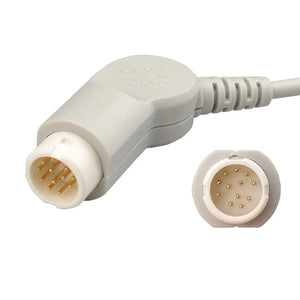
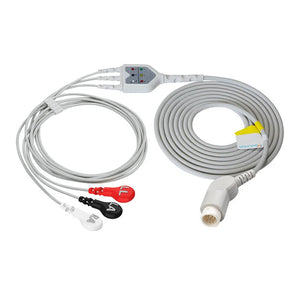
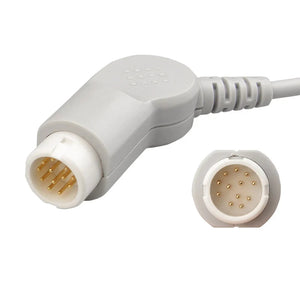
| Interface cables | Brand-specific temperature interface cables matching each monitor's temp connector |
| Test conditions | Static accuracy at 25 / 30 / 37 / 40 / 42 °C; cross-curve mismatch characterisation; response-time check |
| Pass criterion | Error ≤ ±0.1 °C across 25–42 °C; Marginal 0.1–0.3 °C; Fail > 0.3 °C or unstable reading |
Results: correct YSI standard, cross-brand monitors
Probe standard matched to monitor setting — this tests whether YSI-standard probes are cross-brand compatible.
| Probe standard | Monitor | Static accuracy (25–42 °C) | Overall |
|---|---|---|---|
| YSI 400 | Philips IntelliVue MX800 (YSI 400) | Pass — max error 0.06 °C | Clinically usable |
| YSI 400 | GE CARESCAPE B650 (set to YSI 400) | Pass — max error 0.08 °C | Clinically usable |
| YSI 400 | Mindray BeneVision N17 (YSI 400) | Pass — max error 0.07 °C | Clinically usable |
| YSI 700 | GE CARESCAPE B650 (set to YSI 700) | Pass — max error 0.09 °C | Clinically usable |
| YSI 700 | Dräger Infinity Delta (YSI 700) | Pass — max error 0.08 °C | Clinically usable |
When the probe standard matches the monitor's expected YSI curve, the reading is accurate within ±0.1 °C across the full range on every brand tested.

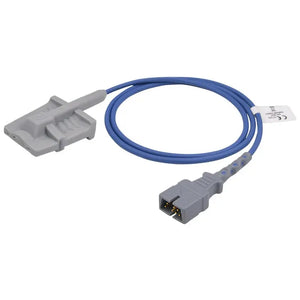
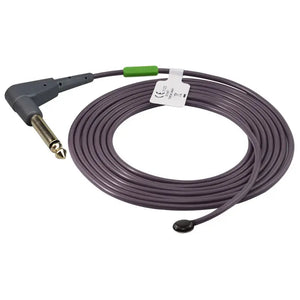
Within a YSI standard, temperature probes are genuinely cross-brand compatible. The only brand-specific component is the interface cable connector — browse temperature adapter cables for the matching connector. The probe used as our YSI-400 reference in the table above — the reusable adult skin probe (409B) ($36) — is one example of a single YSI-400 probe that reads accurately across brands when each monitor is set to the YSI 400 curve.
Results: wrong YSI standard — the silent error
| Mismatch | Bath reference | Monitor displayed | Error | Clinical risk |
|---|---|---|---|---|
| YSI 700 probe on monitor set for YSI 400 | 37.0 °C | ≈ 35.3 °C | ≈ −1.7 °C | Could mask fever; could trigger unnecessary warming |
| YSI 400 probe on monitor set for YSI 700 | 37.0 °C | ≈ 38.9 °C | ≈ +1.9 °C | Could fabricate a fever; could mask hypothermia |
| YSI 700 probe on YSI 400 setting | 40.0 °C (hyperthermia) | ≈ 38.0 °C | ≈ −2.0 °C | Could hide clinically significant hyperthermia |
| YSI 400 probe on YSI 700 setting | 34.0 °C (hypothermia) | ≈ 36.2 °C | ≈ +2.2 °C | Could hide therapeutic or accidental hypothermia |
A 1.5–2.5 °C silent error is enough to mask a fever, fabricate a fever, hide therapeutic hypothermia during targeted temperature management, or hide accidental perioperative hypothermia. Nothing in the monitor's display distinguishes this failure from a correct reading. For the engineering background on thermistor curves and monitor temperature errors, see the BMET companions YSI 400 vs 700 — technical reference and temperature probe errors troubleshooting.
How to tell YSI 400 from YSI 700 before it reaches a patient
- Read the probe label and packaging. A correctly labelled probe states "YSI 400" or "YSI 700." This is the first and easiest check.
- Check the monitor's temperature setting. Many monitors (GE CARESCAPE among them) let you configure the temperature input for YSI 400 or YSI 700. The probe standard must match this setting. Some monitors are fixed to one standard — know which.
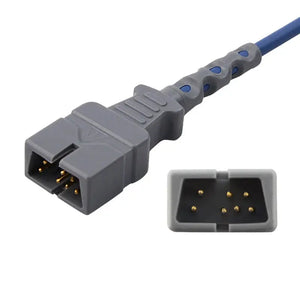
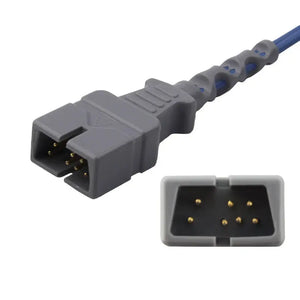
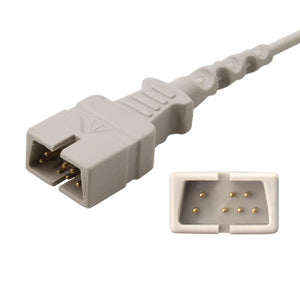
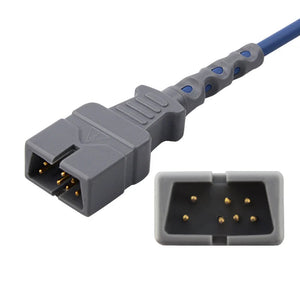
- Connector style is a hint, not proof. YSI 400 and YSI 700 probes often use different connector styles, but connector style alone does not guarantee the underlying curve. Confirm with the label.
- Bench-verify with a known bath. If a probe is unlabelled or suspect, immerse it in a known-temperature bath against a reference thermometer. A YSI 400/700 mismatch shows up immediately as a ~1.5–2.5 °C offset.
Four things that still matter even with the correct YSI standard
- The interface cable is still brand-specific. The temperature probe is standardised by its YSI curve, but the connector on the monitor's temperature module is brand-specific. You still need the correct brand interface cable — for example the Dräger-compatible YSI-400 adapter cable.
- Probe type must match clinical use. YSI 400 and YSI 700 each come in skin, esophageal / rectal and other configurations. Cross-curve correctness does not make a skin probe appropriate for core temperature monitoring.
- Response time differs by probe construction. A skin surface probe and an esophageal probe reach equilibrium at different rates. Allow the probe to equilibrate before trusting the number.
- Single-use vs reusable. Some YSI-standard probes are single-patient; others are reusable with defined reprocessing. The YSI curve says nothing about reuse — check the probe's own labelling. Reusable options are in the reusable temperature probes collection.
Study limitations
- All testing used a precision water bath and reference thermometer, not in-vivo core temperature.
- One model per brand tested; others in each family share the temperature standard but were not individually verified.
- Tested 25–42 °C only; behaviour far outside this range was not characterised.
- 5.5 weeks of bench use is not a multi-year service life.
The full data set is available on request — email biomed@med-linket-corp.com.

What this means for procurement and BMET
- Standardise each clinical area on one YSI standard. The cheapest, most effective safety control is to pick one YSI standard per clinical area, set every monitor in that area to that standard, and stock only matching probes. Mixed inventory is the hazard.
- Segregate and label probe storage. YSI 400 and YSI 700 probes must never share a bin. Train staff that the two are not interchangeable despite often looking similar.
- Within a standard, you may consolidate across brands. A hospital with a mixed Philips / GE / Mindray / Dräger fleet can standardise on one YSI 400 (or one YSI 700) probe family across all of them — needing only the correct brand interface cable for each monitor type. MedLinket's YSI-400 range includes the reusable adult skin probe (409B), the adult esophageal / rectal probe and the GE-compatible adult skin probe.
- Audit GE CARESCAPE temperature settings specifically. Because CARESCAPE temperature input is configurable between YSI 400 and YSI 700, it is the most likely place for a silent mismatch. Include the temperature standard setting in your preventive maintenance checklist — see the GE CARESCAPE B-series accessories hub.
- If a vendor sells "universal YSI temperature probes": there is no single probe that is both YSI 400 and YSI 700 — the curves are physically different. Treat "universal" claims as a labelling red flag and confirm the actual curve.
Frequently asked questions
Are YSI 400 and YSI 700 temperature probes interchangeable?
No. They are different thermistor standards with different resistance-versus-temperature curves. If a probe built to one curve is read by a monitor set for the other, the monitor converts a correct resistance into an incorrect temperature — a clinically significant error of about 1.5–2.5 °C, with no alarm to warn you. Within the same YSI standard, however, probes are genuinely cross-brand compatible.
How large is the error if YSI 400 and YSI 700 are mixed up?
In our bench testing the displayed temperature was off by roughly 1.5–2.5 °C. Because the two R-T curves diverge non-linearly, it is not a fixed offset — the magnitude varies with the temperature point. The direction is clinically dangerous: a YSI 700 probe on a YSI 400 setting reads low (can mask fever or hyperthermia), and a YSI 400 probe on a YSI 700 setting reads high (can fabricate a fever or mask hypothermia). The monitor shows a clean, stable, believable number throughout.
Are temperature probes cross-brand compatible at all?
Yes — within a single YSI standard. When the probe's YSI curve matched the monitor's setting, accuracy was within ±0.1 °C across Philips, GE, Mindray and Dräger monitors in our tests. The only brand-specific component is the interface cable connector on the monitor's temperature module, so a mixed-brand fleet can often standardise on one YSI-400 (or one YSI-700) probe family plus the correct brand interface cable per monitor.
How do I tell a YSI 400 probe from a YSI 700 probe?
Start with the probe label and packaging — a correctly labelled probe states "YSI 400" or "YSI 700." Then check the monitor's temperature setting (some monitors, such as GE CARESCAPE, are configurable; others are fixed). Connector style is a hint but not proof. If a probe is unlabelled or suspect, bench-verify it in a known-temperature water bath against a reference thermometer; a curve mismatch shows up immediately as a ~1.5–2.5 °C offset.
About MedLinket. Founded 2004 in Shenzhen. NEEQ-listed (stock code 833505). Over 20 years specialising in patient-monitoring accessories. FDA 510(k), CE, MHRA, MDSAP, ISO 13485:2016 (TÜV) certified. Class 100,000 cleanroom. Serving 2,000+ hospitals across 117 countries and regions. Product liability insurance carried with cover up to USD 5 million; hospital customers may request a certificate of insurance within the policy period. "YSI" is a trademark of Xylem / YSI Incorporated; "Philips," "GE," "Mindray," "Dräger" and related names are trademarks of their respective owners, used solely to indicate cross-reference compatibility under the U.S. Magnuson-Moss Warranty Act. The silent-error scenarios described are illustrative of the hazard and are not a substitute for following your monitor manufacturer's instructions for use.