Pre-ductal SpO₂ (right hand) and post-ductal SpO₂ (foot) in a healthy newborn should both read ≥95% with a difference of ≤3%, measured between 24–48 hours of life. A foot reading more than 3% lower than the right hand suggests right-to-left ductal shunting and warrants urgent echocardiography to rule out critical congenital heart disease (CCHD). Any single value below 90% is an automatic screening fail.
I have spent the better part of my 22 years in Level III and Level IV NICUs watching well-appearing newborns deteriorate within hours of a missed differential — which is why the gap between preductal and postductal oxygen saturation gets my attention every single shift. The two readings look almost identical on a normal baby. When they don't, that 3-percentage-point gap is often the first and only warning that something inside the chest is profoundly wrong, long before color, feeding, or respiratory effort give it away.
This guide explains the physiology, the bedside technique, and the decision pathway I teach new graduates every orientation cycle: what pre- and post-ductal sats actually represent, what numbers should worry you, and the exact workup sequence we run when the gap exceeds threshold. The article reflects current AAP, AHA, and CDC CCHD screening recommendations alongside techniques refined at the bedside in U.S. nurseries and NICUs.
A quick note on terminology
I. Pre- and Post-Ductal SpO₂: Definitions and Sites
A) What each reading actually measures
Pre-ductal SpO₂ (right hand) reflects systemic arterial oxygen saturation before any blood passes the ductus arteriosus. The anatomic reason this works is straightforward: the right subclavian artery branches from the brachiocephalic (innominate) trunk, which arises from the aortic arch proximal to the duct. A probe on the right palm or right index finger therefore samples blood that has come straight out of the left ventricle without any opportunity to mix with deoxygenated pulmonary-arterial blood crossing through a patent duct.
Post-ductal SpO₂ (either foot) reflects oxygenation after the descending aorta has picked up whatever blood the duct is delivering. In a healthy newborn with a closing duct and normal pulmonary pressures, that contribution is negligible and the foot reads almost identically to the hand. In a baby with persistent pulmonary hypertension, critical coarctation, or an interrupted aortic arch, the foot reading drops because deoxygenated blood from the pulmonary artery is being shunted right-to-left into the descending aorta — exactly the pattern called differential cyanosis.
Comparing the two sites — what we shorthand as "pre-ductal vs. post-ductal" — is the entire diagnostic point. A single SpO₂ value, no matter how you take it, can't distinguish a global oxygenation problem from a localized shunt; only the gradient can.
| Parameter | Pre-ductal (Right Hand) | Post-ductal (Foot) |
|---|---|---|
| Vascular origin | Right subclavian → brachiocephalic trunk → aortic arch (proximal to duct) | Descending aorta (distal to duct) |
| Typical probe site | Right palm, right index finger, or right wrist | Dorsum or plantar surface of either foot |
| Normal value at 24–48 hr | ≥95% | ≥95%, within 3% of hand |
| Clinical significance if low | Suggests global hypoxemia (lung disease, low cardiac output) | Suggests right-to-left ductal shunt — differential cyanosis |
B) Bedside technique that actually produces clean numbers
Pre-ductal probe placement (right hand)
Wipe the palm and finger with a dry gauze first — vernix and amniotic fluid residue scatter the LED light and produce false low readings on the first attempt about a third of the time. Wrap the probe so the LED and photodetector face each other directly across the digit, and dress the cable so the baby can't pull it free during a startle. Allow 30–60 seconds for a stable plethysmographic waveform before recording the value; if the pulse rate displayed by the oximeter doesn't match the cardiac monitor or palpated rate within ±5 bpm, the reading is unreliable and the probe needs to be repositioned.
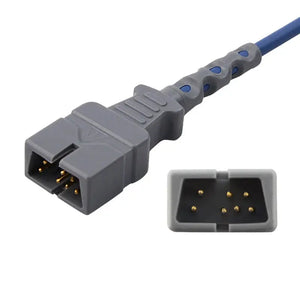
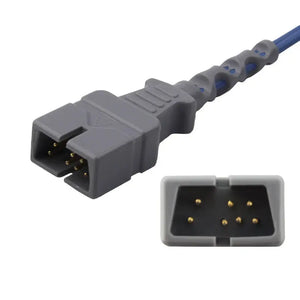
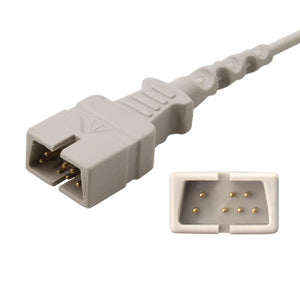
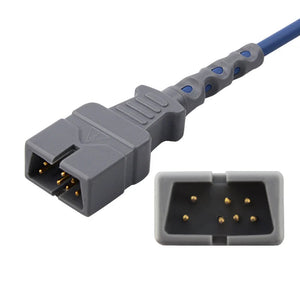
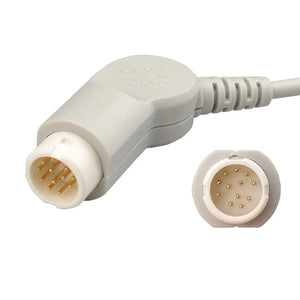
When connecting neonatal SpO₂ sensors to a bedside monitor, the connector pinout has to match the monitor's port — a mismatch will either fail to read or, worse, produce plausible-looking but incorrect values. Our SpO₂ connector pinout reference is the resource I send our biomedical engineering team when we're qualifying new sensor stock.
Post-ductal probe placement (foot)
The foot is harder than the hand for two reasons: it tends to be cooler (especially in the first hours of life), and it moves more during the screening window. Use a wrap-style silicone sensor sized for neonates rather than a clip-style adult probe — a clip on a foot will either fall off or compress capillary perfusion enough to produce a false low reading. Warm the foot in your hand for 30 seconds if it feels cool; cold extremities are the single most common cause of post-ductal screening failures that resolve on recheck.
I had a 39-week baby in our well-baby nursery last spring who failed her initial screen with a foot reading of 91% against a hand reading of 96%. The intern was already calling cardiology when I noticed the foot was visibly cool and mottled — the room had been at 68°F all night and the baby had been uncovered during a feed. We warmed her foot, repositioned the probe on the dorsum where perfusion is usually better than the plantar surface in cool extremities, and re-screened 30 minutes later: 97% on both hand and foot. The lesson I drill into every new graduate is that artifact rule-out comes first, but you only get to skip the cardiology consult if the recheck is clean. Real differential cyanosis does not normalize with warming.
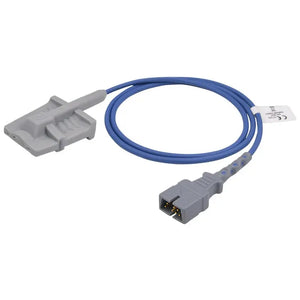
Wrap-Style SpO₂ Sensor for Neonatal Post-Ductal Measurement
Post-ductal measurement on a newborn foot needs a silicone wrap sensor that conforms to a small extremity without compressing perfusion — exactly the issue described above. This Nellcor M1193T-compatible neonatal wrap sensor is the form factor most U.S. nurseries standardize on for foot screening.
View Neonatal Wrap SpO₂ Sensor → Nellcor M1193T compatible · Silicone wrap · Designed for neonatal hand/foot monitoringWhenever feasible, place both probes simultaneously rather than sequentially. A baby's saturation can drift several percentage points within a minute of crying, feeding, or settling, and a sequential measurement spaced 90 seconds apart is essentially comparing two different physiological states. The pass/fail thresholds in CCHD screening assume simultaneous values.
II. How the Two Numbers Drive the Diagnosis
Universal pulse oximetry screening for CCHD has been standard of care in U.S. nurseries since the AAP and AHA jointly endorsed it in 2011 and the Department of Health and Human Services added it to the Recommended Uniform Screening Panel. The reason it works is that roughly half of the seven targeted critical lesions — hypoplastic left heart syndrome, pulmonary atresia, tetralogy of Fallot, total anomalous pulmonary venous return, transposition of the great arteries, tricuspid atresia, and truncus arteriosus — produce a measurable saturation drop or differential before they produce visible cyanosis or hemodynamic collapse.
The interpretive thresholds I work with at the bedside are tighter than most published summaries suggest, and they're worth memorizing in their exact form:
- Pass: SpO₂ ≥95% in either limb AND difference between hand and foot ≤3%.
- Recheck zone: SpO₂ 90–94% in either limb, OR a hand-foot difference of 4% or more. Repeat the screen in one hour; three failed checks (one hour apart) constitute a positive screen.
- Automatic fail: SpO₂ <90% in either limb on any single screen — go straight to clinical evaluation, no recheck wait.
The reason a 4% gap pushes me toward echocardiography even when both absolute values look acceptable is that the gradient itself is the more sensitive indicator for ductal-dependent and right-to-left shunt physiology. A baby reading 96% on the hand and 92% on the foot is "passing" if you only look at the absolute numbers — but that 4% difference is exactly the pattern of early differential cyanosis from a critical coarctation, and waiting another hour for the duct to close further can be the difference between a stable transfer and a code in the nursery.
The case I think about most often happened in my second year as a charge nurse. A term infant, breastfeeding well, normal exam, no murmur. Initial screen at 26 hours: 97% right hand, 92% foot. Both technically above 90%, but the 5% gradient was the only abnormal finding on the entire chart. The covering pediatrician wanted to recheck in an hour and discharge if it normalized. I pushed for the echo because I'd seen this pattern resolve too "conveniently" before in coarctation cases where the duct is partially closing. The echo showed a critical preductal coarctation. Prostaglandin was started within an hour, the baby went to the children's hospital that afternoon, and the surgical repair at day 5 went uncomplicated. The 5% gap was the only thing that flagged that baby. That case is the reason I treat every gradient ≥4% as an echocardiogram trigger, not a recheck trigger.
III. Reference Ranges and Interpreting the Gap
A) Normal SpO₂ ranges by population
| Population | Typical SpO₂ range | Clinical context |
|---|---|---|
| Healthy adults at sea level | 95–100% | Reference baseline |
| Term newborn, first 10 minutes of life | 60% rising to ~90% | Normal transitional physiology — do not screen this early |
| Term newborn, 24–48 hr (CCHD screening window) | 95–100%, ≤3% hand-foot difference | Standard screening target |
| Preterm infant on supplemental O₂ | 91–95% (per NICHD SUPPORT/BOOST trial guidance) | Lower target reduces ROP risk; upper limit reduces oxidative injury |
| Adults at high altitude (>2,500 m) | ~90–95% | Altitude-adjusted screening thresholds may apply |
| Stable COPD with chronic hypoxemia | 88–92% under physician supervision | Higher targets risk hypercapnic respiratory failure |
| Cyanotic CHD, palliated single-ventricle physiology | 75–85% (cardiology-individualized) | Balance Qp:Qs to avoid pulmonary overcirculation |
A persistent SpO₂ below 90% in a term infant beyond the first 10 minutes of life is never normal, regardless of which site you measured.
B) What different gap sizes typically mean
- ≤2% difference: Expected. Normal transitional physiology with a closing duct.
- 3% difference: Borderline. Document and recheck before discharge; not a fail by AAP criteria but worth a second look if the baby has any other soft sign (mild tachypnea, intermittent grunting, lower-than-usual feeding effort).
- 4–5% difference: Clinically significant. Right-to-left ductal shunting until proven otherwise. Common etiologies: persistent pulmonary hypertension of the newborn (PPHN), critical coarctation, interrupted aortic arch type B, and the early presentation of total anomalous pulmonary venous return.
- ≥6% difference: Strongly diagnostic of a duct-dependent or shunt-mediated lesion. Echo within the hour, prostaglandin E₁ ready at the bedside, NICU transfer initiated.
Two physiologies generate the largest gradients I see in practice:
- Persistent pulmonary hypertension of the newborn (PPHN): Pulmonary vascular resistance fails to drop after birth, the duct stays open, and right ventricular blood preferentially shunts right-to-left into the descending aorta. The classic bedside signal is a hand-foot gradient of 10% or more that swings with each FiO₂ change.
- Critical coarctation of the aorta: The narrowing sits just at or below the ductal insertion. While the duct is open, the lower body is perfused from the pulmonary artery via right-to-left ductal flow, masking the obstruction. As the duct closes over the first 24–72 hours, lower-body perfusion collapses and the foot saturation — and femoral pulses — drop precipitously. Pre-/post-ductal screening is often the only thing that catches this lesion before the baby presents in shock.

IV. When the Gap Exceeds Threshold: The Workup I Actually Run
A) The first 5 minutes — rule out artifact, but don't get stuck there
- Confirm probe placement. Right hand for pre-ductal — not left, not either hand. The left subclavian arises distal to the duct and will give you a falsely low pre-ductal reading.
- Check the plethysmographic waveform on both monitors. A flat or jagged waveform means you don't have a reliable signal regardless of the displayed number.
- Verify the displayed pulse rate matches the cardiac monitor within ±5 bpm. A mismatch usually means motion artifact or a poorly perfused extremity.
- Warm cool extremities. A foot that's pale, mottled, or cool to touch will under-read; 30 seconds of warming in your hand often corrects this.
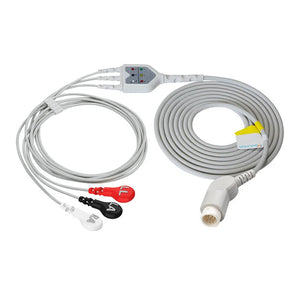
- Inspect the cable and connector. A degraded cable, cracked silicone wrap, or oxidized connector pin can produce intermittent low readings. If your unit's monitors are routinely throwing screening failures that resolve on probe swap, that's a fleet-wide issue worth flagging — regular calibration of patient monitor accessories and routine sensor replacement intervals matter more than people realize.
Artifact rule-out should take five minutes, not fifty. If the gradient is still ≥4% after artifact correction, move on.
B) Diagnostic workup once the gradient is real
- Echocardiography is the gold standard. A pediatric cardiologist (or, in many U.S. centers, a tele-echo service) can image the four-chamber view, great vessel relationships, and ductal flow direction within 30 minutes of order. ASE 2024 pediatric TTE guidelines are the current reference.
- Arterial blood gas (ABG) drawn from a pre-ductal site (right radial preferred). Provides true PaO₂, PaCO₂, and acid-base status. A PaO₂ <100 mmHg on 100% FiO₂ during a hyperoxia test classically suggests cyanotic CHD over primary lung disease.
- Four-extremity blood pressures. A right-arm-to-leg systolic gradient ≥10–20 mmHg is the classic coarctation finding; combined with the pre/post-ductal SpO₂ gradient, it's often diagnostic at the bedside before the echo arrives.
- Chest X-ray. Evaluates lung fields, cardiothymic silhouette, and pulmonary vascularity (the "egg on a string" of TGA, the "boot-shaped heart" of TOF, or oligemic lungs in pulmonary atresia).
- BNP or NT-proBNP if heart failure physiology is suspected, particularly in coarctation or anomalous pulmonary venous return.
C) Initial management while imaging is pending
- Suspected duct-dependent lesion: Initiate prostaglandin E₁ (alprostadil) at 0.01–0.05 mcg/kg/min via central or large peripheral line. Apnea is the most common adverse effect — have intubation equipment at the bedside before you start the infusion.
- Suspected PPHN: Optimize ventilation and oxygenation, consider inhaled nitric oxide at 20 ppm, and prepare for high-frequency oscillatory ventilation or ECMO if oxygenation index exceeds 25.
- Suspected critical coarctation: Avoid aggressive fluid resuscitation if heart failure physiology is present — preload optimization and PGE₁ to reopen the duct buy time for surgical or catheter-based repair.
V. Standardized Screening — Timing, Workflow, Documentation
A) Timing and technique
- When to screen: 24–48 hours of life is the AAP-endorsed window. Earlier than 24 hours produces an unacceptably high false-positive rate from ongoing transitional circulation; later than 48 hours risks discharging an infant with undetected critical disease.
- How to screen: Both probes on simultaneously — right hand and either foot. Single screen is acceptable if both values are ≥95% with ≤3% difference. Otherwise enter the recheck cycle described in section II.
- Single-use sensors: Required in well-baby nurseries to prevent cross-contamination. Reusable sensors are fine for a single inpatient stay in the NICU, but they need terminal cleaning between patients per facility infection-control protocol.
Disposable Neonatal SpO₂ Sensor for CCHD Screening
Universal CCHD screening at 24–48 hours of life requires single-use neonatal sensors to prevent cross-contamination in well-baby nurseries. This Masimo LNCS Neo–compatible non-adhesive sensor is the workflow standard for the right-hand-and-foot protocol described above.
View Disposable Neonatal SpO₂ Sensor → Masimo LNCS Neo compatible · Non-adhesive · Standard for in-nursery CCHD screeningB) Continuous monitoring and documentation in the NICU
- Set alarm limits per unit policy — typical neonatal defaults are low 89%, high 95% on room air, adjusted upward to 96% upper limit when on supplemental O₂ in preterm infants to reduce hyperoxia-driven retinopathy of prematurity.
- Document the actual displayed value and the FiO₂, support mode, and probe site at each measurement — the gradient is meaningless without the context.
- Trend the data across at least 4–6 hours before drawing any conclusions about persistent abnormality. A single value off the curve almost always means probe artifact.
Documentation isn't just clinical hygiene — it's the audit trail for The Joint Commission, state CCHD reporting, and any subsequent equipment investigation. Hospitals that follow structured documentation and compliance record-keeping practices can reconstruct exactly which sensor, which monitor, and which probe site produced any given reading, which matters enormously when a screening result is later questioned.
C) Managing abnormal screens — the decision framework
1) Artifact rule-out (5 minutes, no longer)
Probe slippage, ambient phototherapy lights bleeding into the photodetector, peripheral vasoconstriction, motion, nail polish (yes, even on neonates with appliqué nail covers from photo sessions). Recheck after warming and repositioning. If readings are still erratic after one full probe swap, the issue is hardware — the unit's patient monitor preventive maintenance checklist walks through the cable and connector continuity tests our biomed team uses.
2) Unstable infant — treat first, screen later
Red flags that move you straight into resuscitation mode regardless of the SpO₂ number:
- Respiratory rate >60/min sustained, or <30/min with retractions
- Central cyanosis (lips, tongue, mucous membranes — not just acrocyanosis)
- Heart rate <100 bpm or >220 bpm
- Capillary refill >3 seconds at the sternum
- Absent or asymmetric femoral pulses
Immediate actions: cautious supplemental O₂ (avoid 100% blast on a duct-dependent lesion — high FiO₂ accelerates ductal closure and can crash a baby with critical coarctation), continuous cardiorespiratory monitoring, vascular access for prostaglandin if indicated, and NICU transfer activation.
3) Focused workup — the 60-minute path
- Repeat pre- and post-ductal SpO₂ in 30 minutes (or one hour for the AAP recheck cycle).
- ABG, four-extremity BPs, chest X-ray drawn/taken concurrently rather than sequentially.
- Echocardiogram ordered immediately if the gradient persists ≥4%, regardless of the recheck result.
For suspected coarctation specifically, the right-arm-to-leg blood pressure differential is your bedside confirmatory test before the echo arrives. A right-arm systolic ≥20 mmHg higher than either leg, combined with a hand-foot SpO₂ gradient ≥4%, is essentially diagnostic until proven otherwise.
4) Transfer and multidisciplinary care
Any confirmed critical congenital heart lesion needs transfer to a center with pediatric cardiac surgery and ECMO capability. The handoff conversation matters: the receiving cardiologist needs the actual numbers (hand SpO₂, foot SpO₂, four-extremity BPs, FiO₂, current PGE₁ rate), not summary impressions. Anything you saw at the bedside that didn't make it onto the formal record — a transient murmur, a brief desat with feeds, the way the baby's color changed during the foot screen — call it out verbally during transfer.
Long-term follow-up after CCHD diagnosis typically includes serial echocardiograms every 3–6 months in the first year, ongoing pulse oximetry trending at home or in clinic for unrepaired or palliated lesions, and structured family education on warning signs (feeding intolerance, sweating with feeds, increased respiratory effort, failure to gain weight).
5) Decision flow at a glance
Decision flow for an abnormal pre-/post-ductal screen:
6) Principles I teach every new graduate
- Trend matters more than any single value. One bad number is almost always artifact; a pattern is rarely artifact.
- Individualize the target by gestational age, day of life, and underlying physiology — a 24-week preterm and a 40-week term newborn have completely different SpO₂ goals.
- Cardiology and neonatology disagree about target ranges all the time. Document who set the target, when, and why. The chart is the only neutral arbiter.
VI. Special Populations
A) Preterm vs. term infants
Preterm infants on supplemental oxygen carry a meaningful risk of retinopathy of prematurity at SpO₂ >95%, which is why the consensus target on most NICU order sets sits at 91–95% rather than 95–100%. The trade-off is a marginally higher risk of necrotizing enterocolitis and mortality at the lower end of that range — a balance the NICHD SUPPORT and BOOST-II trials clarified but didn't fully resolve. CCHD screening thresholds (≥95%, ≤3% gradient) still apply once the infant has reached 35–36 weeks corrected gestational age and is on room air.
B) Cyanotic congenital heart disease
For known cyanotic lesions in the pre-surgical or palliated state — single-ventricle physiology after a Norwood or BT shunt, for example — cardiology often individualizes the target SpO₂ to 75–85%. Higher saturations in this population indicate pulmonary overcirculation rather than improved health, and can precipitate cardiogenic shock. The screening threshold rules don't apply to known cardiac patients; their goals come from their cardiology team.

Final Thoughts
The pre-/post-ductal SpO₂ screen is one of the highest-yield, lowest-cost diagnostic tools we have in newborn care. A two-minute simultaneous measurement, properly performed and properly interpreted, catches a category of life-threatening disease that physical exam misses about half the time. Two decades of bedside work have convinced me that the ones we miss are almost never missed because the test failed — they're missed because someone treated a 4% gradient as artifact, accepted a "passing" recheck without asking why the first screen was abnormal, or skipped the foot probe because the baby was fussy.
If you take one thing from this guide, take this: the absolute SpO₂ values matter, but the gradient between the two sites is the more sensitive signal for the lesions we most need to catch. A baby with both readings in the high 90s but a 5% hand-foot difference is not a passing screen — that baby gets an echo. The downside of one extra echocardiogram is a $1,200 hospital charge and a worried parent for 45 minutes. The downside of missing a critical coarctation is a baby who codes at home on day 4. The math is not close.
Frequently Asked Questions
What is a normal pre-ductal vs post-ductal SpO₂ difference in newborns?
In a healthy term newborn measured between 24 and 48 hours of life, both pre-ductal (right hand) and post-ductal (foot) SpO₂ should read at least 95%, with a difference of 3% or less between the two sites. A pass on AAP/AHA-endorsed CCHD screening requires SpO₂ ≥95% in either limb AND ≤3% difference between hand and foot. Any single reading below 90% is an automatic fail and triggers immediate clinical evaluation.
Why is preductal higher than postductal in some newborns?
In certain congenital heart defects — most commonly persistent pulmonary hypertension of the newborn (PPHN), critical coarctation of the aorta, and interrupted aortic arch — well-oxygenated blood is preferentially directed to the upper body, while blood reaching the lower body mixes with deoxygenated blood through a patent ductus arteriosus. The right hand (preductal) reads higher than the foot (postductal). This pattern is called differential cyanosis, and a sustained gradient greater than 3% warrants urgent echocardiography. Note that reverse differential cyanosis — foot higher than hand — is the classic finding in transposition of the great arteries with coarctation, which is the rarer but more dangerous variant.
Why do we perform pre-ductal oxygen saturations on babies?
The right hand receives blood from the brachiocephalic (innominate) artery before the ductus arteriosus, which gives the most accurate snapshot of central systemic oxygenation uncontaminated by any ductal mixing. Comparing right-hand (pre-ductal) and foot (post-ductal) values is what makes differential cyanosis visible on the monitor — and differential cyanosis is the earliest reliable bedside sign of several critical congenital heart lesions that look entirely normal on physical exam. Without the comparison, a single SpO₂ reading from any one site cannot distinguish global hypoxemia from a localized right-to-left shunt.
Why is the right hand specifically used for pre-ductal pulse oximetry?
Anatomically, the right subclavian artery branches from the brachiocephalic trunk, which arises from the aortic arch proximal to the ductus arteriosus. Blood reaching the right hand has therefore not had any opportunity to mix with deoxygenated pulmonary-arterial blood crossing through the duct. The left subclavian artery, by contrast, arises distal to the ductus and may already carry mixed (post-ductal) blood — which is why the left hand can produce a falsely low pre-ductal reading and is never used for screening. Standardizing the right hand as the pre-ductal site improves consistency across care teams and prevents this anatomy-driven error.
When should CCHD pulse oximetry screening be performed?
The American Academy of Pediatrics recommends universal CCHD pulse oximetry screening between 24 and 48 hours of life, ideally before nursery discharge. Screening earlier than 24 hours produces an unacceptably high false-positive rate because of ongoing transitional circulation (the duct is still closing, pulmonary vascular resistance is still falling). Delaying past 48 hours risks discharging an infant with an undetected duct-dependent lesion that decompensates as the duct fully closes — which is exactly the window in which critical coarctation and hypoplastic left heart syndrome become symptomatic.
What SpO₂ reading is an automatic fail on CCHD screening?
Per AAP CCHD screening protocol, SpO₂ below 90% in either the right hand or the foot on any single screen is an automatic fail and requires immediate clinical evaluation, typically including echocardiography. A reading of 90–94% in either limb, OR a hand-foot difference greater than 3%, requires a recheck after one hour — three consecutive failed rechecks (each one hour apart) constitute a positive screen and trigger the same workup as an automatic fail.
Complete Your CCHD Screening Setup
MedLinket manufactures the full range of neonatal patient monitoring accessories needed for AAP-recommended pulse oximetry screening and NICU care — compatible with Philips, GE, Mindray, Masimo, Nellcor, Dräger, and other major monitor platforms used in U.S. hospitals.
Serving 2,000+ hospitals across 120+ countries · ISO 13485 quality system · FDA & CE certified
Free monitor compatibility verification: shopify@medlinket.com
For additional technical resources, see our multi-brand compatibility matrix, our guide on how to evaluate third-party medical accessories, or visit the BMET Resource Hub for equipment maintenance and troubleshooting guides.

Clinical Education Team — MedLinket
This guide was developed by our clinical education team — a group that includes a senior NICU nurse with 22 years of bedside experience across U.S. Level III and Level IV units, a pediatric cardiologist, and a biomedical engineering specialist with cross-training in neonatal monitoring equipment qualification. Recommendations reflect current AAP, AHA, and CDC guidance on CCHD pulse oximetry screening (2011 endorsement, updates through 2024) combined with practical bedside techniques refined in U.S. nurseries and NICUs.