Neonatal blood pressure (BP) monitoring is one of the most technically demanding tasks in critical care. Newborns — especially preterm infants — have hemodynamics that change by the hour, skin so fragile that pressure marks can become injuries, and arm circumferences ranging from 3 cm in extremely low birth weight (ELBW) preemies to 15 cm in late infants. A cuff that fits a 1500 g preemie is wrong for a term newborn, and a measurement protocol designed for adults can cause harm in the NICU.
This guide covers everything clinicians and biomedical staff need to know: normal BP ranges by gestational age, hypotension thresholds, the 5-size cuff system, disposable vs reusable selection, when to upgrade to invasive BP, and how to choose the right cuff and hose for every major monitor brand (Philips, GE, Mindray, Dräger, Nihon Kohden).
Quick Answer: Neonatal Blood Pressure at a Glance
- Term newborn (≥37 wks) normal BP: ~65–85 / 45–55 mmHg, MAP ~50–60
- Preterm rule of thumb: MAP (mmHg) ≥ gestational age (weeks) during first 72 hours
- Cuff sizing: 5 sizes covering arm circumference 3–6 cm (Size #1) to 8–15 cm (Size #5)
- Default in NICU: single-patient disposable cuffs (reusable-cuff inner-surface contamination is reported as high as 69.1%)
- Upgrade to invasive BP (IBP) when continuous monitoring, frequent blood gas sampling, or hemodynamic instability is required
- Common errors: wrong cuff size (±10–40 mmHg inaccuracy), cycling too frequently (skin breakdown), cold extremities, active crying
Why Neonatal Blood Pressure Is Different from Adult BP
Hemodynamic differences in newborns
Adult BP monitoring assumes a relatively stable cardiovascular system. Newborns — particularly preterm infants — are still transitioning from fetal to neonatal circulation. In the first hours and days of life, ductus arteriosus patency, pulmonary vascular resistance, and myocardial function all influence BP in ways that simply do not apply to adult patients. This is why standard adult cuff sizing tables, alarm thresholds, and measurement intervals cannot be borrowed wholesale for the NICU.
Why "one-size-fits-all" cuffs don't work
The bladder of a blood pressure cuff should encircle roughly 80% of the limb circumference and cover about 40% of its width (most cuff systems are designed so the inflatable section covers at least 75% of the arm circumference). Because a preemie's upper-arm circumference may be only 3–6 cm, while a large term newborn measures 8–15 cm, a single neonatal cuff cannot serve all NICU patients. A wrong-size cuff can shift NIBP readings by 10–40 mmHg — large enough to mask shock or trigger unnecessary intervention.
Normal Blood Pressure Ranges for Neonates
Normal neonatal BP varies dramatically with gestational age, postnatal age, and birth weight. The tables below summarize widely used reference ranges; institutional protocols should always take precedence.
| Gestational Age | Systolic (mmHg) | Diastolic (mmHg) | MAP (mmHg) |
|---|---|---|---|
| < 28 weeks (extremely preterm) | 40–55 | 20–35 | ~25–35 |
| 28–32 weeks (very preterm) | 50–65 | 30–40 | ~30–45 |
| 32–36 weeks (moderate-late preterm) | 55–75 | 35–45 | ~40–50 |
| ≥ 37 weeks (term) | 60–85 | 40–55 | ~45–60 |
| Day of Life | Systolic (mmHg) | Diastolic (mmHg) |
|---|---|---|
| Day 1 | 60–85 | 40–55 |
| Day 3–7 | 65–90 | 45–60 |
| 2 weeks | 70–95 | 50–65 |
| 1 month | 75–100 | 50–70 |
The "MAP ≥ gestational age" rule
For preterm infants in the first 72 hours of life, many neonatologists use the practical bedside rule: mean arterial pressure (in mmHg) should be at least equal to the gestational age (in weeks). So a 28-week preemie should maintain MAP ≥ 28 mmHg; a 32-weeker, MAP ≥ 32 mmHg. Sustained MAP below this threshold prompts evaluation for hypotension. This rule is a clinical heuristic, not a guideline — it does not replace assessment of perfusion, urine output, lactate, or echocardiographic findings.
Defining Neonatal Hypotension and Hypertension
Hypotension thresholds
Neonatal hypotension is not defined by a single number. The clinical decision to treat is based on three complementary findings: (1) MAP below the gestational-age threshold, (2) signs of poor perfusion (capillary refill > 3 s, mottling, cool extremities), and (3) end-organ markers (decreased urine output, rising lactate, metabolic acidosis). Treating BP numbers alone — without confirming perfusion failure — risks unnecessary volume loading or inotrope exposure.
Hypertension in neonates
Neonatal hypertension is rare but clinically significant. It is generally defined as BP persistently above the 95th percentile for gestational age, postnatal age, and sex. Common causes include renovascular disease (especially after umbilical arterial catheterization), bronchopulmonary dysplasia with chronic lung disease, congenital adrenal hyperplasia, and certain medications. Confirmed neonatal hypertension warrants further workup, including renal ultrasound.
Cuff-induced artifact ("white-coat effect" in neonates)
Crying, handling, and feeding can transiently raise neonatal BP by 10–20 mmHg. A single elevated reading rarely justifies intervention — repeat measurements during a quiet, post-feeding state are more reliable. This is one reason monitoring trends matters more than single numbers in the NICU.
NIBP Monitoring in the NICU: Step-by-Step Protocol
Step 1 — Cuff selection by arm circumference
Measuring the infant's upper-arm circumference with a flexible tape is the first and most critical step. Match the measurement to the cuff range below; if the circumference falls on a boundary, choose the larger size to avoid falsely elevated readings. (Standard neonatal cuff ranges follow the ISO 81060-2 limb-circumference framework.)
| Size # | Arm Circumference | Typical Patient | MedLinket Model |
|---|---|---|---|
| Size #1 | 3–6 cm | ELBW preemies (<1000 g) | M1866A-compatible |
| Size #2 | 4–8 cm | VLBW preemies (1000–1500 g) | M1868A-compatible |
| Size #3 | 6–11 cm | Term newborns | M1870A-compatible |
| Size #4 | 7–14 cm | Large term / early infancy | M1872A-compatible |
| Size #5 | 8–15 cm | Late infants | 5082-105-1-compatible |
Step 2 — Limb selection and position
Use the upper arm whenever possible. Avoid the limb with an indwelling line, IV, or pulse oximeter. Place the cuff so the artery marker aligns with the brachial artery and the limb is at the level of the heart. Tightness should allow one finger to slide between cuff and skin — too tight increases skin injury risk, too loose produces falsely high readings.
Step 3 — Measurement frequency
Routine NICU NIBP is typically every 3–4 hours for stable infants and every 15 minutes to 1 hour for unstable patients. Avoid cycling more often than every 15 minutes for prolonged periods — repeated inflation can cause petechiae, skin breakdown, and venous congestion in fragile preemie skin.
Step 4 — Documentation
Record each reading with cuff size, limb used, infant state (sleep / awake / crying / post-feed), and any concurrent interventions (handling, suctioning). Trending matters: a single number is often less informative than a 6-hour trend.
🔗 Complete 5-Size Disposable Neonatal NIBP Cuff Range
MedLinket disposable neonatal cuffs cover the full arm-circumference range from 3 cm (extremely premature) to 15 cm (large term newborn). All sizes use transparent TPU material for real-time skin monitoring, are latex-free and DEHP-free, color-coded by size, and FDA 510(k) cleared and CE marked. Manufactured under an ISO 13485 quality system with EO sterilization.
- Size #1 (3–6 cm) — ELBW preemies — M1866A-compatible (Box of 24)
- Size #2 (4–8 cm) — VLBW preemies — M1868A-compatible (Box of 24)
- Size #3 (6–11 cm) — Term newborns — M1870A-compatible (Box of 24)
- Size #4 (7–14 cm) — Large term — M1872A-compatible (Box of 24)
- Size #5 (8–15 cm) — Late infants — 5082-105-1-compatible (Box of 24)
Disposable vs Reusable Cuffs in NICU Settings
Infection control: why NICUs default to disposable
Reusable NIBP cuffs in clinical settings have shown inner-surface contamination rates as high as 69.1% for MRSA and other pathogens. The World Health Organization estimates that hospital-acquired infections (HAIs) affect a meaningful share of hospitalized patients — higher still in intensive care. For neonates — whose immature immune systems make them especially vulnerable — single-patient disposable cuffs are the modern default.
Cost-per-use considerations
Disposable cuffs eliminate reprocessing labor, reduce HAI-related length-of-stay costs, and remove the variability of cleaning compliance. For lower-acuity step-down nurseries or general pediatric wards where infection risk is lower, reusable cuffs paired with rigorous cleaning protocols remain a viable option.
Material and safety standards
Modern neonatal cuffs use latex-free and DEHP-free materials to eliminate allergic and toxicity concerns. MedLinket's neonatal cuff range uses transparent TPU, allowing the bedside nurse to inspect the skin under the cuff in real time — an important feature for preemies whose skin is at high risk for pressure injury.
🔗 Reusable Neonatal Cuffs for Step-Down & Lower-Acuity Settings
For step-down nurseries, general pediatric wards, or budget-constrained units, MedLinket reusable neonatal cuffs offer a cost-effective alternative when paired with proper cleaning protocols. Nylon + TPU construction is soft and durable, latex-free, and PVC-free.
View Reusable Neonatal Cuffs → Suitable for non-NICU pediatric settings · See cleaning guide aboveWhen to Upgrade from NIBP to Invasive BP (IBP) in Neonates
Clinical indications for invasive BP
NIBP gives a snapshot every few minutes; IBP provides a continuous, beat-to-beat waveform and the ability to draw arterial blood gas samples. In neonates, indications to escalate to IBP include: hemodynamic instability requiring vasoactive medications, frequent blood gas sampling needs, severe respiratory failure, post-operative cardiac surgery, and any situation where NIBP is unreliable (e.g., extreme preemies, severe edema, very low cardiac output). As a rule of thumb, oscillometric NIBP also becomes unreliable at the physiologic extremes — for example very low or very high heart rates and pressures — where a continuous arterial line is more dependable.
Umbilical arterial catheter (UAC) considerations
The umbilical artery is the most common access site in newborns, especially during the first 5–7 days of life. After that, peripheral arterial cannulation (radial, posterior tibial) is typical. The IBP system is the same regardless of access site: a fluid-filled catheter connects to a pressurized flush system and a disposable transducer that converts mechanical pressure into an electrical signal for the monitor.
Continuous monitoring vs intermittent
For most stable preemies, intermittent NIBP is sufficient. For sick or unstable infants — particularly those on inotropes, those with persistent pulmonary hypertension, or those undergoing therapeutic hypothermia for hypoxic-ischemic encephalopathy — continuous IBP is the standard of care. The transducer should be leveled to the phlebostatic axis (mid-axillary line at the 4th intercostal space) and zeroed at every shift change or after any patient repositioning.
🔗 Disposable IBP Transducers for Continuous Neonatal Monitoring
For unstable preemies requiring continuous BP via umbilical or peripheral arterial catheter, MedLinket disposable transducers (registration 国械注准 20243072401) are compatible with all major monitor brands. Per company materials, the sensor uses a U.S.-imported silicon piezoresistive chip rated to ±2% sensitivity with zero drift. Available in standard, closed-blood-collection, and dual/triple-channel configurations for ART + CVP + ICP monitoring; the fully-closed sampling reservoir (R-series) uses a triple-seal design (PTFE bacterial-filter membrane + silicone plug + sealing ring) and is favored where bedside needle-free sampling is needed, in line with CDC and INS guidance.
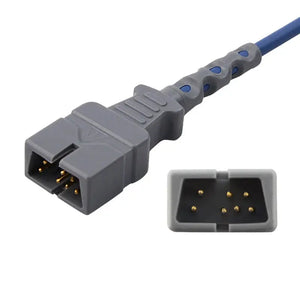
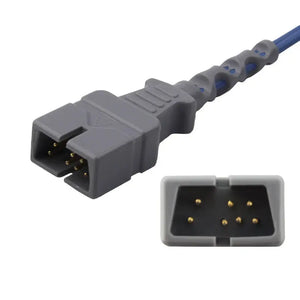
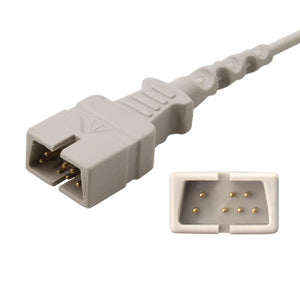
- Utah 4-pin connector — common in neonatal units
- Edwards 5-pin connector
- Abbott 6-pin round connector
- B.Braun 4-pin connector
- BD/Ohmeda 7-pin connector
Common NIBP Errors in Neonates and How to Avoid Them
Wrong cuff size — the #1 source of error
A cuff that is too small produces falsely elevated readings; one that is too large produces falsely low readings. The error magnitude can reach 10–40 mmHg — enough to mask hypotension or fabricate hypertension. Always measure arm circumference and match to the table above; do not estimate by eye.
Cycling too frequently
Repeated cuff inflation in the same limb can cause petechiae, edema, or skin breakdown — especially in preemies whose skin is not fully keratinized. If frequent measurements are needed, alternate limbs or escalate to IBP.
Active crying or handling
Crying transiently raises BP by 10–20 mmHg. If a reading is unexpectedly high, settle the infant and repeat after 3–5 minutes of quiet rest.
Cold extremities and poor perfusion
Hypothermic or vasoconstricted limbs produce unreliable oscillometric readings. Warm the limb, ensure a thermoneutral environment, and reassess. Persistent failure to obtain a reading despite proper technique is itself a clinical sign that warrants attention.
Limb selection conflicts
Avoid placing the cuff on a limb with an IV, peripheral arterial line, pulse oximeter probe, or PICC. Inflation on a line-bearing limb can damage the line, occlude flow, or produce artifact.
Multi-Brand Monitor Compatibility for the NICU
Most NICUs use multiple monitor brands across bedside, transport, and procedure rooms. Each brand uses proprietary connector standards, so getting the right cuff and hose combination matters. Below is a quick reference matrix. (Brand names are referenced for compatibility only and imply no OEM or endorsement relationship.)
| Monitor Brand | Connector / Hose Type | MedLinket Compatible Hose |
|---|---|---|
| Philips (IntelliVue MX/MP series) | Round neonatal connector | M1596B Infant/Neonate Hose |
| GE Healthcare (Carescape, Dash) | Neonatal Luer slip | 2017009-001 Hose |
| Mindray / Datascope | Neonatal Luer slip | 6200-30-11560 Hose |
| Nihon Kohden (BSM, Life Scope) | Neonatal Luer slip | YN920P Hose |
| Dräger (Babylog, Infinity) | Female neonatal Luer slip | 2870298 Hose |
| Welch Allyn | Neonatal Luer slip | Welch Allyn Neonatal Hose |
If your unit uses more than one brand, standardizing on a single disposable cuff line with brand-specific hoses is often the simplest inventory strategy. For a complete cross-brand reference, see the Multi-Brand Compatibility Matrix.
🔗 Need to Verify Compatibility for a Specific Monitor Model?
Connector standards can vary even within the same brand across product generations. MedLinket maintains a database covering major monitor brands and a wide range of specific models. Send your monitor brand, model, and a photo of the existing hose connector — we will verify the correct match, free of charge.
📧 Free Compatibility Verification shopify@medlinket.com · WhatsApp +852 6467 3105NICU Best Practices: Reducing Skin Injury and False Alarms
Translucent cuffs for real-time skin inspection
A transparent cuff body lets the bedside nurse see the skin under the cuff at every assessment without removing it. This is particularly valuable for ELBW preemies, where pressure injuries can develop in hours rather than days. Inspecting for redness, blanching, or pressure marks at every cuff cycle is a simple but effective practice.
Coordinating with other monitoring
NIBP, SpO₂, and temperature monitoring share limbs and skin real estate. Standard NICU practice is to place the SpO₂ probe on one extremity and the NIBP cuff on a different one, alternating sites every 2–4 hours to reduce cumulative pressure. Coordinate with respiratory therapy and bedside ultrasound to avoid overlap on procedure days.
Reducing false alarms in the NICU
NICU monitor alarms differ from adult units: heart-rate ranges are higher (110–160 bpm normal in newborns), SpO₂ targets are tighter (typically 90–95% for preemies on oxygen), and BP thresholds shift with gestational age. Setting alarm parameters appropriate to the patient — not defaults — is essential. For general principles, see our False Alarms on Patient Monitors guide.
Skin-care bundle
Combine: (1) correctly sized cuff, (2) limb rotation every 2–4 hours, (3) skin inspection at each measurement, (4) avoidance of cycling intervals shorter than 15 minutes when not clinically necessary, and (5) early escalation to IBP for unstable infants. This bundle reduces both pressure injuries and unnecessary BP measurement attempts.
Frequently Asked Questions
What is normal blood pressure for a newborn?
For a healthy term newborn on Day 1 of life, typical BP is approximately 60–85 / 40–55 mmHg with a MAP of 45–60 mmHg. Preterm infants have lower normal ranges that increase with gestational age. See Tables 1 and 2 above for ranges by gestational age and day of life.
How is blood pressure measured in premature babies?
Most preemies are measured non-invasively (NIBP) using an oscillometric monitor and a properly sized cuff (Size #1 or #2 for ELBW and VLBW infants). For unstable preemies on inotropes or those requiring frequent blood gas sampling, invasive BP monitoring via an umbilical or peripheral arterial catheter is standard.
What size cuff for a 1500 g preemie?
A 1500 g preemie typically has an upper-arm circumference of 5–7 cm, which falls into Size #2 (4–8 cm range). Always measure the actual arm circumference rather than estimating from weight alone — gestational age, edema, and growth all affect the relationship.
How often should NICU babies have BP checked?
Routine NIBP is typically every 3–4 hours for stable infants and every 15 minutes to 1 hour for unstable patients. Cycling more often than every 15 minutes for prolonged periods increases skin-injury risk; if frequent measurements are needed, escalate to continuous IBP.
When is invasive blood pressure (IBP) needed in neonates?
IBP is indicated for hemodynamic instability requiring vasoactive medications, frequent blood gas sampling, severe respiratory failure, post-cardiac surgery, therapeutic hypothermia, or any situation where NIBP is unreliable.
Why are disposable cuffs preferred in NICUs?
Reusable cuffs in clinical settings have shown inner-surface contamination rates as high as 69.1% for MRSA and other pathogens. Single-patient disposable cuffs eliminate cross-contamination risk, reduce reprocessing labor, and remove variability in cleaning compliance — all critical in a unit where patients have immature immune systems.
Can the same cuff be used for term and preterm babies?
No. Term newborns typically need Size #3 (6–11 cm) or Size #4 (7–14 cm), while preemies need Size #1 (3–6 cm) or Size #2 (4–8 cm). Using one cuff across the full neonatal range produces 10–40 mmHg errors that can mask shock or trigger unnecessary intervention.
How do I know which neonatal cuff fits my monitor?
Disposable cuff bodies are largely standardized; the difference is at the hose-to-monitor connector. Identify your monitor brand and the existing hose connector type, then match to the brand-specific hose listed in Table 4 above. For verification, send your monitor model to shopify@medlinket.com for a free compatibility check.
Conclusion
Neonatal blood pressure monitoring done well is more than a measurement — it is a coordinated practice that combines correct cuff sizing, gestational-age-appropriate thresholds, infection control, skin protection, and the judgment to know when to escalate from non-invasive to invasive monitoring. The right disposable cuff in the right size on the right limb, paired with a brand-specific hose and proper measurement technique, is the foundation. From there, clinical assessment of perfusion, urine output, and overall infant state guides the interpretation.
For NICUs equipping or re-equipping their BP monitoring inventory, the most common gaps we see are: incomplete size coverage (typically missing the smallest preemie sizes), single-brand limitation when the unit uses multiple monitor systems, and continued reliance on reusable cuffs without adequate cleaning protocols. Addressing all three — with a 5-size disposable range, brand-specific hoses, and a documented escalation pathway to IBP — supports better BP measurement accuracy, skin-injury prevention, and infection control.
Equip Your NICU with the Right Neonatal BP Accessories
MedLinket manufactures the complete range of neonatal monitoring accessories — disposable & reusable NIBP cuffs (5 sizes covering 3–15 cm), brand-specific hoses, IBP transducers, SpO₂ sensors, and temperature probes — compatible with Philips, GE, Mindray, Dräger, Nihon Kohden, Masimo, Nellcor, and other major monitor brands.
Free Sample Program: Hospitals and clinics can request neonatal cuff samples for clinical evaluation before purchase.
📧 shopify@medlinket.com 💬 WhatsApp: +852 6467 310520+ Years
Countries
Hospital Clients
Cleared & Marked
Certified
Product Liability
Part of MedLinket's Hospital Monitor Reading & Accessories Guide. By the MedLinket Clinical Education Team; reviewed by Clinical Affairs — June 2026.